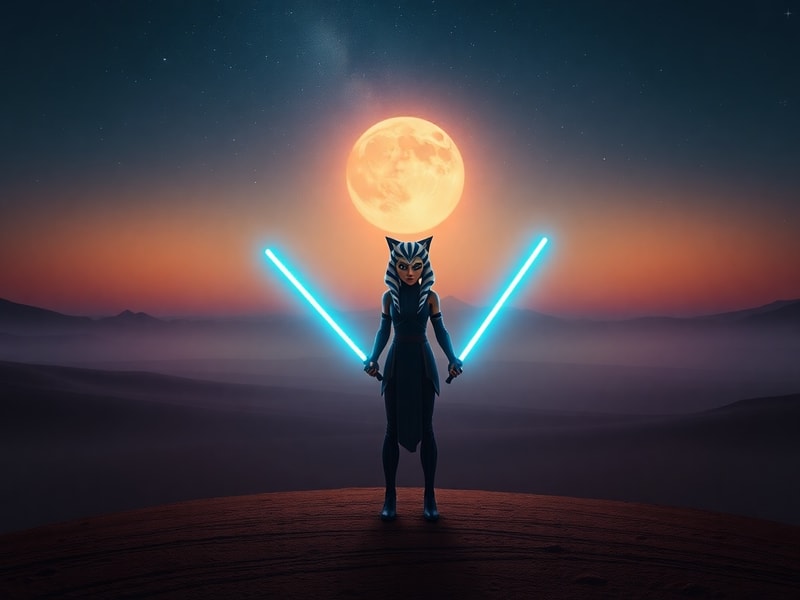
Ahsoka Tano’s Return: What Season 2 Promises
The long-awaited second season of Ahsoka arrives amid a resurgence of interest in the Star Wars universe beyond the films. Following the success of The Mandalorian and Andor, Disney+ continues to invest in deepening its live-action storytelling within the franchise. While the first season introduced viewers to the former Jedi’s post-Return of the Jedi quest, the second installment looks set to expand both her narrative and the broader galaxy’s lore.
Set in the years after Return of the Jedi, the series explores the remnants of the Empire’s influence across the Outer Rim and beyond. With Thrawn’s return as a looming threat, Season 2 is expected to weave together threads from Rebels, The Clone Wars, and even The Force Awakens era. Fans anticipate greater integration with other live-action series, particularly through crossovers involving characters like Sabine Wren and Baylan Skoll.
Global Fandom and Cultural Resonance
Star Wars has long been a global phenomenon, transcending borders and languages. In Asia, fan communities have grown significantly, with conventions in Japan, South Korea, and India drawing thousands. The rise of streaming platforms has made it easier for international audiences to access Ahsoka, and Season 2 is likely to further solidify its presence in markets where Star Wars was once considered niche.
In Latin America, fan clubs and cosplay groups have become vibrant cultural hubs. Events like Brazil’s FLIS (Festival de Literatura e Imaginário de São Paulo) now feature Star Wars panels, and local artists have reimagined characters in regional art styles. The show’s themes of resistance and redemption resonate particularly strongly in communities with histories of authoritarian rule.
In Europe, where Star Wars fandom has traditionally been strong, Ahsoka has been praised for its mature storytelling. Critics in the UK and Germany have highlighted its visual ambition and thematic depth, comparing it favorably to Andor in terms of tone and scale. The series’ blend of political intrigue and spiritual inquiry aligns with European philosophical traditions, adding layers of interpretation for international viewers.
Diversity in Storytelling and Representation
The Star Wars franchise has faced scrutiny over its lack of diversity in earlier decades. Recent years, however, have seen a deliberate effort to expand representation. Ahsoka leads this shift, with Rosario Dawson’s titular character at the forefront of a more inclusive vision. The show features a multicultural cast, including characters like Hera Syndulla, voiced by Vanessa Marshall, whose leadership and moral complexity offer new archetypes for audiences.
In Season 2, audiences can expect to see more of the Nightsisters’ influence, a storyline that resonates deeply within African diasporic spiritual traditions. The inclusion of characters like Shin Hati, played by Ivanna Sakhno, reflects a growing emphasis on Asian representation in Western sci-fi. These choices are not merely cosmetic; they enrich the narrative by grounding the galaxy’s mythology in real-world cultural experiences.
Narrative Connections and the Expanding Universe
Ahsoka exists at the intersection of television and transmedia storytelling. Its first season laid groundwork not only for its own future but for the entire Star Wars canon. Season 2 is expected to deepen ties with other series, particularly The Mandalorian and its spinoffs. Filoni’s involvement ensures continuity, but the challenge remains in balancing serialized depth with the episodic nature of streaming television.
One of the most anticipated developments is the potential reunion of Ahsoka and Anakin Skywalker. While not confirmed, archival audio and new performances could bring their dynamic to life in ways previously unimaginable. Such a moment would carry emotional weight not only for fans of The Clone Wars but for anyone who has followed Ahsoka’s journey from Padawan to warrior.
The series also explores lesser-known corners of the galaxy, such as the planet Seatos and the ruins of ancient Jedi temples. These settings allow for visual creativity and thematic exploration of legacy and loss. In an era where many sci-fi franchises rely on nostalgia, Ahsoka pushes forward by reviving forgotten lore while introducing fresh ideas.
Anticipated Guest Stars and Cameos
Rumors and reports suggest several notable appearances in Season 2. While nothing is official, the following figures have been linked to potential cameos:
- Ewan McGregor as Obi-Wan Kenobi (archive audio or hologram)
- Mark Hamill as Luke Skywalker (voice cameo)
- Pedro Pascal as Din Djarin (via hologram or recorded message)
- Forest Whitaker as Saw Gerrera (flashback or vision)
- Genevieve O’Reilly as Mon Mothma
These appearances, if realized, would reinforce the interconnected nature of the Star Wars universe. They would also serve as emotional anchors for long-time fans, bridging gaps between generations of storytelling.
The Future of Star Wars Television
As Ahsoka Season 2 approaches, it stands as a test case for the future of Star Wars television. The franchise’s pivot from episodic anthology to serialized drama has been met with mixed reactions. Some viewers praise the depth of character arcs, while others long for the episodic storytelling of The Clone Wars or Rebels.
The show’s success—or failure—will influence decisions about future live-action series, including potential seasons of Ahsoka itself. With Disney+ restructuring its content strategy, the stakes are higher than ever. A strong second season could justify further investment in character-driven Star Wars stories, while a weaker reception might push the franchise toward safer, more formulaic projects.
Regardless of the outcome, Ahsoka has already made an impact. It has proven that Star Wars can thrive in television without the weight of a film franchise behind it. It has also demonstrated the value of female-led narratives in a genre historically dominated by male protagonists. As Season 2 unfolds, it will be watched not only by devoted fans but by industry observers tracking the evolution of modern sci-fi television.
For those seeking to dive deeper into the lore, Entertainment on Dave’s Locker offers curated insights into Star Wars media, including reviews, analysis, and behind-the-scenes features. The galaxy may be vast, but the conversation around its stories is growing more connected every day.
As the season premiere approaches, anticipation builds not just for what Ahsoka will face, but for what her journey represents: a continuation of myth, a testament to resilience, and a reminder that the Force is not confined to the past—it lives in the stories we tell today.