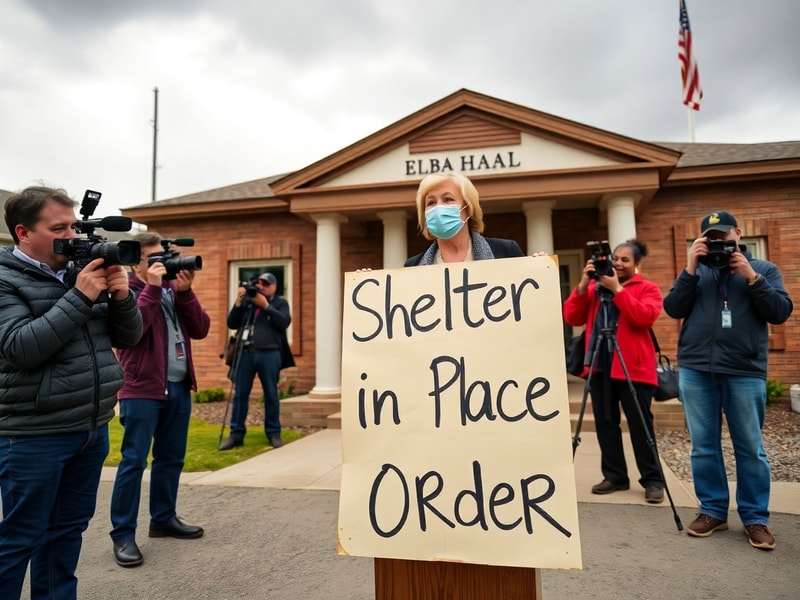
The city of Elba, Alabama, issued a shelter-in-place order in response to a localized public health threat. This directive required residents to remain indoors, limit movement outside their homes, and avoid unnecessary travel. The order was part of a broader effort to mitigate the spread of a communicable disease within the community.
The announcement came after local health officials identified an outbreak linked to a specific event. The situation evolved rapidly, prompting authorities to act decisively. Residents were advised to secure supplies and prepare for a temporary disruption to daily life. The order remained in effect for several days before being lifted as conditions improved.
Context Behind the Order
The shelter-in-place order in Elba was not an isolated incident but part of a pattern seen in other small communities facing similar threats. Public health experts emphasize that such measures are often necessary to prevent exponential growth of infections. In Elba’s case, the outbreak was traced to a public gathering where physical distancing had not been maintained.
Local hospitals, already operating with limited resources, faced potential strain if the outbreak had spread further. The order served as a critical intervention to protect both residents and the healthcare system. Authorities worked closely with state health departments to monitor the situation and determine when it was safe to lift restrictions.
Key Factors Leading to the Order
Several factors contributed to the decision to implement the shelter-in-place order:
- Rapid case increase: Health officials observed a sharp rise in confirmed cases within a short period.
- Limited testing capacity: Local clinics struggled to process tests quickly, delaying identification of new cases.
- Community event exposure: A large gathering was identified as a superspreading event.
- Hospital capacity concerns: Local medical facilities warned they could be overwhelmed without intervention.
Impact on Residents and Businesses
The shelter-in-place order had immediate and tangible effects on daily life in Elba. Residents scrambled to stock up on essentials, leading to temporary shortages at grocery stores. Pharmacies saw increased demand for medications, particularly those used to treat symptoms associated with the outbreak. Families with children adjusted to school closures, relying on remote learning resources where available.
Small businesses faced significant challenges. Restaurants that relied on dine-in service had to pivot to takeout or delivery models. Retail stores saw foot traffic plummet, forcing owners to explore alternative revenue streams. The economic strain was particularly acute for businesses operating on thin margins, highlighting vulnerabilities in local economies during crises.
Meanwhile, essential workers—including healthcare providers, grocery store employees, and public safety personnel—continued to report for duty despite the risks. Their efforts underscored the importance of community resilience during such events. Local leaders called for unity, urging residents to support one another through mutual aid networks and charitable donations.
Broader Implications for Public Health Policy
The Elba shelter-in-place order serves as a case study in how small communities respond to public health emergencies. It raises important questions about preparedness, resource allocation, and the balance between individual freedoms and collective safety. Public health experts argue that such measures, while disruptive, are often necessary to prevent catastrophic outcomes.
The experience in Elba also highlights the need for robust infrastructure to support communities during crises. This includes reliable communication systems to disseminate accurate information, adequate supply chains to prevent shortages, and financial assistance programs to support affected individuals and businesses. Without these safeguards, even well-intentioned orders can exacerbate existing inequalities.
Looking ahead, policymakers may draw lessons from Elba’s experience to refine their approaches to future outbreaks. The order demonstrated the importance of transparency, swift action, and community engagement in managing public health threats. It also underscored the need for flexible policies that can adapt to rapidly changing circumstances.
Lessons for Other Communities
Elba’s shelter-in-place order offers several takeaways for other communities facing similar challenges:
- Preparedness is critical: Having a clear plan in place before a crisis occurs can save valuable time and reduce confusion.
- Communication must be prioritized: Accurate, timely, and accessible information helps residents make informed decisions.
- Support systems matter: Financial aid, food assistance, and mental health resources can mitigate the impact on vulnerable populations.
- Flexibility is essential: Orders may need to be adjusted based on evolving data and community feedback.
Conclusion
The shelter-in-place order in Elba was a necessary measure to protect public health during a critical moment. While it posed challenges for residents and businesses alike, it also demonstrated the power of community resilience and coordinated action. As smaller towns and rural areas continue to face public health threats, the lessons from Elba’s experience will remain relevant.
Moving forward, communities must prioritize preparedness, invest in robust support systems, and foster open dialogue to navigate future crises. The Elba order is a reminder that proactive measures, though difficult, can prevent far greater hardship down the line.
For more insights on public health and community responses, explore our News and Health sections on Dave’s Locker.