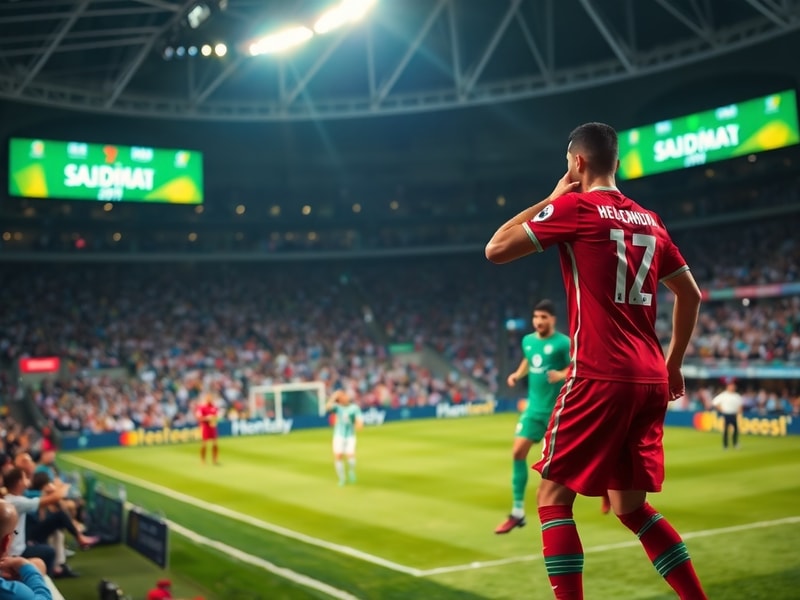
When Saudi Arabia and Uruguay face off on the football pitch, the match transcends mere competition. It becomes a cultural exchange, an economic statement, and a geopolitical chess move. Both nations leverage football to project influence far beyond their borders, using the sport as a soft power tool in an era where national identity is increasingly tied to global perception.
The Historical Context of the Rivalry
Though their head-to-head encounters remain infrequent, the rivalry between Saudi Arabia and Uruguay carries symbolic weight. Their first official meeting took place in 2018 during the World Cup group stage in Russia, where Uruguay won 1-0. That match was more than a football game—it was a statement. Uruguay, a small but football-rich nation, faced a rising Gulf power whose ambitions extended well beyond regional dominance.
The two countries have met only once since then, in a friendly in 2022. Yet their football philosophies tell a deeper story. Uruguay, with its storied history—two World Cup titles, a legacy of producing world-class players like Luis Suárez and Edinson Cavani—represents tradition and technical excellence. Saudi Arabia, meanwhile, embodies ambition and rapid transformation, using football as a catalyst for modernization and international prestige.
Football as a Tool of Nation Branding
Both nations recognize the power of football in shaping global perceptions. Saudi Arabia’s Public Investment Fund (PIF), led by Crown Prince Mohammed bin Salman, has invested heavily in football through the acquisition of Newcastle United in the English Premier League and the recruitment of high-profile players to Saudi Pro League clubs. This strategy is not solely about on-field success—it’s about rebranding the nation as a modern, open, and cosmopolitan hub.
Uruguay, though smaller in population and GDP, has long used football as a source of national pride. The Celeste’s consistent performances in international tournaments—despite limited resources—reinforce a narrative of resilience and identity. While Uruguay doesn’t have oil wealth or sovereign wealth funds, its football culture is a form of cultural capital that commands respect worldwide.
The Economic and Diplomatic Dimensions
Football matches between Saudi Arabia and Uruguay often occur in neutral venues or as part of high-profile tournaments, but their significance extends into diplomacy and trade. In 2023, Saudi Arabia hosted the FIFA Club World Cup, an event that served both sporting and diplomatic purposes. Uruguay’s participation was not just athletic—it was an opportunity to strengthen economic ties, particularly in sectors like agriculture, technology, and renewable energy.
Bilateral trade between the two nations remains modest but growing. Saudi Arabia is a key importer of Uruguayan beef and dairy products, while Uruguay has shown interest in Saudi investments in infrastructure and logistics. Football, in this context, acts as a bridge—creating goodwill and opening doors for broader cooperation.
- Trade Highlights: Uruguay exports beef, dairy, and software to Saudi Arabia.
- Investment Flows: Saudi firms explore opportunities in Uruguay’s renewable energy and port infrastructure.
- Cultural Exchange: Football academies and youth programs are being developed with mutual participation.
Youth Development and the Future of Football
The contrast in football development models between the two nations is stark. Uruguay’s success stems from a deep-rooted youth system, often run by local clubs and supported by passionate communities. The Uruguayan Football Association (AUF) has maintained a strong focus on grassroots development, producing players who thrive under pressure in top European leagues.
Saudi Arabia, on the other hand, is in the midst of a top-down revolution. With massive funding, the Saudi Pro League has recruited global stars like Cristiano Ronaldo, Karim Benzema, and N’Golo Kanté. The goal isn’t just to win titles—it’s to transform the league into a global entertainment product. This approach has drawn criticism from purists but has undeniably elevated the country’s profile.
Yet, for all its financial power, Saudi Arabia still looks to Uruguay for inspiration in youth development. In 2023, the Saudi Arabian Football Federation (SAFF) signed a cooperation agreement with Uruguay’s AUF to share expertise in coaching, scouting, and academy management. This partnership reflects a recognition that sustainable success requires more than money—it requires culture.
The Broader Implications for Global Football
The Saudi Arabia vs Uruguay dynamic is a microcosm of a larger shift in world football. Traditional powerhouses like Uruguay are being challenged by wealthy Gulf states and ambitious Asian nations seeking to reshape the sport’s landscape. This isn’t just about winning matches—it’s about redefining who controls football’s narrative.
Saudi Arabia’s rise in football coincides with its broader Vision 2030 plan, which aims to diversify the economy and reduce dependence on oil. Football is one pillar of this strategy, alongside tourism, entertainment, and technology. By hosting major tournaments, signing global stars, and investing in infrastructure, Saudi Arabia is positioning itself as a new hub for world sport.
Uruguay, meanwhile, continues to punch above its weight. Its ability to produce world-class players on a per capita basis is unmatched. The country’s football philosophy—rooted in creativity, resilience, and tactical intelligence—remains a model for smaller nations aspiring to compete at the highest level.
“Football is not just a sport in Uruguay—it’s a way of life. It teaches discipline, pride, and community. That’s something money can’t buy.” — Óscar Washington Tabárez, former Uruguay national team coach
What’s Next for the Rivalry?
The next chapter in this rivalry may unfold on the field in the 2026 FIFA World Cup, where both nations could potentially meet again. With Saudi Arabia hosting the tournament alongside the United States and Canada, the geopolitical stakes are higher than ever. A victory for Uruguay would reinforce its reputation as a footballing giant. A win for Saudi Arabia would signal the continued rise of Gulf football.
Beyond the pitch, the rivalry is likely to intensify in other arenas. Saudi Arabia’s sportswashing concerns—amid allegations of human rights abuses—have drawn global scrutiny. Uruguay, with its democratic stability and strong institutions, offers a contrasting narrative. Football, in this context, becomes a stage for competing values: tradition versus transformation, authenticity versus ambition.
For fans, the matches are about passion and competition. For analysts, they represent a study in soft power and national branding. And for both nations, football is a tool—one that can build bridges or amplify divisions, depending on how it’s wielded.
The Saudi Arabia vs Uruguay rivalry is more than a fixture—it’s a reflection of how modern nations use sport to tell their stories on the global stage. As the world watches, the pitch becomes a battleground not just for goals, but for identity.