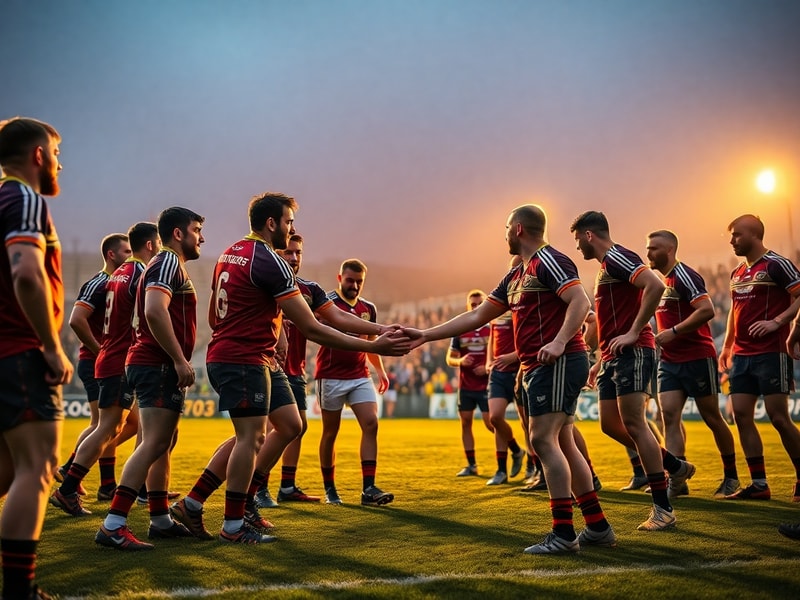
The Gaelic Athletic Association (GAA) draw is more than a method of fixture allocation—it is a ritual that binds communities, sustains rivalries, and preserves the integrity of Ireland’s indigenous sports. While casual observers may see it as a simple lottery, the draw carries deep cultural significance, blending unpredictability with tradition. From local parish leagues to the grandeur of All-Ireland finals, the GAA draw shapes narratives that resonate far beyond the pitch.
The Origins of the GAA Draw: From Grassroots to Grand Stage
The GAA was founded in 1884, born from a desire to revive traditional Irish sports like hurling and Gaelic football. In its early years, fixtures were often arranged through informal agreements or local agreements, but as the organization grew, a structured system became necessary. The draw emerged as a fair and transparent method to allocate matches, ensuring that teams faced one another without bias.
By the early 20th century, the GAA draw had evolved into a public spectacle. County boards began hosting draws in town halls or local venues, inviting fans to witness the moment fate was sealed. These events became social gatherings, where neighbors debated potential pairings and speculated about future clashes. The draw’s ceremonial nature reinforced its role not just as a logistical tool, but as a cultural touchstone.
Today, the GAA draw is broadcast live on television and streamed online, drawing audiences that span Ireland and the global diaspora. It has become a shared experience, uniting fans in anticipation and nostalgia. While technology has modernized the process—with digital randomization replacing manual ball draws—the essence remains unchanged: a celebration of sport, community, and chance.
How the GAA Draw Works: Rules, Formats, and Strategic Nuances
The mechanics of the GAA draw vary by competition, but the core principle is consistency. Most draws are conducted using numbered balls in a transparent container, with teams or counties paired randomly. Here’s a breakdown of how it typically functions across key competitions:
- Club Championships: Local draws are usually conducted by county boards. Teams are grouped by division or parish, and pairings are made within those tiers to ensure competitive balance. The draw often takes place weeks before the season begins, setting the stage for months of rivalry.
- Inter-County Championships: For elite competitions like the All-Ireland Senior Football Championship, the draw is a national event. Teams are seeded based on previous performance, and the draw determines not only who they face but also the path to the final. Upsets in the early rounds can dramatically alter a county’s journey.
- Group Stages and Knockouts: Some tournaments, such as the National Football League, use a league format followed by a knockout draw. The latter stages often involve a “blind draw,” where teams are placed in a pot and paired without prior knowledge of the bracket. This adds an element of unpredictability that fans relish.
The draw’s structure also influences tactical preparation. Teams study potential opponents based on historical data and recent form, but the randomness of the draw means that underdogs can emerge at any stage. This unpredictability is part of the GAA’s charm—it keeps the sport dynamic and ensures that no two seasons are alike.
The Cultural Weight of the GAA Draw: More Than Just a Fixture List
The GAA draw transcends its functional role. It is a catalyst for storytelling, a spark for rivalries, and a mirror of Irish identity. In rural communities, the draw can determine the social calendar for months. Local pubs and clubs host viewing parties, while families gather around radios or screens to hear the results. The announcement of a “local derby”—when two neighboring parishes face off—can spark weeks of banter and pride.
Certain draws have etched themselves into GAA folklore. The 1991 All-Ireland final draw famously paired Dublin and Kerry, two of the sport’s most storied counties, in what became an instant classic. Decades later, fans still recount the tension of that moment. Similarly, the 2014 draw that pitted Mayo against Dublin in a semi-final led to one of the most dramatic matches in recent memory, a game that ended in a draw and went to a replay.
The draw also reflects broader societal changes. In recent years, the GAA has introduced “open draws” in some competitions, allowing fans to suggest fixture pairings through public votes. This innovation has democratized the process, though it has also sparked debate about tradition versus modernity. Meanwhile, the global reach of the GAA—with clubs in North America, Australia, and Europe—has led to international draws that connect the diaspora to their roots.
Global Echoes: How the GAA Draw Inspires Beyond Ireland
The concept of a structured draw is not unique to Ireland, but the GAA’s approach is uniquely communal. Similar systems exist in other sports, such as the UEFA Champions League draw or the NFL’s playoff bracket, but these often prioritize commercial or competitive balance over public engagement. The GAA draw, by contrast, is designed to be inclusive. It invites fans into the process, making them stakeholders in the outcome.
Internationally, the GAA draw has inspired amateur leagues in countries like the United States and Canada, where clubs adapt the system to their own contexts. For example, the New York GAA’s annual draw generates excitement among expatriate communities, offering a taste of home in a foreign land. In Britain, the draw for the London GAA championships is a highlight of the season, drawing crowds to Irish cultural centers.
Even in non-GAA strongholds, the draw’s principles are studied. Sports administrators in other codes have looked to the GAA for ways to enhance fan engagement. The transparency of the process—where every pairing is made in front of an audience—has set a standard for integrity in sports administration. It proves that even in an era of algorithms and data analytics, the human element still holds power.
A Tradition That Endures
The GAA draw is a testament to the enduring appeal of tradition in a rapidly changing world. In an age where sports fixtures are increasingly dictated by television schedules and commercial interests, the draw remains a symbol of fairness and spontaneity. It reminds fans that sport is not just about results—it’s about stories, rivalries, and the unexpected.
As the GAA continues to grow globally, the draw will likely evolve further. Digital platforms may soon allow for interactive draws, where fans vote on potential pairings in real time. Yet, no matter how advanced the technology, the essence of the draw will remain the same: a moment of collective breath-holding, a pause in the chaos of life, where the future of a season is decided in an instant.
For those who love Gaelic games, the draw is more than a fixture list. It is a ritual, a tradition, and a thread that connects generations. Whether you’re a player, a fan, or a casual observer, the moment the balls are drawn is a reminder that in sport, as in life, you never quite know what’s coming next.
To explore more about Gaelic games and their global reach, visit our Sports category for updates on tournaments, player profiles, and cultural insights.