NBC Poll Shows Trump Maintaining Strong Lead Among Republican Voters
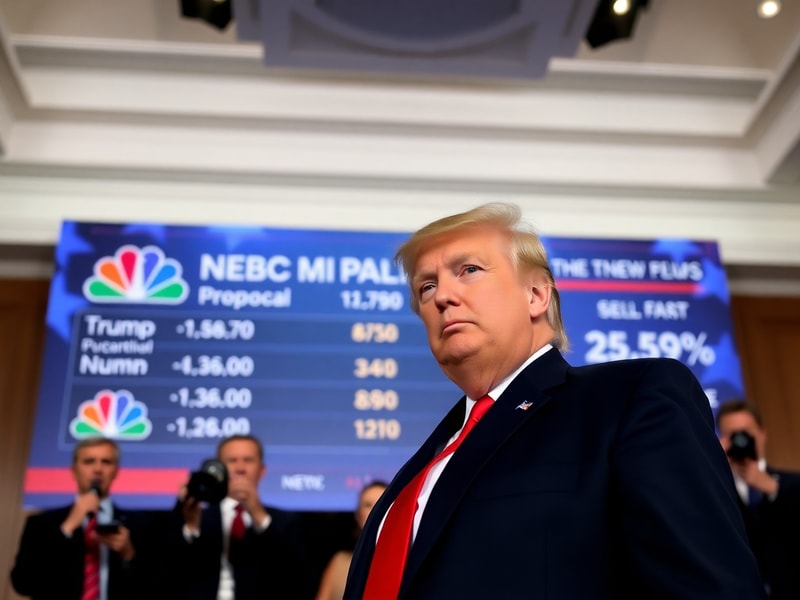
A recent NBC News poll has revealed that former President Donald Trump continues to dominate the Republican primary field, securing a commanding lead over his closest rivals. The survey, conducted in early October, places Trump at 52% support among likely GOP voters, a figure that has remained consistent for several months despite ongoing legal challenges and political controversies.
The poll’s findings reflect broader trends in American politics, where Trump’s influence over the party remains unchallenged. Unlike traditional political figures who rely on party infrastructure and donor networks, Trump’s appeal stems from a coalition of grassroots supporters, anti-establishment voters, and those disillusioned with conventional governance. This base has proven resilient even as legal battles and media scrutiny intensify.
Key Takeaways from the NBC Poll
The NBC News survey offers several insights into the current state of the Republican Party and Trump’s enduring popularity:
- Unmatched Name Recognition: Trump’s 52% support is nearly double that of his nearest competitor, Florida Governor Ron DeSantis, who polls at 16%. This gap underscores Trump’s unparalleled brand recognition and media presence.
- Legal Troubles Have Little Impact: Despite multiple indictments and ongoing trials, Trump’s support has not wavered. The poll suggests that his base views legal challenges as politically motivated rather than disqualifying.
- Cross-Party Appeal: The survey indicates that Trump’s support extends beyond traditional Republican voters, attracting independents and even some Democrats disillusioned with the current administration.
- Media Dynamics: Trump’s ability to dominate news cycles—both positively and negatively—ensures that his message reaches a vast audience, reinforcing his status as the de facto leader of the GOP.
Global Reactions to Trump’s Polling Dominance
Trump’s polling strength is not just a domestic issue; it resonates internationally, particularly among leaders and analysts who study American politics. Observers in Europe and Asia are closely monitoring the 2024 race, as Trump’s potential return to the White House could reshape global alliances, trade policies, and diplomatic strategies.
In Western Europe, Trump’s lead in the polls has sparked concerns about the future of NATO and transatlantic relations. Many European leaders fear that a second Trump term could weaken U.S. commitment to collective defense, particularly if he follows through on his promises to reduce military aid to Ukraine. The ongoing conflict in Ukraine has already strained relations, and Trump’s rhetoric on the matter has been met with skepticism in capitals like Berlin and Paris.
Meanwhile, in Asia, Trump’s trade policies—particularly his focus on tariffs and protectionism—are a point of contention. Countries like Japan and South Korea, which rely heavily on U.S. military protection and trade partnerships, are wary of a potential return to the “America First” approach that defined Trump’s first term. The prospect of renewed economic tensions could disrupt supply chains and regional stability.
Cultural Shifts and the Trump Effect
Beyond politics and policy, Trump’s polling dominance reflects deeper cultural shifts in the United States. His rise to power in 2016 marked a turning point in American discourse, where celebrity, media savvy, and anti-establishment rhetoric became as influential as traditional political experience. This trend has only accelerated, with social media platforms amplifying Trump’s ability to bypass traditional gatekeepers like mainstream news outlets and political parties.
The NBC poll highlights how Trump’s appeal transcends conventional political messaging. His supporters often view him not just as a politician but as a cultural icon—a figure who embodies resistance to perceived elite overreach. This phenomenon has parallels in other parts of the world, where populist leaders have gained traction by positioning themselves as outsiders fighting against entrenched systems.
For example, the rise of figures like Jair Bolsonaro in Brazil and Viktor Orbán in Hungary demonstrates a global trend toward leadership that prioritizes nationalist rhetoric and challenges democratic norms. In this context, Trump’s polling lead can be seen as part of a broader movement that questions the efficacy of traditional governance and embraces more confrontational styles of leadership.
What This Means for the 2024 Election
The NBC poll’s findings carry significant implications for the 2024 presidential election. If Trump secures the Republican nomination, the general election will likely center on a rematch between him and President Joe Biden, a contest that could hinge on issues like economic recovery, inflation, and foreign policy.
One of the most pressing questions is whether Trump’s legal troubles will ultimately benefit or harm his campaign. Historically, legal challenges have had mixed effects on political candidates. While some voters may view them as distractions, others might see them as evidence of a rigged system, further solidifying Trump’s base. The timing of any potential convictions—whether before or after the election—could play a decisive role in shaping public opinion.
Another factor to watch is the role of third-party candidates. Figures like Robert F. Kennedy Jr. and Cornel West could siphon off votes from both major candidates, particularly in swing states where margins are often razor-thin. The NBC poll does not account for third-party influence, but their presence could complicate Trump’s path to victory.
Finally, the poll underscores the growing polarization of American politics. Trump’s lead is not just a reflection of his personal appeal but also of the deep divisions within the electorate. As the country grapples with issues like immigration, abortion rights, and economic inequality, the 2024 race is poised to be one of the most contentious in modern history.
Lessons from History
Trump’s polling dominance invites comparisons to past political movements that defied conventional wisdom. In the 1990s, Ross Perot’s independent presidential run demonstrated how a charismatic outsider could disrupt the two-party system. Similarly, the rise of Bernie Sanders in 2016 and 2020 showed that progressive populism could mobilize large segments of the electorate.
However, Trump’s case is unique in its blend of political, cultural, and media dynamics. His ability to dominate the news cycle, leverage social media, and maintain a loyal base sets him apart from previous political figures. The NBC poll suggests that this formula remains effective, even as the political landscape continues to evolve.
For political analysts, the challenge lies in understanding why Trump’s appeal persists despite the controversies and legal challenges. The answer may lie in his ability to tap into broader frustrations with the political establishment, economic uncertainty, and a sense of cultural displacement among his supporters.
Conclusion: The Road Ahead for Trump and the GOP
The NBC poll is a reminder that Trump’s influence over the Republican Party is far from waning. His lead in the primary reflects not just his personal brand but the broader shifts in American politics toward populism, media-driven campaigns, and anti-establishment rhetoric. As the 2024 election approaches, the stakes could not be higher, both domestically and internationally.
For the GOP, Trump’s dominance presents both opportunities and challenges. On one hand, his candidacy energizes the party’s base and ensures high voter turnout. On the other, his polarizing presence risks alienating moderate voters and deepening divisions within the party. The question for Republicans is whether they can harness Trump’s electoral power without being consumed by it.
For the rest of the country, Trump’s polling lead is a call to engage more deeply with the issues that define the 2024 race. Whether through voting, activism, or dialogue, the outcome of the election will shape the trajectory of American democracy for years to come. As the political landscape continues to shift, one thing is clear: the Trump era is far from over.
For more analysis on political trends, visit our News and Politics sections.