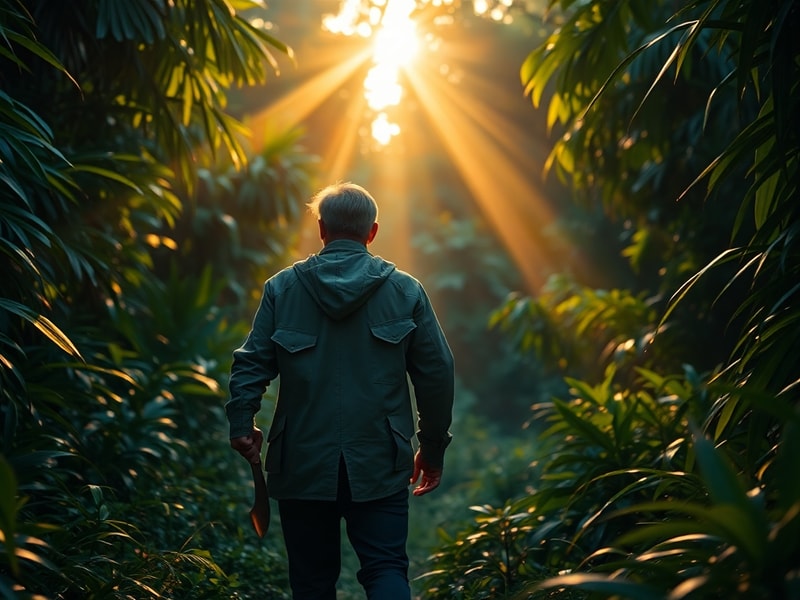
Survival shows have evolved from niche television experiments to global phenomena that test human endurance in ways few other formats can. Among these, Outlast the Jungle stands out not just for its dramatic confrontations with nature, but for how it challenges contestants—and viewers—to rethink what it means to push beyond limits. The series doesn’t just drop people into the wild; it immerses them in ecosystems where every decision can mean the difference between success and failure.
What began as a regional competition in Southeast Asia has grown into a cross-cultural spectacle, broadcast in over 40 countries and adapted for audiences from Scandinavia to South America. Its appeal lies in more than just drama. It reflects deeper societal fascinations—the fear of the unknown, the desire for mastery over chaos, and the universal human instinct to survive. But beyond the entertainment, the show offers lessons in resilience, adaptability, and the delicate balance between human ambition and nature’s unpredictability.
The Global Rise of Jungle Survival Competitions
The concept of survival television isn’t new, but its modern iteration gained momentum with programs like Survivor in the early 2000s. However, Outlast the Jungle represents a shift toward hyper-realism and cultural authenticity. Unlike staged environments, the jungle series is filmed in dense rainforests, mangrove swamps, and mountainous terrains, often with minimal crew intervention and no artificial lighting.
This authenticity has resonated globally. In Japan, a country with deep respect for nature and discipline, the show’s emphasis on strategy and endurance struck a chord with audiences. Meanwhile, in Brazil, where the Amazon is both myth and reality, local adaptations emphasized communal survival and indigenous knowledge—showcasing how survival isn’t just individual, but collective.
Interestingly, the format has also become a platform for cultural exchange. Contestants from different nations often form alliances based on shared values—whether it’s the teamwork prized in Nordic cultures or the individual cunning valued in Mediterranean societies. This blend of strategy and culture has made the show a mirror to how different societies define resilience.
Key Elements That Define the Format
The success of Outlast the Jungle can be attributed to several design choices that elevate it beyond typical reality TV:
- Unscripted Realism: Contestants are given basic survival tools but must rely on instinct and wit. No scripted twists or hidden cameras—just raw, unfiltered challenges.
- Cultural Integration: Each season is shot in a real ecosystem, often collaborating with local guides or indigenous communities to ensure authenticity.
- Psychological Pressure: Isolation, hunger, and constant physical strain create a pressure cooker environment where mental strength becomes as crucial as physical ability.
- Global Audience Participation: Viewers often vote on eliminations or challenges, making the audience part of the survival narrative.
This blend of survival, strategy, and culture has turned Outlast the Jungle into more than a show—it’s a cultural artifact that reflects how humanity confronts the wild.
Survival as Strategy: Lessons from the Wild
The jungle doesn’t reward brute force—it rewards intelligence. Contestants who thrive are not necessarily the strongest, but those who adapt quickly. This mirrors real-world survival scenarios, from disaster response to corporate turnarounds. The show becomes a classroom for resilience.
One notable trend is the rise of “strategic vegetarians”—contestants who refuse to eat meat, not out of ideology, but because hunting is too energy-intensive. This decision forces them to rely on foraging, fishing, or trade, demonstrating how constraints can breed innovation. In season 5, a contestant from Sweden survived for 28 days primarily on insects and tubers, a diet unfamiliar to many but essential in the wild.
Another recurring theme is the importance of water. Many contestants fail not from hunger, but from dehydration. The show highlights how access to clean water is often the first and most critical survival factor—a lesson relevant in both developing nations and post-disaster zones.
Cultural Adaptation and Indigenous Knowledge
In several international adaptations, local survival techniques have proven superior. In the Philippines version, contestants used bamboo to build shelters and traps, drawing from indigenous knowledge passed down for generations. Similarly, in the Congo-based season, participants who followed the lead of local BaAka guides—known for their forest expertise—outlasted others who relied solely on modern tools.
This integration of traditional wisdom has sparked conversations about decolonizing survival narratives. Western contestants often arrive with high-tech gear and military-style training, only to realize that indigenous methods are more efficient in the jungle. The show has become a subtle platform for cultural reclamation, where ancient knowledge is validated on a global stage.
It also raises a critical question: Is modern survival knowledge making us weaker? The show suggests that over-reliance on technology can be a liability when systems fail. In one memorable season, a contestant’s GPS died on day three, leaving him disoriented until he learned to read the stars—a skill that saved his life.
The Psychological Toll: Mind Games in the Wild
Survival isn’t just physical—it’s psychological. The isolation, monotony, and constant threat of danger create a mental landscape few are prepared for. Contestants often report vivid hallucinations, paranoia, and emotional breakdowns. The jungle amplifies inner demons, forcing participants to confront fears they didn’t know they had.
In 2022, a contestant from Spain described his experience as “a meditation on suffering.” He went from confident and talkative to silent and withdrawn within days. His journal entries—later published—revealed a man grappling with identity and purpose. Such raw psychological journeys have made the show a subject of study in stress-response research.
This mental dimension has also made the show popular among psychologists and neuroscientists. Studies have used contestant interviews to analyze how the brain copes with prolonged stress, particularly in environments where there is no clear escape. The findings have applications in military training, disaster preparedness, and even mental health therapy.
The Role of Leadership and Conflict
Not all survival is individual. Many seasons showcase the rise and fall of leaders—those who can unite, motivate, or manipulate others. In one African adaptation, a former military officer took control early, enforcing strict rules that kept the group alive but stifled morale. His eventual downfall came not from the jungle, but from rebellion within the group.
This dynamic reflects real-world power structures. The show becomes a microcosm of how leadership, whether in a corporate boardroom or a refugee camp, can determine survival—or failure—on a collective scale.
Beyond the Screen: Real-World Impact of Jungle Survival
The influence of Outlast the Jungle extends far beyond entertainment. In regions where climate change is intensifying storms and droughts, survival skills are becoming essential. NGOs and educational programs have begun using the show’s format to teach communities how to respond to emergencies.
In Indonesia, a local NGO adapted the show’s challenges into a training program for fishermen, teaching them how to navigate storms, find clean water, and treat injuries at sea. In the Philippines, after Typhoon Haiyan, survivors who had watched the show were able to build emergency shelters and purify water using techniques seen on screen.
Even in urban settings, the show’s lessons resonate. The COVID-19 pandemic revealed how fragile modern supply chains can be. People who had learned to grow food, purify water, or repair tools during lockdowns credited programs like Outlast the Jungle for sparking their interest in self-reliance.
This real-world application has elevated the show from mere entertainment to a cultural touchstone—one that teaches not just how to survive, but how to think critically about resilience in an unpredictable world.
A Call to Reconnect with Nature
In an age of digital overload and sedentary lifestyles, Outlast the Jungle serves as a counter-narrative. It reminds viewers that humans are still part of nature, not separate from it. The show’s contestants often speak of a renewed appreciation for the natural world after their ordeal—a humility that modern society has largely lost.
Some critics argue the show glorifies suffering, but producers emphasize its educational purpose. Contestants sign waivers, undergo medical screenings, and are monitored by survival experts. The goal isn’t to exploit, but to illuminate the raw connection between humans and the environment.
As climate change accelerates and ecosystems collapse, the skills taught by Outlast the Jungle may become necessary for millions. The show is no longer just a competition—it’s a preparation.
Conclusion: The Jungle as a Mirror
Outlast the Jungle is more than a television series. It’s a reflection of human nature under pressure—a test of mind, body, and spirit. It challenges viewers to ask: What would I do when stripped of comforts? How far would I go to survive?
The show’s global success shows that this question resonates across cultures. Whether in the Amazon, the Congo, or the Philippines, the jungle demands the same thing: adaptability. And in a world where stability is increasingly uncertain, that lesson may be the most valuable one of all.
For those inspired to test their own limits, the show offers a final piece of advice: start small. Learn to build a fire. Find clean water. Stay calm under pressure. Because the real jungle isn’t just out there—it’s in all of us.