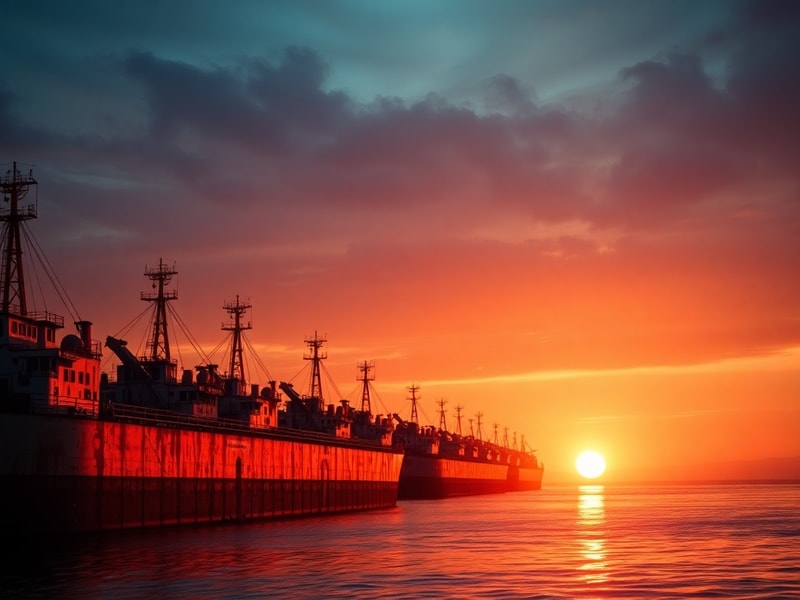
Shadow Fleet Exposed: How Hidden Ships Are Reshaping Global Trade
“`html
Shadow Fleet: The Hidden Maritime Network Reshaping Global Trade
The term “shadow fleet” has quietly entered the lexicon of global trade, though it remains largely invisible to the average consumer. These vessels operate outside traditional regulatory frameworks, often under opaque ownership structures and with documentation that obscures their true origins. While the concept may sound like something out of a maritime thriller, the reality is far more mundane—and far more consequential.
At its core, the shadow fleet consists of tankers and cargo ships that transport oil, chemicals, and other commodities without adhering to international sanctions or environmental standards. Their existence is a direct response to geopolitical tensions, economic pressures, and the ever-tightening grip of regulatory bodies like the International Maritime Organization (IMO). For industries and governments alike, understanding this phenomenon is no longer optional; it is essential.
The Origins of the Shadow Fleet
The shadow fleet is not a new creation. Its roots trace back to the 1990s, when sanctions against countries like Iraq and Yugoslavia forced traders to find alternative routes for delivering goods. However, the modern iteration of this fleet gained momentum in the 2010s, particularly in response to Western sanctions on Iran and Venezuela. These sanctions aimed to curb oil exports from these nations, but they also created a lucrative opportunity for operators willing to bypass the rules.
By 2020, the shadow fleet had expanded dramatically. The onset of the COVID-19 pandemic disrupted global supply chains, creating shortages and price volatility. At the same time, Russia’s invasion of Ukraine in 2022 further strained energy markets, pushing countries like China and India to seek discounted Russian oil. The shadow fleet became the invisible hand facilitating these transactions, often at the expense of transparency and accountability.
Key Characteristics of the Shadow Fleet
The shadow fleet operates with a set of defining features that set it apart from conventional shipping:
- Opaque Ownership: Vessels are frequently owned by shell companies registered in tax havens like Panama, Liberia, or the Marshall Islands. This makes it nearly impossible to trace the true beneficiaries of these operations.
- Flag-of-Convenience Registries: Ships often fly flags from countries with lax regulatory oversight, such as Comoros, Palau, or Tanzania. These flags allow operators to avoid stricter standards imposed by nations like the United States or members of the European Union.
- Age and Condition: Many shadow fleet vessels are older tankers that have been decommissioned or sold off by major shipping companies. Their age increases the risk of accidents, but their lower costs make them attractive for high-risk operations.
- Technological Evasion: These ships frequently disable or manipulate their Automatic Identification System (AIS) transponders to avoid detection. This tactic, known as “going dark,” makes it difficult for authorities to track their movements in real time.
Why the Shadow Fleet Matters
The shadow fleet’s impact extends far beyond the maritime industry. It influences global energy prices, geopolitical alliances, and even environmental policies. One of the most immediate consequences is the distortion of oil markets. By allowing sanctioned countries to export oil at discounted rates, the shadow fleet undermines the intended effects of sanctions, which are meant to isolate rogue regimes economically.
For example, when Western nations imposed sanctions on Russian oil following the invasion of Ukraine, the shadow fleet provided Moscow with a lifeline. By mid-2023, it was estimated that over 100 tankers were involved in transporting Russian crude oil to countries like India and China. This not only helped Russia sustain its war efforts but also kept global oil prices lower than they might have been otherwise.
Environmental concerns are another critical issue. The shadow fleet often includes older, less efficient vessels that are more prone to spills and emissions violations. In 2022, a report by the environmental group Environmental Watch found that shadow fleet tankers were responsible for a disproportionate share of oil spills in the Mediterranean and Southeast Asia. These incidents frequently go unreported or underreported due to the lack of transparency surrounding these ships.
The Human Cost of Shadow Operations
While the shadow fleet’s activities are often discussed in abstract terms of trade and geopolitics, the human toll is very real. Crew members on these vessels frequently face hazardous working conditions. Many are recruited from low-income countries, where job opportunities are scarce, and are paid wages far below industry standards. Reports from labor rights organizations highlight cases of crew members being abandoned without pay, stranded in foreign ports, or forced to work in unsafe environments.
The lack of regulatory oversight also means that safety standards are often ignored. In 2021, the International Transport Workers’ Federation documented several incidents involving shadow fleet vessels, including fires, explosions, and structural failures. These incidents not only endanger the lives of crew members but also pose significant environmental risks.
Moreover, the shadow fleet exacerbates corruption and organized crime in the maritime sector. The use of shell companies and fake documentation creates fertile ground for money laundering and smuggling. In some cases, these vessels have been linked to the trafficking of not just oil, but also arms, drugs, and even wildlife.
The Future of the Shadow Fleet
As global tensions continue to rise and sanctions regimes grow more complex, the shadow fleet is likely to expand further. However, its future is not without challenges. Regulatory bodies are beginning to take notice. The IMO has proposed stricter enforcement of AIS tracking and mandatory inspections for high-risk vessels. Meanwhile, countries like the United States and the United Kingdom have imposed sanctions on specific shadow fleet operators and their associated companies.
Technological advancements may also play a role in curbing the shadow fleet’s activities. Satellite monitoring, blockchain-based documentation, and AI-driven analytics are being developed to improve transparency in maritime trade. For instance, companies like Windward and Spire Global use satellite data to track vessel movements and identify suspicious behavior, such as sudden course changes or AIS blackouts.
Yet, the shadow fleet’s resilience should not be underestimated. Operators are adept at adapting to new regulations, often relocating their operations to jurisdictions with even looser oversight. The cat-and-mouse game between regulators and shadow fleet operators is far from over.
What Can Be Done?
Addressing the shadow fleet requires a multi-faceted approach. Governments must strengthen international cooperation to share intelligence and coordinate sanctions enforcement. Financial institutions, too, have a role to play by scrutinizing transactions linked to shadow fleet operators and refusing to facilitate payments for high-risk vessels.
For consumers and businesses, the rise of the shadow fleet underscores the importance of supply chain transparency. Companies that rely on oil or other commodities must ensure that their suppliers adhere to ethical and legal standards. This may involve conducting due diligence on shipping partners or opting for certified sustainable sources.
Ultimately, the shadow fleet is a symptom of a larger problem: the fragmentation of global trade governance. As long as there are loopholes to exploit and profits to be made, operators will find ways to circumvent the rules. The challenge for policymakers, industry leaders, and civil society is to close these loopholes before the shadow fleet’s influence becomes even more entrenched.
Conclusion
The shadow fleet is a stark reminder of how global trade operates in the shadows. It thrives on secrecy, exploits regulatory gaps, and undermines the very systems designed to keep commerce fair and safe. While its existence may not be headline news, its impact is felt across industries, economies, and environments worldwide.
As the world grapples with energy crises, geopolitical conflicts, and environmental degradation, the shadow fleet represents a critical flashpoint. Ignoring its presence will only allow it to grow stronger. The time to act is now—before the invisible hand of the shadow fleet becomes an unshakable force in global trade.