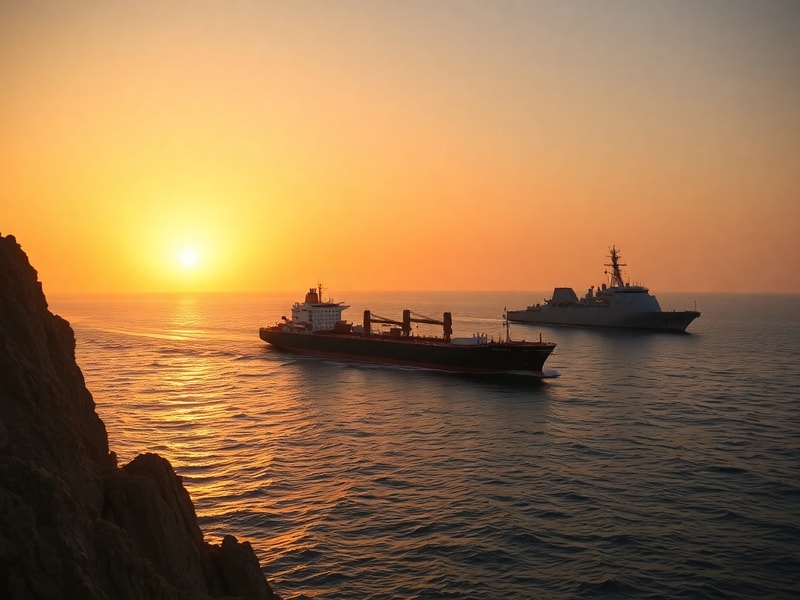
Why the Strait of Hormuz Remains the World’s Most Critical Shipping Route
“`html
The Strait of Hormuz: A Global Chokepoint Shaping Geopolitics and Trade
The Strait of Hormuz remains one of the most strategically significant maritime passages in the world. Connecting the Persian Gulf to the Gulf of Oman and ultimately the Arabian Sea, this narrow waterway sees an estimated 20-30% of the world’s oil supply pass through its waters each day. Its importance transcends economics, influencing military strategy, diplomatic relations, and regional stability across the Middle East and beyond.
The strait’s geography is as narrow as it is crucial—only about 21 miles wide at its narrowest point. Within that span, two shipping lanes, each just two miles wide, accommodate the heavy traffic of commercial tankers and naval vessels. This bottleneck creates a natural vulnerability, making the strait a flashpoint for geopolitical tension and a symbol of the intersection between energy security and global power.
The Historical and Strategic Importance of the Strait
Control over the Strait of Hormuz has been a priority for empires and nations for centuries. In ancient times, the Persian Empire and later Arab dynasties recognized its value as a trade route linking the Indian Ocean to the Mediterranean. By the 20th century, the discovery of vast oil reserves in the Arabian Peninsula transformed the strait into a lifeline for the global economy. The 1973 oil crisis, triggered in part by regional instability, underscored how a disruption in Hormuz could send shockwaves through energy markets.
Today, the strait remains a focal point for naval operations. The United States, Iran, and several Gulf Cooperation Council (GCC) states maintain a strong military presence in the region. The U.S. Fifth Fleet, headquartered in Bahrain, patrols the waters to ensure freedom of navigation, a principle enshrined in international law but frequently contested by Iran. Iranian authorities have periodically threatened to close the strait in response to sanctions or perceived threats, most notably during the Iran-Iraq War and in the aftermath of the 2019 attacks on oil tankers near Fujairah.
Economic Impact: Oil, Trade, and Global Markets
The Strait of Hormuz is not just a geopolitical flashpoint—it is an economic artery. Approximately 21 million barrels of oil pass through the strait daily, according to the U.S. Energy Information Administration. That volume represents roughly one-third of the world’s seaborne traded oil. Any disruption, whether due to conflict, accident, or deliberate action, could trigger price spikes and supply shortages, affecting economies from Tokyo to New York.
The strait’s role in liquefied natural gas (LNG) trade is also substantial. Qatar, the world’s largest LNG exporter, relies heavily on Hormuz to ship its gas to Asia and Europe. While Qatar has invested in alternative export routes, such as the Dolphin pipeline to the UAE, the strait remains essential for the bulk of its LNG shipments. This dual dependence on oil and gas underscores the strait’s irreplaceable role in the global energy matrix.
Disruptions in the strait can have cascading effects. In 2019, attacks on tankers near the strait led to a temporary spike in oil prices. Insurance premiums for vessels transiting the area surged, and shipping companies rerouted some cargoes around the Cape of Good Hope, adding weeks to voyages and increasing costs. The incident highlighted the fragility of global supply chains and the lack of viable alternatives to the strait.
Navigating Tensions: Diplomacy, Military Posture, and Risk Mitigation
Efforts to ensure safe passage through the Strait of Hormuz have involved a complex web of diplomacy and deterrence. The International Maritime Organization (IMO) has repeatedly called for adherence to international maritime law, including the United Nations Convention on the Law of the Sea (UNCLOS). However, enforcement remains inconsistent, particularly when regional powers interpret legal principles differently.
Several initiatives have been proposed or implemented to reduce risks in the strait. These include:
- Operation Sentinel: Launched in 2019 by the U.S. and allies, this maritime security initiative aims to protect commercial shipping through the strait and surrounding waters.
- Gulf Maritime Security Group: A regional effort involving GCC states to coordinate patrols and intelligence-sharing.
- Alternative Routes: Countries such as Saudi Arabia and the UAE have invested in pipelines and rail links to bypass the strait, though these alternatives are limited in capacity.
Yet, tensions persist. Iran’s Revolutionary Guard has conducted drills simulating the closure of the strait, while Western nations conduct regular naval exercises to demonstrate their commitment to maintaining open shipping lanes. The balance between deterrence and escalation is precarious, with each side carefully calibrating its actions to avoid direct conflict while asserting its interests.
For smaller Gulf states like Oman and the UAE, the strait is both a source of prosperity and vulnerability. Oman, which shares the strait’s southern entrance, has positioned itself as a neutral mediator in regional disputes. The UAE, meanwhile, has diversified its economy to reduce reliance on oil transit through Hormuz, investing heavily in ports, logistics, and technology.
Cultural and Human Dimensions: Lives Intertwined with the Strait
Beyond its strategic and economic significance, the Strait of Hormuz holds deep cultural meaning for the communities along its shores. The cities of Bandar Abbas in Iran and Khasab in Oman are gateways to ancient trade networks that once connected Persia to India and East Africa. The strait’s waters are dotted with islands like Hormuz and Qeshm, each with its own history of resilience and adaptation.
Local fishermen and pearl divers have long depended on the strait’s rich marine ecosystem. Though industrialization and environmental degradation have reduced these traditional livelihoods, the strait remains a vital source of food and cultural identity for coastal communities. The annual Musandam Festival in Oman celebrates this heritage, blending music, poetry, and seafaring traditions.
Yet, the strait is also a site of human tragedy. Migrants and refugees from South Asia and East Africa often attempt perilous crossings in overcrowded vessels, risking their lives in the hope of reaching the Gulf states. Smuggling networks exploit the strait’s crowded waters, moving everything from consumer goods to weapons. These realities add a human dimension to the strait’s geopolitical narrative, highlighting the intersection of security, migration, and economic survival.
Looking Ahead: Can the Strait Remain Open?
The future of the Strait of Hormuz hinges on a delicate interplay of diplomacy, energy transition, and regional power dynamics. As the world shifts toward renewable energy, the strait’s dominance in oil trade may gradually decline. Yet, for the foreseeable future, hydrocarbons will remain central to global energy supply, ensuring that Hormuz retains its strategic importance.
Diplomatic breakthroughs remain elusive. The 2022 Iran nuclear deal negotiations included discussions on regional security, but broader tensions overshadowed progress. Meanwhile, non-state actors and proxy conflicts continue to pose risks. The 2021 drone attack on an Israeli-linked tanker off the coast of Oman, attributed to Iran, served as a reminder that asymmetric threats are as dangerous as conventional ones.
For the international community, the challenge is clear: balancing the need for energy security with the imperative of preventing conflict. The Strait of Hormuz is not merely a chokepoint—it is a mirror reflecting the world’s reliance on fossil fuels, the fragility of global supply chains, and the enduring volatility of the Middle East. Until these broader issues are addressed, the strait will remain both a symbol of interconnectedness and a powder keg of potential crisis.
In an era of shifting alliances and evolving energy landscapes, one thing is certain: the Strait of Hormuz will continue to shape the world’s economic and geopolitical future. The question is whether humanity can navigate its turbulent waters without capsizing.