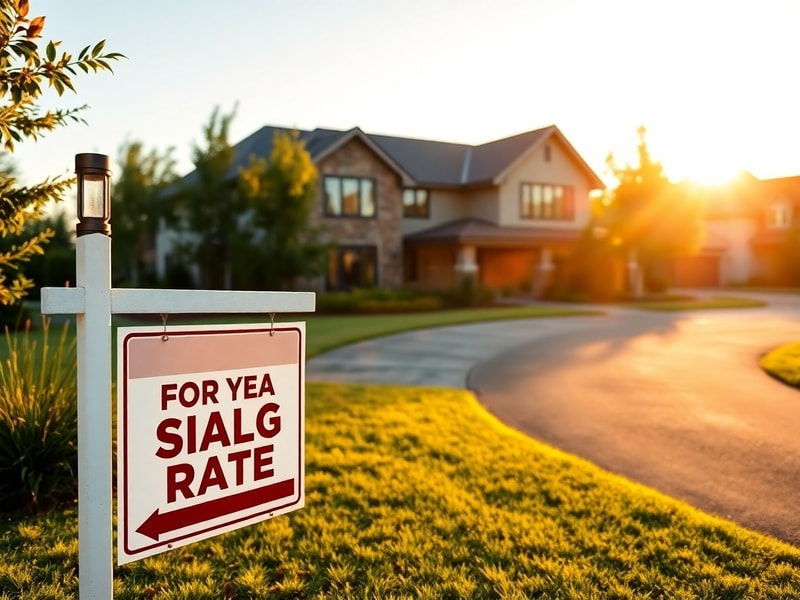
The 30-year fixed mortgage rate remains one of the most popular choices for homebuyers in the United States. It offers stability and predictability, allowing borrowers to lock in an interest rate for the entire duration of their loan. This long-term commitment provides financial security but also comes with trade-offs that require careful consideration.
The Mechanics of a 30-Year Fixed Mortgage
A 30-year fixed mortgage is a home loan where the interest rate remains unchanged for the full 30 years of the loan term. Unlike adjustable-rate mortgages (ARMs), which can fluctuate with market conditions, this type of loan provides consistency in monthly payments. Borrowers pay the same amount every month, making budgeting easier over the long term.
The trade-off for this stability is typically a higher interest rate compared to shorter-term loans like 15-year mortgages. While monthly payments are lower due to the extended repayment period, borrowers end up paying significantly more in interest over the life of the loan. For example, on a $300,000 loan at a 4% interest rate, the total interest paid over 30 years would exceed $215,000.
Key Features of 30-Year Fixed Mortgages
- Fixed Interest Rate: The rate remains constant for the entire 30-year term, regardless of market fluctuations.
- Lower Monthly Payments: Spreading payments over 30 years reduces the monthly financial burden compared to shorter terms.
- Higher Total Interest Paid: The extended repayment period results in more interest accumulating over time.
- Flexible Use of Funds: Lower monthly payments free up cash for other investments or expenses.
- Predictable Budgeting: Homeowners can plan their finances with confidence, knowing their housing costs won’t change.
How Mortgage Rates Are Determined
Mortgage rates are influenced by a variety of economic factors, each playing a role in shaping the cost of borrowing. The Federal Reserve’s monetary policy is one of the most significant drivers. When the Fed raises or lowers short-term interest rates, mortgage rates often follow suit, though not always in lockstep. Long-term rates, like those for 30-year fixed mortgages, are more closely tied to the 10-year Treasury yield, which reflects investor expectations for inflation and economic growth.
Inflation also plays a critical role. When inflation rises, lenders typically demand higher interest rates to compensate for the eroding value of money over time. Conversely, in periods of low inflation or economic uncertainty, rates may dip as investors seek safer assets like government bonds, driving yields—and mortgage rates—downward.
Beyond macroeconomic forces, individual borrower profiles matter. Credit scores, loan-to-value ratios (LTV), and debt-to-income ratios (DTI) all influence the rate a lender offers. Borrowers with strong credit histories and substantial equity in their homes generally secure the most favorable terms.
Current Trends and Historical Context
As of mid-2024, 30-year fixed mortgage rates hover around 6.5% to 7%, a notable decline from the peak of nearly 8% in late 2023 but still higher than the historic lows of under 3% seen during the pandemic. This shift reflects the Federal Reserve’s aggressive rate hikes in response to persistent inflation, which peaked at over 9% in mid-2022.
Historically, 30-year fixed rates have fluctuated widely. In the early 1980s, they soared above 18% amid efforts to combat double-digit inflation. By the early 2000s, rates had fallen to around 5%-6%, and the post-2008 financial crisis era saw them drop to historic lows, fueling a refinancing boom. The pandemic-era rates of 2%-3% were an anomaly, driven by emergency monetary policies and unprecedented market interventions.
Long-Term Implications for Homebuyers and the Housing Market
- Affordability Challenges: Higher rates reduce purchasing power, making it harder for first-time buyers to enter the market. A $350,000 home at 3% interest costs about $1,475 per month, whereas at 7%, the same home would require roughly $2,327 per month.
- Refinancing Slowdown: With rates elevated, fewer homeowners can benefit from refinancing to lower their payments, reducing liquidity in the housing market.
- Investor Behavior: Higher borrowing costs may discourage real estate investment, potentially cooling price growth in overheated markets.
- Economic Ripple Effects: The housing market’s sensitivity to interest rates means broader economic impacts, from construction employment to consumer spending on home-related goods.
- Policy Responses: Government agencies like Fannie Mae and Freddie Mac may adjust loan limits or guarantee terms to mitigate affordability crises during high-rate periods.
Is a 30-Year Fixed Mortgage Right for You?
Choosing the right mortgage depends on individual financial goals, risk tolerance, and long-term plans. A 30-year fixed mortgage is ideal for those who prioritize stability and plan to stay in their home for many years. It’s also a solid choice for buyers who need lower monthly payments to manage other financial priorities, such as saving for retirement or a child’s education.
However, if you can comfortably afford higher payments, a shorter-term loan like a 15-year mortgage may save thousands in interest over time. Alternatively, some borrowers opt for hybrid approaches, such as starting with a 30-year loan and making extra payments to reduce principal faster. This strategy provides flexibility while building equity more quickly.
For those considering adjustable-rate mortgages, the initial lower rates of a 5/1 or 7/1 ARM might seem appealing. But with rates currently high, the risk of future increases could outweigh the benefits for risk-averse borrowers.
Key Considerations Before Committing
- Your Time Horizon: If you plan to move within 5-10 years, a shorter-term loan or ARM might be more cost-effective.
- Income Stability: Ensure your budget can handle potential rate fluctuations if you opt for an adjustable loan or future refinancing.
- Opportunity Cost: Compare the long-term cost of a 30-year loan to the potential returns of investing extra funds elsewhere, like the stock market.
- Closing Costs and Fees: These can add thousands to the loan’s total cost. Shop around and negotiate to minimize them.
- Prepayment Penalties: Some lenders charge fees for early repayment. Always review the fine print.
For borrowers who want to explore alternatives or compare current offerings, resources like Dave’s Locker Finance and Dave’s Locker Analysis provide up-to-date insights and tools to navigate the mortgage landscape.
Looking Ahead: What’s Next for Mortgage Rates?
The trajectory of 30-year fixed mortgage rates will depend largely on Federal Reserve policy and inflation trends. Economists widely expect the Fed to begin cutting rates in late 2024 or early 2025, assuming inflation continues to moderate toward the central bank’s 2% target. Such a move could bring mortgage rates down to the 5.5%-6.5% range by the end of next year.
However, unexpected economic shocks—such as a recession, geopolitical conflicts, or supply chain disruptions—could alter this outlook. The Fed’s dual mandate of controlling inflation while fostering employment complicates the decision-making process, as the two goals can sometimes conflict.
For prospective homebuyers, timing the market is notoriously difficult. Rather than waiting for rates to drop, many experts advise focusing on personal financial readiness. Improving credit scores, saving for a larger down payment, and reducing debt can significantly improve loan terms regardless of broader market conditions.
Ultimately, the 30-year fixed mortgage remains a cornerstone of American homeownership, offering a blend of stability and flexibility. While rates are higher than in recent years, they are still historically low compared to past decades. For most buyers, the decision should hinge on long-term affordability and personal financial strategy rather than short-term market fluctuations.
As always, consulting with a trusted financial advisor or mortgage professional can provide tailored guidance suited to your unique circumstances.