Computers have become so integral to daily life that their presence often goes unnoticed. These machines, once the size of entire rooms, now fit in the palm of a hand, yet their influence spans industries, cultures, and continents. Their development reflects not just technological progress but also shifts in human behavior, economic structures, and global communication.
From the earliest mechanical calculators to today’s artificial intelligence systems, computers have evolved through waves of innovation driven by necessity, curiosity, and competition. This transformation has not occurred in isolation. It has been shaped by global events, cultural exchanges, and the relentless pursuit of efficiency across societies.
The Early Foundations: Calculators and the Birth of Logic
The concept of a computer predates the electronic age. In the 17th century, mathematician and philosopher Blaise Pascal built one of the first mechanical calculators, known as the Pascaline, to help his father with tax computations. This device, though limited to addition and subtraction, laid the groundwork for automated calculation.
Over a century later, mathematician Charles Babbage envisioned a more ambitious machine: the Analytical Engine. Designed in the 1830s, this mechanical computer could perform complex calculations using punch cards—an idea borrowed from the textile industry. Though never fully built during his lifetime, Babbage’s vision introduced key principles that would define modern computing: programmability and memory.
These early innovations were not merely technical feats. They reflected the intellectual climate of the Enlightenment, where reason and logic were celebrated as tools for human progress. The spread of such ideas across Europe and North America helped establish a culture of scientific inquiry that would later accelerate technological development.
Electrification and the Rise of Mainframes (1940s–1970s)
The mid-20th century marked a turning point. World War II created an urgent demand for rapid calculations—from artillery trajectory tables to codebreaking. This led to the development of some of the first electronic computers, such as ENIAC (Electronic Numerical Integrator and Computer), unveiled in 1945. ENIAC filled a room, weighed 30 tons, and used 18,000 vacuum tubes that frequently burned out.
Despite its flaws, ENIAC demonstrated the potential of electronic computation. By the 1950s, computers like the UNIVAC became commercially available, used by businesses and governments to process data, forecast elections, and manage payrolls. These “mainframe” computers were expensive and required specialized environments, limiting their use to large institutions.
Yet their impact was profound. In Japan, companies like Fujitsu began adapting Western technology to local needs, blending global engineering with cultural work practices. Meanwhile, in the Soviet Union, engineers worked in parallel, developing systems like the MESM, which contributed to early space program calculations. This era highlighted how computing was becoming a global endeavor, shaped by both collaboration and geopolitical tension.
The Personal Revolution: From Desktops to Laptops
The late 1970s and early 1980s brought computing out of corporate basements and into homes. The launch of the Apple II in 1977 and the IBM PC in 1981 democratized access. For the first time, individuals could own a computer, learn programming, and create digital content. This shift was fueled by a cultural movement that celebrated individualism, self-expression, and DIY innovation.
In India, for example, the 1980s saw the rise of computer clubs and magazines that translated technical knowledge into local languages. Young enthusiasts built their own systems from kits, inspired by the idea that computing could empower communities. Similarly, in Latin America, fledgling tech scenes emerged in countries like Brazil and Argentina, often driven by grassroots initiatives during periods of political and economic instability.
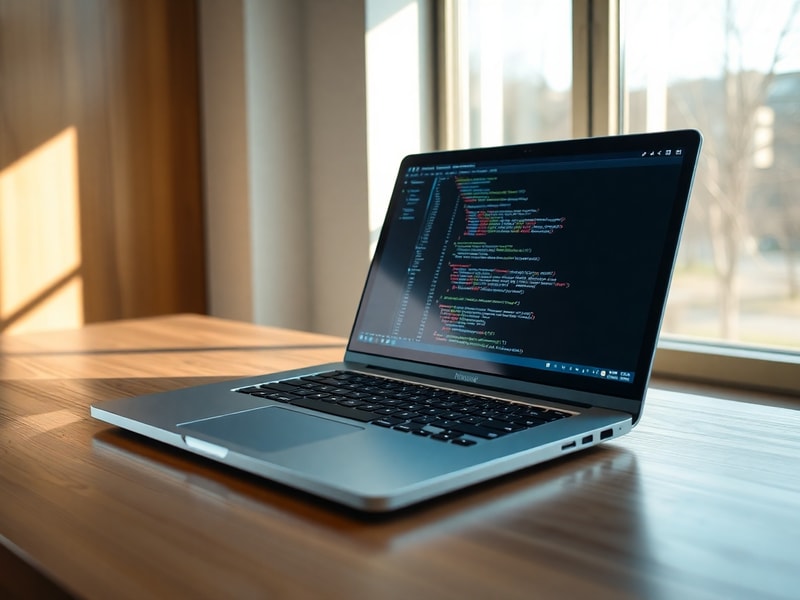
By the 1990s, laptops began replacing desktops, enabling mobility and remote work. This change mirrored broader social trends—globalization, the rise of the gig economy, and the increasing need to stay connected across time zones. The shift also reflected environmental concerns, as smaller devices consumed less energy.
As personal computers became ubiquitous, they also became symbols of status and identity. In South Korea, cafes known as “PC bangs” became social hubs where gamers and students gathered to play and study. In Europe, open-source movements like Linux fostered communities that valued transparency and collaboration over proprietary control.
The Digital Age: Mobility, Clouds, and AI
Today’s computers are defined by connectivity and intelligence. Smartphones, which combine phone, camera, and computer functions, have become the most widely used computing devices on Earth. In 2023, over 6.8 billion people owned a smartphone—more than the number of people with access to clean drinking water. This ubiquity has transformed how societies learn, socialize, and conduct business.
Cloud computing has further decentralized computing power. Instead of relying on local hardware, users access services like Google Drive or AWS from anywhere with an internet connection. This model has enabled startups in Nairobi and Bangalore to compete on a global scale without massive infrastructure investments.
Artificial intelligence represents the next frontier. Systems like large language models and computer vision are now embedded in everything from medical diagnostics to agricultural planning. In China, AI-powered surveillance systems are used for public safety, while in Europe, strict regulations like the GDPR shape how AI can be deployed ethically.
Yet this progress is not without challenges. Digital divides persist across regions, genders, and socioeconomic groups. In rural areas of Sub-Saharan Africa, many communities still lack reliable electricity, let alone internet access. Meanwhile, the environmental cost of data centers—responsible for about 1% of global electricity use—has sparked calls for greener computing solutions.
A Global Perspective: Computing Across Cultures
Computing is not a monolithic field. Different cultures have approached it with unique priorities and values. In Japan, the concept of “wa” (harmony) influences the design of user interfaces, favoring calm, minimalist aesthetics. In contrast, Western interfaces often emphasize speed and efficiency, reflecting a culture that values individual achievement.
Language also plays a crucial role. While English dominates programming languages (Python, JavaScript), efforts are underway to make coding accessible in Swahili, Hindi, and Arabic. These initiatives aim to preserve linguistic diversity while ensuring that non-English speakers can participate in the digital economy.
Education systems reflect these cultural differences. In Finland, coding is taught in primary schools as part of basic literacy. In the United States, initiatives like computer science education programs aim to close equity gaps. Meanwhile, in Rwanda, the government has made ICT (Information and Communication Technology) a national priority, building innovation hubs and training thousands of developers.
These variations highlight a fundamental truth: computing is not just a tool, but a cultural artifact. Its design, use, and impact are deeply influenced by the societies that adopt it.
The Future: What Lies Ahead?
The next decade of computing promises even more radical change. Quantum computing, still in its infancy, could revolutionize fields like drug discovery and climate modeling. Wearable computers, embedded in clothing or even human bodies, may redefine what it means to interact with technology. Meanwhile, ethical debates around data privacy, algorithmic bias, and digital rights will intensify as computing becomes more pervasive.
One thing is certain: computers will continue to evolve in ways we can barely imagine. Their story is not just one of silicon and code, but of human ambition, adaptation, and connection. From the first punch cards to the latest neural networks, each step forward reflects our collective desire to understand, create, and communicate.
As we move forward, the challenge will be ensuring that this technological evolution benefits everyone—not just a privileged few. That requires not only better hardware and software, but also policies, education, and cultural attitudes that prioritize equity and sustainability.
In the end, the computer is more than a machine. It is a mirror of humanity itself—flawed, brilliant, and constantly evolving.