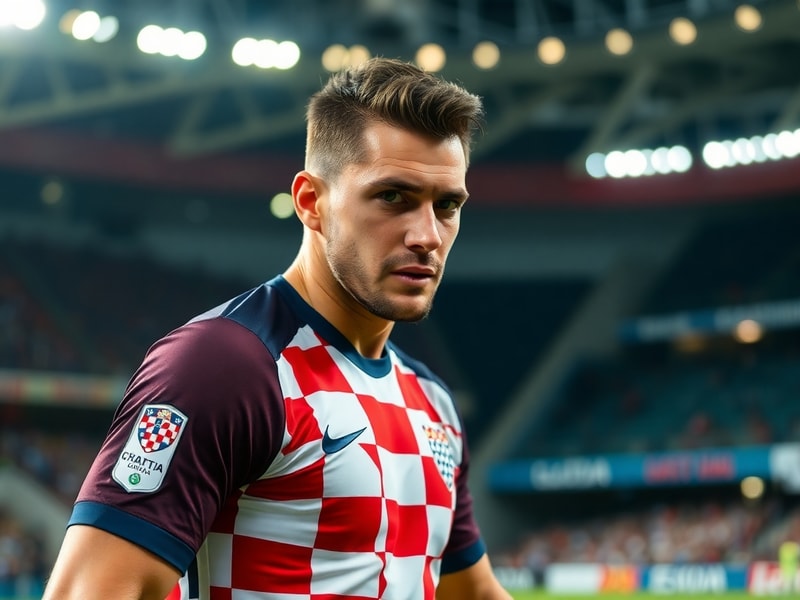
At just 22 years old, Joško Gvardiol has already established himself as one of the most promising defenders in world football. His rise from Dinamo Zagreb’s youth academy to the summit of European football reads like a carefully crafted blueprint for defensive excellence. Gvardiol’s blend of physicality, tactical intelligence, and composure under pressure has drawn comparisons to elite defenders like Virgil van Dijk and Matthijs de Ligt. Yet his journey remains uniquely his own—a testament to relentless work ethic and adaptability.
Born on January 23, 2002, in Zagreb, Croatia, Gvardiol showed early promise as a versatile left-footed defender. His ability to play in multiple defensive roles—from left-back to center-back—has made him invaluable to every team he’s represented. This adaptability, combined with his natural leadership and reading of the game, positions him as a cornerstone for both club and country in the years ahead.
The Path to Prominence: Club and International Career
Gvardiol’s professional debut came with Dinamo Zagreb in October 2019, at the age of 17. His performances in the Croatian league caught the attention of scouts across Europe. By the 2020–21 season, he had become a regular starter, helping Dinamo win the league title and qualify for the UEFA Champions League group stage. His performances in Europe, particularly against elite attacking sides, showcased his maturity and defensive acumen.
In August 2021, Gvardiol completed a high-profile transfer to RB Leipzig in the Bundesliga, becoming the most expensive defender in the club’s history at the time. The move was seen as a calculated step toward elite European football, and Gvardiol repaid that trust immediately. He quickly became a key figure in Leipzig’s backline, contributing to their 2021–22 DFB-Pokal triumph and establishing himself as one of the league’s top young defenders.
His international career has mirrored his club success. Gvardiol made his senior debut for Croatia in June 2021, just days before the start of UEFA Euro 2020. Though Croatia were eliminated in the round of 16, Gvardiol’s performances hinted at a bright future. He was a regular starter during the 2022 FIFA World Cup qualifiers and played a crucial role in Croatia’s third-place finish at the 2022 World Cup in Qatar, where he started all seven matches.
Key Career Highlights
- 2019: Professional debut with Dinamo Zagreb at age 17
- 2020–21: Helped Dinamo win the Croatian First League and qualify for UCL group stage
- 2021: Transferred to RB Leipzig for a reported €19 million, becoming the club’s most expensive defender
- 2021–22: Won the DFB-Pokal with Leipzig
- 2021: Made senior debut for Croatia at UEFA Euro 2020
- 2022: Played every minute of Croatia’s 2022 World Cup campaign, finishing third
- 2023: Named to the UEFA Champions League Squad of the Season
Playing Style: What Makes Gvardiol Different
Gvardiol’s playing style is a blend of modern defensive demands and classic positional awareness. Standing at 6’1”, he combines height with agility, allowing him to dominate aerial duels while staying quick in one-on-one situations. His left foot is a major asset, enabling him to progress the ball effectively from deep and deliver accurate crosses or long passes.
What truly sets Gvardiol apart, however, is his football intelligence. He reads the game at an advanced level, often intercepting passes before they develop and positioning himself to cut off passing lanes. This proactive approach minimizes the need for last-ditch tackles and reduces defensive errors—critical traits in high-pressing systems like Leipzig’s.
His comfort on the ball under pressure makes him a natural fit for possession-based systems. He’s not afraid to carry the ball forward or play out from the back, a necessity in modern football where defenders are expected to function as playmakers. Gvardiol’s ability to switch play with a single touch or spray long passes to wide areas adds a strategic dimension to his game.
Defensively, he’s not overly physical but relies on timing and anticipation. His composure in tight spaces and under pressure is remarkable for his age. These attributes make him not just a defender, but a complete footballer—one who can anchor a backline while contributing to the attack.
Broader Implications: The Future of Defensive Development
Gvardiol’s rise comes at a time when the role of the defender is undergoing a quiet revolution. Traditional center-backs who relied on brute strength and aggression are being replaced by players who combine technical skill, tactical awareness, and physical resilience. This shift reflects the broader evolution of football tactics, where defensive solidity is no longer just about stopping attacks but initiating them.
Clubs are increasingly prioritizing defenders who can play in multiple roles, especially in systems that demand positional flexibility. Gvardiol embodies this trend. His ability to play at left-back, in a back three, or as a ball-playing center-back gives coaches tactical options that were rare a decade ago. This versatility is becoming a prerequisite for top-level defenders, and Gvardiol is setting the standard.
From a Croatian perspective, Gvardiol represents the next generation of talent emerging from a golden era of football. Croatia’s 2018 World Cup runners-up and 2022 third-place finish were powered by midfield maestros like Luka Modrić and Ivan Perišić. Now, a new wave—including Gvardiol, Mateo Kovačić’s successor Marcelo Brozović, and emerging stars like Lovro Majer—is stepping into leadership roles. This transition ensures Croatia’s continued competitiveness on the international stage.
There are also broader implications for player development. Gvardiol’s path from Dinamo Zagreb’s academy to Leipzig and now potentially Europe’s elite clubs demonstrates the viability of smaller leagues as talent incubators. Dinamo Zagreb, in particular, has become known for producing world-class defenders like Dejan Lovren and Kovačić. Gvardiol’s success reinforces the value of technical development and competitive experience at a young age.
What’s Next for Joško Gvardiol?
As of 2024, Gvardiol is widely regarded as one of the most sought-after defenders in world football. Speculation about a move to a top Premier League club or Real Madrid has intensified, with many pundits predicting he will command a fee in excess of €80 million. His contract with Leipzig runs until 2026, but elite clubs rarely wait for players to enter their prime.
For Croatia, Gvardiol is central to their 2024 European Championship and 2026 World Cup ambitions. With a core group still in their late 20s and early 30s, Gvardiol could become the leader of a new golden generation. His maturity, leadership, and technical ability make him a natural successor to Modrić in the long term.
Off the field, Gvardiol has cultivated a professional image. Known for his humility and dedication to training, he avoids the off-field distractions that have affected some young stars. This discipline, combined with his talent, suggests a career that could span 15 years at the highest level.
Regardless of where he plays next, Gvardiol’s influence is already being felt. He represents a new archetype: the modern defender who is as comfortable with the ball at his feet as he is clearing a dangerous cross. In an era where football increasingly values technical execution, his rise is not just a personal triumph but a sign of the evolving demands of the game.
As clubs and coaches search for the perfect blend of defense and attack, Joško Gvardiol stands at the forefront of that revolution. His journey is still unfolding, but one thing is clear: he is not just a promising talent. He is a blueprint for the future of football.
For more insight into rising football stars and their impact on the game, visit our Sports section. To explore tactical trends shaping modern football, check out our Analysis category.