Call of Duty: Black Ops Cold War PS5 Review: Next-Gen Upgrade Analysis
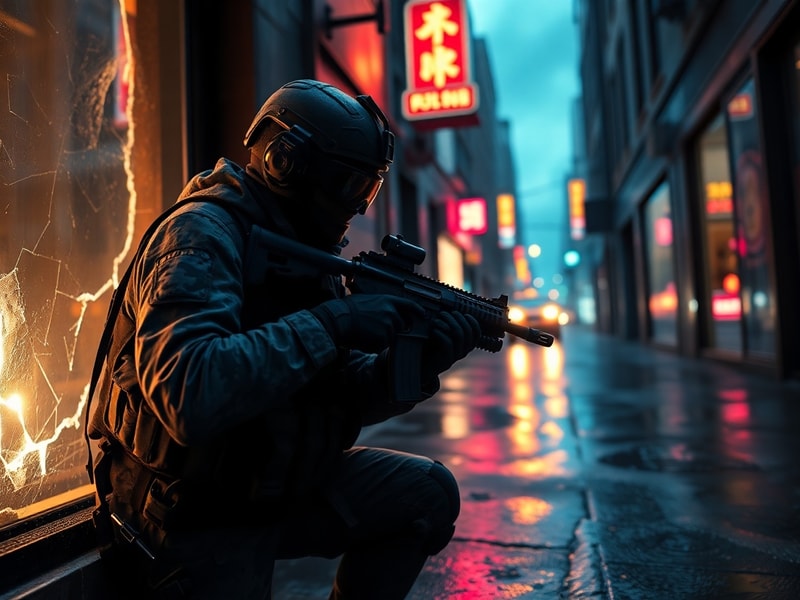
Sony’s DualSense controller hums in your palms as you crouch behind a crumbling Berlin wall, its adaptive triggers tightening like a sniper’s grip. This isn’t just another first-person shooter launch—Call of Duty: Black Ops – Cold War on PlayStation 5 represents a carefully calibrated evolution of the franchise, balancing raw performance with subtle refinements that long-time fans will notice immediately.
Performance That Speaks for Itself
The PS5 version of Cold War runs at a native 4K resolution with a locked 60 frames per second, a leap that feels substantial when compared to the PS4 Pro’s checkerboard-rendered output. Loading times are cut by nearly 60% thanks to the SSD, a change that transforms missions from fragmented segments into smoother narratives. The DualSense’s haptic feedback enhances immersion—gunfire now carries weight, footsteps vary on concrete versus wood, and the tension in a firefight is palpable through subtle vibrations in your fingertips.
Visual fidelity has been upgraded with higher-resolution textures and improved dynamic lighting. Weapon models now cast more detailed shadows, and environmental details like graffiti on walls or rust on metal surfaces are rendered with greater clarity. Even minor elements like the condensation on a soda can in safe houses contribute to a more tactile world.
Where the Upgrade Feels Most Impactful
The game’s campaign, previously criticized for its linear structure, benefits from the increased draw distance and crisp textures, making the Cold War-era locales feel more authentic. The multiplayer, meanwhile, sees the most noticeable improvements:
- Reduced draw distance issues that plagued earlier versions, making distant enemies easier to spot.
- More stable frame rates during chaotic firefights, especially in modes like Domination and Search & Destroy.
- Enhanced audio spatialization, with footsteps and gunfire now directional in a way that gives tactical advantages.
The Broader Gaming Landscape: Why This Matters
Cold War’s PS5 release arrives at a pivotal moment for the industry. Sony’s focus on next-gen optimization has intensified, with third-party developers now expected to deliver meaningful upgrades—not just visual polish. This shift reflects a maturing market where consumers increasingly demand more than just incremental changes.
Yet, the game also highlights the limitations of remastering older titles. While the technical leap is undeniable, the core gameplay loop—tight gunplay, familiar maps, and a familiar progression system—remains largely unchanged. This raises an important question: As developers prioritize technical achievements, are they neglecting innovation?
The rise of live-service shooters like Warzone and Fortnite has redefined player expectations. Cold War’s multiplayer, while polished, feels like a refinement of a formula established over a decade ago. The absence of a true next-gen mode—something rival titles like Destiny 2 have embraced—feels like a missed opportunity.
Original Analysis: The DualSense’s Role in Modern Warfare
The DualSense controller isn’t just a peripheral—it’s becoming a critical storytelling tool. In Cold War, the controller’s advanced features aren’t gimmicky; they serve a functional purpose. The adaptive triggers, for example, tighten when pulling back a bow in the “Fireteam” mode, creating a physical feedback loop that deepens engagement.
This evolution aligns with a broader trend in gaming: the blurring of boundaries between player and game. Controllers like the DualSense and Xbox’s Adaptive Controller are no longer just input devices—they’re extensions of the player’s intent. For a genre as visceral as military shooters, this integration is particularly impactful.
However, the PS5’s strengths also expose the game’s weaknesses. The campaign’s scripted sequences, while visually impressive, still rely on decades-old pacing. The multiplayer, despite its technical upgrades, struggles to compete with the sheer volume of content offered by free-to-play alternatives. This disparity underscores a growing divide in the gaming ecosystem: accessibility versus depth.
Final Verdict: A Technical Success with Familiar Flaws
Call of Duty: Black Ops – Cold War on PS5 is a triumph of technical execution. The performance upgrades are undeniable, and the DualSense integration adds a layer of immersion that previous-gen versions couldn’t match. For players upgrading from PS4 or playing on a high-end PC, the experience is undeniably worth the investment.
Yet, the game’s legacy remains tied to its franchise roots. While the PS5 version sets a new standard for technical fidelity in Call of Duty, it doesn’t redefine what the series—or the genre—can achieve. The question now is whether future iterations will leverage this technical foundation to innovate, or if they’ll remain content with refining what already works.
For now, Cold War stands as a testament to what’s possible when developers fully commit to next-gen hardware. Whether that commitment translates into broader creative risks remains to be seen.
If you’re looking to dive deeper into the technical side of PS5 gaming or explore how Call of Duty fits into the broader landscape, check out our Technology and Gaming sections for more analysis and insights.
One final thought: The DualSense’s impact on gaming is only beginning. As more developers experiment with its capabilities, we may see a new era of tactile storytelling—one where the controller isn’t just a tool, but a character in its own right.