The Obama Presidential Center, a long-awaited project nearly a decade in the making, officially opened its doors to the public on July 12, 2024. The sprawling 19.3-acre campus in Chicago’s Jackson Park is more than just a museum—it’s a cultural and educational hub designed to inspire future generations. With its striking modernist architecture and commitment to civic engagement, the center represents a significant milestone not only for the Obama family’s legacy but also for the South Side community that has supported its development.
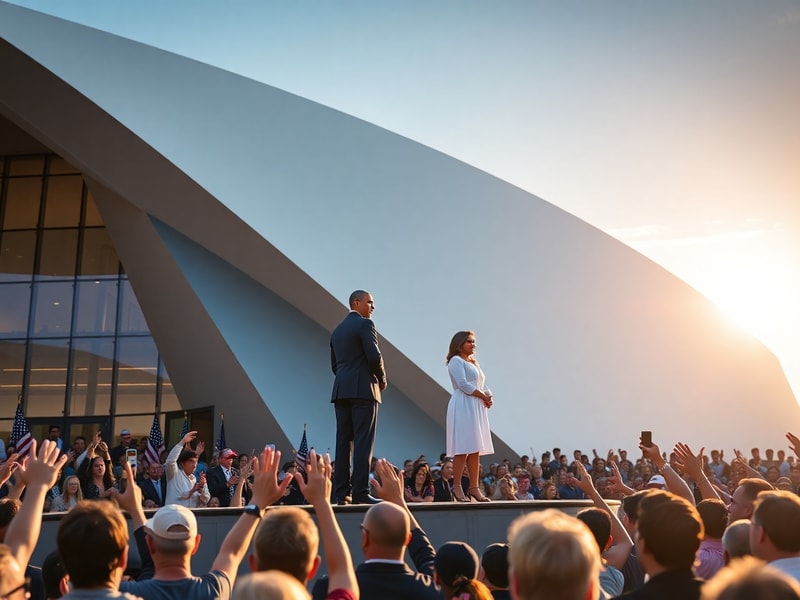
The opening ceremonies drew thousands of visitors, including local residents, dignitaries, and former President Barack Obama and First Lady Michelle Obama. Their presence underscored the personal significance of the project, which began in 2016 when the Obamas selected Chicago as the site for their presidential library. The center’s completion marks the culmination of a journey that faced legal challenges, community debates, and years of construction delays—all of which shaped its final form.
The Vision Behind the Obama Presidential Center
From the outset, the Obama Presidential Center was envisioned as more than a repository for historical artifacts. The design, led by architect Tod Williams Billie Tsien Architects, emphasizes accessibility, sustainability, and community integration. The campus includes three main buildings: the Museum of the Obama Presidential Center, the branch of the Chicago Public Library, and the Tod and Maureen Wheeler Center for Community Life. Each structure reflects the Obamas’ commitment to inclusivity and civic participation.
A key feature of the center is its emphasis on public programming. Unlike traditional presidential libraries, which often operate as research institutions, the Obama Center is designed to serve as a living space for dialogue, art, and education. The Culture section of Dave’s Locker has closely followed the center’s development, highlighting its role in reshaping Chicago’s cultural landscape.
Architectural Highlights
- Museum of the Obama Presidential Center: A 200,000-square-foot facility with exhibits on Obama’s presidency, civil rights, and social justice movements.
- Chicago Public Library Branch: A fully operational library with 20,000 square feet of space, including a makerspace and digital learning labs.
- Tod and Maureen Wheeler Center for Community Life: A 90,000-square-foot hub for events, workshops, and civic gatherings.
- Landscape Design: Over 11 acres of green space, including a new park designed by landscape architect Michael Van Valkenburgh.
Community Impact and Controversies
While the Obama Center has been celebrated as a catalyst for economic growth, its development was not without controversy. Critics raised concerns about displacement, as Jackson Park has long been a cherished public space for South Side residents. The Obama Foundation addressed these concerns by committing to affordable housing initiatives and job training programs for local residents. The foundation also pledged $100 million to community development projects in the surrounding neighborhoods.
The center’s location near the University of Chicago and the Museum of Science and Industry has sparked discussions about gentrification. Some community activists argued that the project would accelerate rising property values, pricing out long-time residents. In response, the Obama Foundation worked with local leaders to create the Education initiative, which provides scholarships and mentorship programs for students in the area. These efforts aim to ensure that the center’s benefits extend beyond its walls.
Economic and Social Benefits
- Job Creation: The construction phase generated over 2,000 jobs, with many going to South Side residents.
- Tourism Boost: City officials project that the center will attract 500,000 visitors annually, driving revenue for local businesses.
- Educational Programs: Partnerships with Chicago Public Schools and local universities will offer STEM and civics education opportunities.
- Cultural Preservation: The center includes exhibits on Chicago’s African American history and contributions to the civil rights movement.
Broader Implications for Presidential Libraries
The Obama Presidential Center sets a new standard for how presidential libraries can engage with the public. Unlike its predecessors, which often focus on archival research, the Obama Center prioritizes interactive experiences and community involvement. This shift reflects a broader trend in how institutions are reimagining their roles in the 21st century.
Presidential libraries have historically served as tools for preserving presidential legacies, but the Obama Center’s emphasis on civic engagement and social justice signals a departure from tradition. The center’s exhibits on topics like climate change, immigration, and racial equity align with the Obamas’ post-presidency focus on activism. This approach may influence future presidential libraries, encouraging them to adopt more dynamic and relevant programming.
Additionally, the Obama Center’s public-private partnership model could serve as a blueprint for other cities seeking to revitalize urban spaces. By leveraging private funding while maintaining public access, the project demonstrates how cultural institutions can thrive without sacrificing inclusivity.
A Lasting Legacy
The Obama Presidential Center’s opening is a testament to perseverance, community collaboration, and the power of visionary leadership. While its impact will unfold over decades, the center has already begun to redefine what a presidential library can be. For the South Side of Chicago, it represents a renewed sense of pride and possibility.
As the center welcomes its first visitors, it stands as a reminder that progress is not without its challenges—but with thoughtful planning and community engagement, it can leave a lasting mark on the world. The Obama Center is more than a building; it’s a promise to future generations that their voices matter and their dreams are worth pursuing.
For those interested in exploring the intersection of politics, culture, and community, the Politics section of Dave’s Locker offers further analysis on how institutions shape society.
As Chicago and the nation reflect on this milestone, the Obama Presidential Center invites all who visit to engage, learn, and contribute to its ongoing story.