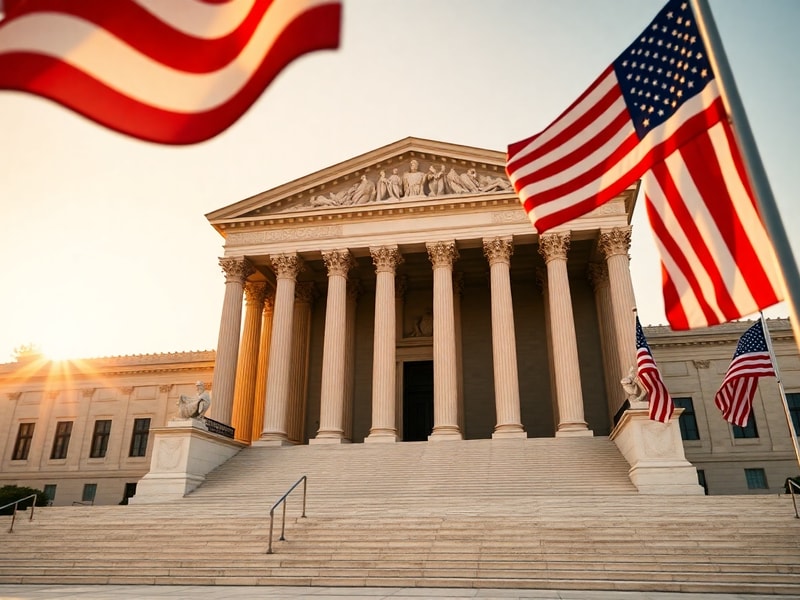
Supreme Court of the United States: Power, Controversy, and Global Impact
The Supreme Court of the United States (SCOTUS) stands as one of the most powerful judicial institutions in the world. Established by the U.S. Constitution in 1789, it serves as the highest federal court in the land, tasked with interpreting laws and ensuring their alignment with constitutional principles. Its decisions shape not only American society but also influence legal frameworks globally. The Court’s role extends beyond mere adjudication; it acts as a check on legislative and executive powers, ensuring that the rule of law remains the foundation of governance.
Unlike many of its counterparts around the world, the U.S. Supreme Court combines judicial review with the authority to strike down laws that violate the Constitution. This dual function has cemented its reputation as a guardian of constitutional democracy. However, its power is not without controversy. The Court’s rulings often spark intense public debate, reflecting the diverse perspectives that define American society. From civil rights to environmental regulations, its decisions ripple through the nation’s political and cultural landscape.
The Structure and Function of the Supreme Court
The Supreme Court consists of nine justices: one Chief Justice and eight Associate Justices. These justices are nominated by the President of the United States and confirmed by the Senate, a process that has become increasingly politicized in recent decades. Once confirmed, justices serve for life, or until they choose to retire, ensuring their independence from political pressures. This lifetime appointment is unique among major judicial systems and underscores the Court’s role as a stabilizing force in American governance.
The Court’s docket is discretionary, meaning it selects which cases to hear. Each year, it receives thousands of petitions but grants review to only about 100-150 cases. The cases it chooses often involve significant legal questions or conflicts between lower courts. The Court’s decisions are final and binding, making its role in the U.S. legal system unparalleled. Below is a breakdown of the Court’s structure and key functions:
- Judicial Review: The power to invalidate laws or executive actions that conflict with the Constitution.
- Interpretation of Laws: Clarifying the meaning of statutes and constitutional provisions.
- Dispute Resolution: Settling disputes between states or between citizens and the government.
- Precedent Setting: Establishing legal principles that lower courts must follow.
The Court’s procedures are steeped in tradition. Oral arguments, held before the justices, allow attorneys to present their cases and answer questions from the bench. After deliberation, the justices issue written opinions, which are often accompanied by dissenting or concurring views. These opinions provide a window into the Court’s reasoning and shape future legal interpretations.
The Supreme Court’s Role in Shaping American Society
Throughout its history, the Supreme Court has played a pivotal role in advancing civil rights and social justice. Landmark cases such as Brown v. Board of Education (1954), which declared racial segregation in schools unconstitutional, and Roe v. Wade (1973), which recognized a constitutional right to abortion, have had profound societal impacts. These rulings not only reflect the Court’s power but also its capacity to drive social change.
However, the Court’s influence is not limited to progressive outcomes. It has also issued decisions that have restricted rights or upheld controversial policies. For example, Citizens United v. Federal Election Commission (2010) expanded corporate political spending, sparking debates about the role of money in politics. Similarly, Dobbs v. Jackson Women’s Health Organization (2022) overturned Roe v. Wade, returning abortion regulation to the states and igniting a national conversation about reproductive rights.
The Court’s rulings often intersect with cultural and political movements. For instance, decisions on LGBTQ+ rights, such as Obergefell v. Hodges (2015), which legalized same-sex marriage nationwide, have reflected and reinforced shifting societal attitudes. These cases demonstrate how the Court operates both as a legal institution and a cultural arbiter, shaping the nation’s values and priorities.
The Supreme Court in a Global Context
The U.S. Supreme Court’s influence extends far beyond American borders. Its decisions are frequently cited by courts in other countries, particularly those with common law traditions. For example, the Canadian Supreme Court and the Indian Supreme Court have referenced U.S. precedents in cases involving constitutional rights and judicial review. This global reach underscores the Court’s role as a model for constitutional democracy.
However, the Court’s international standing is not unchallenged. Critics argue that its rulings reflect American exceptionalism and may not always align with global human rights standards. For instance, the U.S. remains one of the few developed nations without a federal law explicitly banning discrimination based on sexual orientation or gender identity. This discrepancy highlights the tension between the Court’s domestic authority and its global reputation.
The Court’s approach to international law is also a subject of debate. While it occasionally references foreign legal principles, it has resisted fully embracing international human rights frameworks. This reluctance reflects a broader tension within American jurisprudence: the balance between sovereignty and global cooperation. As the world becomes increasingly interconnected, the Court’s role in shaping global legal norms will likely remain a topic of intense scrutiny.
Controversies and Criticisms
Despite its prestige, the Supreme Court is not immune to criticism. One of the most persistent controversies surrounds the appointment process. The Senate’s confirmation hearings have become highly politicized, with nominees often facing intense scrutiny over their judicial philosophies. This politicization raises questions about the Court’s legitimacy and independence.
Another criticism targets the Court’s lack of diversity. Historically, the Court has been dominated by white men, and while recent appointments have diversified its bench, representation remains uneven. The absence of justices from underrepresented backgrounds can limit the Court’s ability to fully grasp the societal impacts of its rulings.
The Court’s secrecy and lack of transparency are also sources of concern. Unlike many other high courts, such as those in Canada or the UK, the U.S. Supreme Court does not televise its oral arguments or issue immediate decisions. This opacity can fuel public skepticism and erode trust in the institution.
Finally, the Court’s power to invalidate laws passed by democratically elected bodies has led some to question whether it undermines the principle of majority rule. Critics argue that the Court’s rulings can override the will of the people, particularly on contentious issues like abortion or gun control. This tension between judicial authority and democratic governance remains a defining feature of American constitutionalism.
The Future of the Supreme Court
The Supreme Court’s future will be shaped by a combination of legal, political, and social forces. As the U.S. grapples with issues like climate change, technological innovation, and social inequality, the Court’s role in addressing these challenges will come under increasing scrutiny. The rise of populism and the erosion of trust in institutions may also test the Court’s authority and resilience.
One potential area of change is the Court’s composition. With several aging justices, retirements or unexpected vacancies could shift the balance of power on the bench. This dynamic has already led to intense speculation about the Court’s ideological direction and the potential for future rulings to reflect a more progressive or conservative vision.
Another factor to watch is the Court’s relationship with the public. Declining approval ratings and growing partisan divisions suggest that the Court’s legitimacy is not guaranteed. Efforts to reform the Court, such as expanding its size or imposing term limits on justices, are gaining traction among some lawmakers and activists. These proposals reflect a broader debate about how to preserve the Court’s role as a neutral arbiter in an increasingly polarized society.
Ultimately, the Supreme Court’s future will depend on its ability to adapt to a changing world. Whether through landmark rulings or incremental shifts, the Court will continue to play a central role in shaping the trajectory of American democracy and its global influence.
Key Takeaways
- The Supreme Court is the highest federal court in the U.S., tasked with interpreting laws and ensuring constitutional compliance.
- Its rulings have far-reaching impacts on American society, from civil rights to environmental regulations.
- The Court’s global influence is significant, though its rulings sometimes clash with international human rights standards.
- Controversies surrounding its appointment process, diversity, and transparency continue to shape public perceptions.
- The future of the Court will be influenced by legal, political, and social dynamics, as well as potential reforms.
For more insights into the intersection of law and society, explore our Politics and Analysis sections. These categories feature in-depth explorations of topics that shape our world, from constitutional law to global governance.
The Supreme Court remains a cornerstone of American democracy, its legacy intertwined with the nation’s history and its future. As it navigates the complexities of the 21st century, its decisions will continue to resonate far beyond the courtroom, leaving an indelible mark on the fabric of society.