Global Defense Shifts: A Coordinated Review of US and European Military Strategies
The geopolitical landscape in 2024 has forced Western military alliances to reassess their defense postures. The United States and European NATO members are conducting parallel reviews of their force structures, deployment strategies, and technological investments. These evaluations come at a time when traditional security threats intersect with emerging challenges such as cyber warfare, hybrid threats, and the long-term implications of the Russia-Ukraine conflict.
While Washington focuses on maintaining its global military dominance, European capitals are prioritizing territorial defense and resilience. The divergence in priorities reflects both the strategic cultures of the US and its European allies and the shifting balance of power within the transatlantic relationship. What emerges is not a unified doctrine but a patchwork of approaches that must coexist within the NATO framework.
NATO’s Evolving Role in Collective Defense
NATO remains the cornerstone of European security, but its operational parameters are being stretched. The alliance’s rapid response capabilities have been tested repeatedly since Russia’s invasion of Ukraine in 2022. In response, NATO has increased its forward deployments in Eastern Europe, established new battlegroups in Bulgaria, Hungary, Romania, and Slovakia, and accelerated the accession of Finland and Sweden.
Yet, the alliance faces internal strains. European nations are increasing defense spending—many for the first time in decades—but procurement remains fragmented. The US continues to contribute the bulk of NATO’s military infrastructure, from command centers to missile defense systems. This imbalance raises questions about long-term sustainability and the willingness of European nations to shoulder greater responsibility.
- Poland has committed to spending 4% of its GDP on defense, the highest level in NATO.
- Germany, long criticized for underinvestment, pledged €100 billion in special defense funding in 2022 and now aims for 2% of GDP annually.
- The UK has expanded its Carrier Strike Group and increased troop numbers in Estonia and Poland.
- France continues to lead a separate EU defense initiative, the European Intervention Initiative, aimed at autonomous European operations.
These divergent paths highlight a growing divergence within the alliance: one camp prioritizes NATO unity, while another seeks greater European strategic autonomy. The review processes currently underway in Washington and Brussels are not just about military readiness—they are about defining the future of Western defense architecture.
Technological Modernization and the Future of Warfare
Both the US and Europe are accelerating investments in next-generation military technologies. Artificial intelligence, autonomous systems, and hypersonic weapons are reshaping the battlefield. The Pentagon’s 2024 National Defense Strategy emphasizes “integrated deterrence,” a concept that blends conventional, nuclear, space, and cyber capabilities into a unified deterrent posture.
Europe, meanwhile, is racing to close its technological gap. The European Defence Agency has launched initiatives to develop AI-driven command systems, electronic warfare tools, and secure communications networks. France and Germany are co-developing the Main Ground Combat System, a next-generation tank to replace aging Leopard and Leclerc models by 2035.
Yet, challenges persist. European defense industries struggle with slow procurement cycles and reliance on US technology, particularly in areas like satellite navigation and missile guidance. The US maintains a clear edge in stealth aircraft, nuclear submarines, and space-based surveillance. However, Europe is making progress in drone swarms and quantum encryption, areas where it sees potential for leadership.
“The future of warfare will be decided not just by who has the most tanks or jets, but by who can process data faster, adapt quicker, and maintain resilience under attack. That’s where Europe believes it can compete—and where the US is still setting the pace.” — Dr. Elie Tenenbaum, French Institute of International Relations
Hybrid Threats and the Battle for Narrative Dominance
Beyond kinetic warfare, both the US and Europe are confronting a surge in hybrid threats—cyberattacks, disinformation campaigns, sabotage, and political interference. Russia’s 2016 US election interference and ongoing influence operations in Europe have demonstrated the vulnerability of democratic institutions to non-military aggression.
The US Cyber Command has elevated its posture from “defend forward” to “persistent engagement,” actively disrupting adversary networks before they can strike. NATO has established a new Cyber Operations Center in Mons, Belgium, to coordinate responses across member states. Meanwhile, the European Union has created a Joint Cyber Unit to pool resources and share intelligence.
Disinformation remains a particularly insidious challenge. Russian and Chinese state-backed media outlets continue to exploit social media platforms to sow division, amplify conspiracy theories, and undermine public trust in governments. Both US and European forces are investing in digital literacy programs, counter-messaging units, and AI-driven content moderation tools.
One emerging strategy is the use of “narrative defense” units—teams of linguists, psychologists, and data analysts who monitor and counter foreign influence operations in real time. These units operate alongside traditional military units, blurring the lines between defense and information warfare.
Cultural and Strategic Divergences Within the Alliance
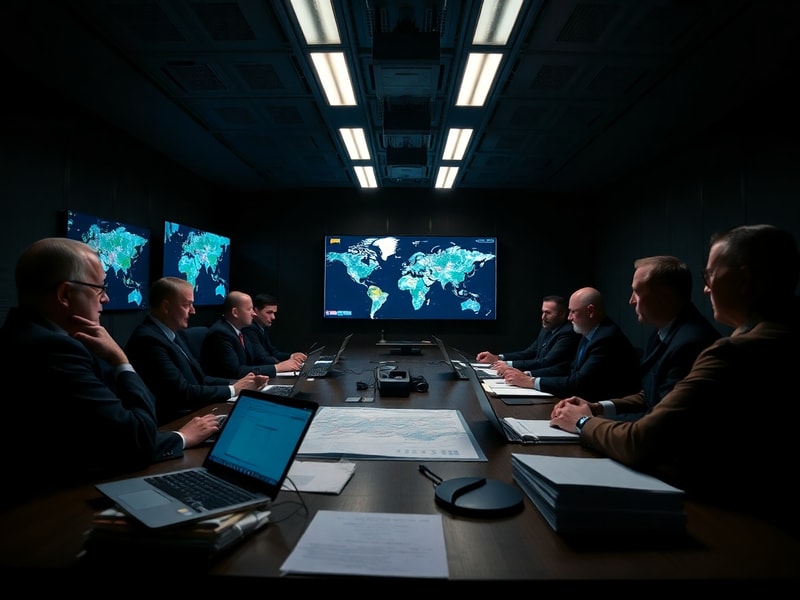
The transatlantic defense review is not solely a technical or budgetary exercise. It reflects deeper cultural and philosophical differences between American and European approaches to security.
The United States tends to view military power through a global lens. Its strategies emphasize power projection, technological superiority, and the ability to intervene anywhere in the world. Europe, by contrast, often prioritizes territorial defense, crisis prevention, and civilian protection. This divergence was evident during the 2021 Afghanistan withdrawal, when European nations expressed frustration at the US decision-making process and the lack of consultation.
Furthermore, Europe’s colonial history and proximity to conflict zones in Africa and the Middle East shape its strategic outlook. France, for instance, maintains a permanent military presence across the Sahel, conducting counterterrorism operations and training local forces. Germany has taken on a more diplomatic role, focusing on stabilization and reconstruction efforts.
These differences are not weaknesses, but sources of strength. When aligned, the US and Europe form a formidable alliance. When misaligned, they risk creating gaps that adversaries can exploit. The current review process is an opportunity to reconcile these approaches—or at least to define clear boundaries where they cannot be reconciled.
One possible path forward lies in “coalition-based defense,” where nations contribute capabilities rather than troops. For example, Poland might provide heavy armor, Italy contribute naval assets, and the UK lead in cyber operations. The US would retain its global command structure but deploy forces only when necessary, relying on allies for regional expertise and logistical support.
Conclusion: Toward a New Transatlantic Security Framework
The ongoing US and European force reviews are more than bureaucratic exercises. They represent an attempt to redefine security in an era of polycrisis—where war in Europe, tensions in Asia, climate instability, and technological disruption all intersect. The outcome will determine whether NATO remains the world’s most effective military alliance or fragments under the weight of competing priorities.
What is clear is that the old model—where the US sets the agenda and Europe follows—is no longer sustainable. Europe is stepping up, but it cannot do so alone. The challenge for both sides is to find a balance: enough integration to deter common threats, enough autonomy to address regional concerns, and enough flexibility to adapt to an unpredictable future.
As defense planners in Washington and Brussels finalize their recommendations, one thing is certain: the world is watching. Not just adversaries, but allies and partners from Asia to Africa are assessing the durability of Western security commitments. The decisions made today will echo for decades, shaping not only military balances but the very nature of global power.