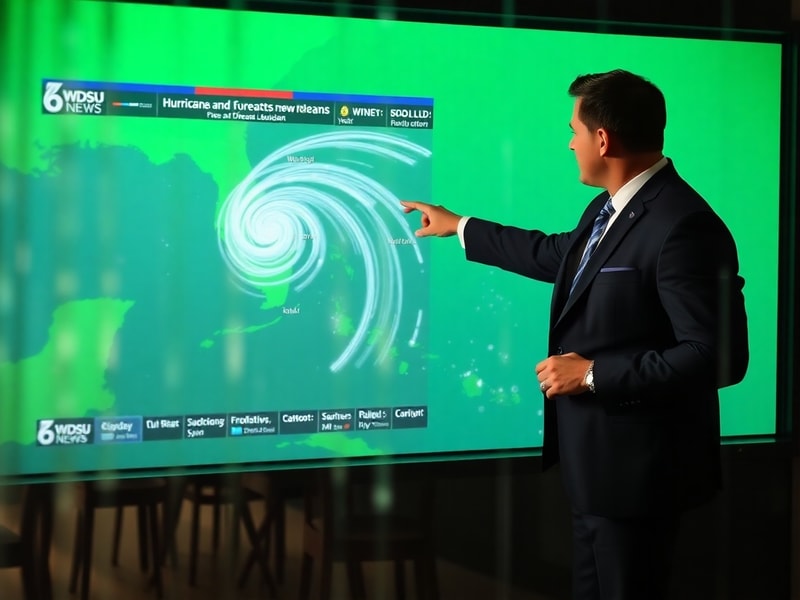
In a city where weather isn’t just small talk but survival strategy, WDSU Weather has become more than a local news staple—it’s a cultural institution. For generations of New Orleanians, the evening forecast from Channel 6 isn’t just information; it’s preparation. The Mississippi River’s mood swings, the Gulf Coast’s hurricane season, and the subtropical climate’s daily surprises make weather reporting here unlike anywhere else in America.
The station’s meteorologists don’t just predict rain—they translate atmospheric chaos into actionable daily decisions. Whether it’s advising on when to evacuate before a storm or helping residents decide whether to carry an umbrella to Café du Monde, WDSU Weather operates at the intersection of science and survival. This is the story of how one local weather team became indispensable to a city that dances with disaster.
The Unique Challenges of Forecasting for New Orleans
New Orleans exists in a meteorological pressure cooker where multiple climate systems collide. The city sits below sea level, surrounded by water on three sides, while the subtropical climate guarantees humidity that can make 80°F days feel like 100°F. Add the annual hurricane season—officially June through November—and you have a forecasting challenge that would test even the most advanced weather models.
WDSU’s team faces particular difficulties that their counterparts in drier climates never encounter:
- Heat Index vs. Actual Temperature: In summer, the difference between the thermometer reading and how it feels can be 20 degrees or more. WDSU’s “Real Feel” reports have become essential for outdoor workers and festival planners alike.
- Hurricane Cone Confusion: The famous “cone of uncertainty” often leads to public misunderstanding. WDSU dedicates significant airtime to explaining storm tracks, evacuation zones, and the difference between watches and warnings.
- River Level Monitoring: The Mississippi doesn’t just flood—it responds to upstream rainfall across half the continent. WDSU provides daily river level updates that affect everything from shipping schedules to backyard flooding.
- Cultural Events: From Mardi Gras parades to Essence Festival, outdoor events dominate the city’s calendar. Weather delays can cost millions, making accurate hourly forecasts crucial for economic survival.
These challenges have forced WDSU’s meteorologists to develop specialized expertise. Their hurricane coverage during Ida in 2021 drew national praise for its clarity during a crisis. While national networks showed satellite images, WDSU’s team translated those images into specific threats for each neighborhood—information that saved lives.
How WDSU Weather Became a Community Staple
The relationship between New Orleanians and their weather team runs deeper than most cities’ media-consumer dynamics. This isn’t just about accurate forecasts; it’s about trust built through decades of reliability during crises. WDSU’s meteorologists have become local celebrities whose credibility extends beyond the 6 o’clock news.
Several factors contribute to this unique bond:
- Local Roots: Unlike networks that rotate meteorologists every few years, WDSU’s team tends to stay for decades. Chief Meteorologist Margaret Orr, who joined in 1984, has become a trusted figure whose voice is as familiar as the city’s jazz musicians.
- Community Integration: The station regularly participates in neighborhood meetings, school visits, and hurricane preparedness fairs. Their meteorologists aren’t just talking heads—they’re neighbors who understand local topography intimately.
- Cultural Sensitivity: New Orleans’ diverse communities have different relationships with weather. The Vietnamese fishing community in New Orleans East, for example, relies on WDSU’s translations of storm surge maps during hurricane season.
- Social Media Responsiveness: During severe weather, WDSU’s team shifts into overdrive on Twitter and Facebook, responding to individual residents’ concerns about their specific locations. This personal touch has created a digital community that extends beyond broadcast hours.
This integration extends to local businesses. Restaurants adjust weekend staffing based on WDSU’s weekend forecasts. Carnival krewes time their parades to avoid predicted rain. Even the city’s famous above-ground cemeteries see increased visitation before storms, as locals follow WDSU’s advice to secure family tombs.
WDSU Weather in the Age of Climate Change
As global temperatures rise, New Orleans finds itself on the front lines of climate change. The city’s average temperature has increased by 2°F since 1970, while sea levels in the Gulf have risen nearly a foot over the past century. These changes have transformed weather reporting from an academic exercise into an urgent public service.
WDSU’s team has adapted by incorporating climate science into their daily coverage. Their “Climate Check” segments now appear regularly alongside traditional forecasts, explaining how global trends manifest locally. During the record-breaking heat wave of 2023, meteorologist Adam McDonald dedicated airtime to explaining why New Orleans was experiencing not just hot days, but “extreme heat events” that could overwhelm the city’s aging infrastructure.
The station has also become a platform for discussing environmental justice. Their reporting connects extreme weather events to the city’s historical underinvestment in flood protection for low-income neighborhoods. When Hurricane Katrina’s aftermath exposed these inequities in 2005, WDSU’s coverage became part of the national conversation about climate justice.
Technology has transformed their work. Doppler radar upgrades in 2022 allow for more precise tracking of individual thunderstorms, while new modeling software helps predict flooding in specific neighborhoods. Yet the human element remains crucial. As one longtime viewer noted, “You can get weather data anywhere, but WDSU tells you what it means for your block.”
The Future of Local Weather Reporting
As media consumption fragments and national weather apps provide increasingly accurate forecasts, WDSU Weather faces challenges familiar to local journalism everywhere. Yet their continued relevance suggests a path forward for local news in the digital age. The key appears to be their deep integration with community needs rather than just technological superiority.
Looking ahead, WDSU’s team is exploring several innovations:
- Hyperlocal Alerts: Using cell tower data to push weather warnings to specific neighborhoods rather than broad zones. This could provide more targeted evacuation notices during hurricanes.
- Citizen Weather Networks: Partnering with local ham radio operators and weather enthusiasts to create a grassroots observation network that supplements official data.
- Climate Transition Coverage: Moving beyond crisis reporting to help residents understand how to adapt their homes and lives to permanent environmental changes.
These developments matter beyond New Orleans. As climate change intensifies extreme weather worldwide, local weather teams become increasingly vital. Cities from Miami to Mumbai face similar challenges, and the solutions developed in New Orleans could provide models for other communities.
For now, WDSU Weather continues its daily ritual of translating atmospheric science into human terms. Whether it’s warning about an approaching cold front or celebrating a rare cool summer evening, their work reminds New Orleanians that understanding the weather isn’t just about knowing the temperature—it’s about navigating life in a city that thrives despite its challenges.
As one longtime resident put it, “When WDSU says there’s a 60% chance of rain, you don’t just check your umbrella. You check your evacuation route. That’s how we survive here.”