The FIFA World Cup is more than just a tournament—it’s a global spectacle where nations compete for glory, history, and bragging rights. At the heart of every World Cup lies the group stage, where teams battle in round-robin format to advance to the knockout rounds. Understanding the group standings is essential for fans, analysts, and even casual viewers who want to follow the action closely.
The group stage is designed to create drama, unpredictability, and high-stakes moments. With 32 teams divided into eight groups of four, each team plays three matches. The top two teams from each group advance, but the path to qualification is often paved with surprises. The standings determine not only who moves forward but also potential future matchups, seeding, and even psychological advantages heading into the knockout rounds.
The Basics: How World Cup Group Standings Are Determined
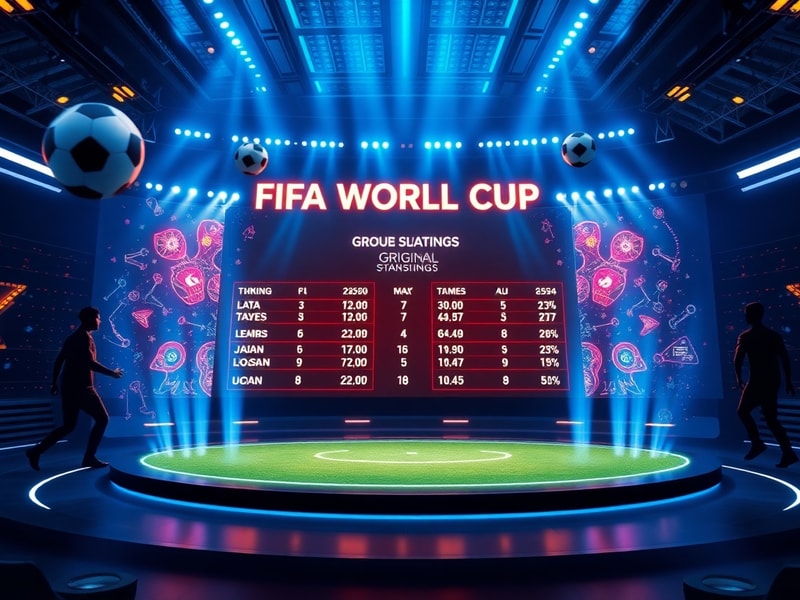
World Cup group standings follow a straightforward yet strategic ranking system. Teams earn points based on match outcomes: three points for a win, one point for a draw, and zero for a loss. If two or more teams finish with the same number of points, tiebreakers come into play. The official FIFA tiebreaker criteria are applied in this order:
- Goal difference: The total goals scored minus goals conceded. A team with +5 goal difference is ranked higher than one with +2.
- Goals scored: If goal difference is tied, the total number of goals scored breaks the tie.
- Head-to-head result: If teams are still tied, their direct match result is used. For example, if Team A beats Team B in the group stage, Team A ranks higher.
- Fair play points: Teams receive deductions for yellow and red cards. Fewer disciplinary points mean a higher ranking.
- Drawing of lots: Used only if all other criteria fail—a rare but possible scenario.
These rules ensure fairness and clarity, though they can also lead to controversy. For instance, in the 2014 World Cup, Algeria advanced over Russia despite both teams having identical records. Algeria had a better goal difference (+1 vs. 0), securing their spot in the knockout rounds.
Key Factors That Influence Group Standings
Several factors influence how teams perform and ultimately rank in their groups. One of the most critical is schedule strength. Teams in groups with historically strong opponents often face a tougher path. For example, in the 2022 World Cup, Group E featured Spain, Germany, Japan, and Costa Rica—a group dubbed the “group of death” due to the high caliber of teams.
Another factor is momentum. Teams that start strong gain confidence, while those struggling early may spiral under pressure. Coaching decisions, player fitness, and even referee decisions can tip the scales. In the 2018 World Cup, Belgium topped their group despite a slow start, thanks to late comebacks and a strong squad depth.
Weather and travel also play a role. Teams playing in extreme heat or across long distances may fatigue faster. In Qatar 2022, teams from Europe faced challenges adjusting to the desert climate, while hosts Qatar battled intense scrutiny and pressure in front of their home crowd.
Controversies and Upsets: When Group Standings Defy Expectations
The World Cup is known for its unpredictability, and group standings often reflect that. Upsets can reshape entire tournaments. In the 2002 World Cup, South Korea stunned Italy and Spain to top their group, becoming the first Asian nation to advance past the group stage in the knockout rounds. Their success was fueled by tactical discipline and controversial refereeing decisions.
Another memorable moment came in 2010, when Switzerland defeated Spain 1–0 in the group stage. Spain, the eventual tournament winner, nearly went home early. The result highlighted how a single loss can derail even the strongest teams. Spain recovered, but the shockwave was felt across the football world.
Controversies also arise from referee decisions. In the 2014 World Cup, USA goalkeeper Tim Howard made 16 saves against Belgium, one of the highest single-game totals in tournament history. Despite the heroic effort, the USA lost 2–1 in extra time. The result sparked debates about officiating and whether tighter VAR (Video Assistant Referee) protocols could have changed the outcome.
What Happens After the Group Stage: How Standings Shape the Knockout Rounds
The group stage isn’t just about advancing—it’s about setting up future matchups. The standings determine the knockout bracket. The top two teams from each group advance to the Round of 16, where they face opponents from other groups. The bracket is structured so that teams from the same group cannot meet until the final, if at all.
This system adds a layer of strategy. Teams may prioritize avoiding certain opponents in the Round of 16. For example, a group winner might aim to finish second in their group to avoid a top seed like Brazil or France in the early knockout rounds. This tactical nuance is often overlooked by casual fans but is well understood by coaches and analysts.
In the 2018 World Cup, Croatia topped their group and advanced as runners-up in their knockout path. Their path included wins over Denmark, Russia, and England—culminating in a historic run to the final. The group stage gave them the momentum and confidence needed to make a deep tournament run.
Another example comes from the 2014 World Cup, where Germany topped their group with a perfect record. Their path included encounters with Algeria, France, and Brazil—each match becoming a statement of dominance. The group stage set the tone for their eventual title victory.
Lessons from Recent Tournaments: Trends in Group Standings
Recent World Cups have shown trends in how teams approach the group stage. In 2022, Morocco became the first African and Arab nation to top a World Cup group. Their defensive organization and counterattacking style disrupted traditional powerhouses like Belgium and Croatia. The result signaled a shift in global football dynamics.
In contrast, European teams have increasingly relied on possession-based tactics. Spain and Germany often dominate groups with high possession stats, but this strategy can backfire against low-block teams. In 2022, Japan stunned both Germany and Spain with quick transitions and pressing, illustrating the growing effectiveness of tactical flexibility.
Another trend is the rise of underdog stories. Teams like Senegal in 2002 and Costa Rica in 2014 advanced as group winners, defying pre-tournament expectations. These results remind fans that the World Cup is not just for the elite—it’s a stage where anyone can shine.
Why Group Standings Matter Beyond the Tournament
The impact of group stage performances extends beyond the tournament itself. Strong group stage results boost a nation’s FIFA ranking, influencing future tournament seeding and qualification paths. Teams that perform well often gain financial rewards, increased sponsorships, and greater global visibility.
For players, a standout group stage performance can launch careers. Stars like Harry Kane, Kylian Mbappé, and Cristiano Ronaldo have all delivered memorable group stage moments that defined their legacies. Even young talents use the group stage as a platform to announce themselves on the world stage.
For fans, the group stage is where allegiances form and rivalries ignite. A dramatic win or a stunning upset can turn a casual viewer into a lifelong supporter. The 2014 World Cup saw Algeria’s historic run inspire a generation of African football fans, proving that the group stage is more than just a formality—it’s the heartbeat of the tournament.
Conclusion: The Group Stage as the Soul of the World Cup
The World Cup group stage is where dreams are made and broken. It’s a crucible of competition where strategy, resilience, and luck collide. The standings tell a story—not just of points and positions, but of nations rising, falling, and defying expectations.
As fans, understanding the group stage enhances the viewing experience. It transforms passive watching into active engagement. Every match, every goal, every tactical shift carries weight. The group stage isn’t just the beginning of the World Cup—it’s where the magic begins.
As we look ahead to the next tournament, one thing is certain: the group stage will once again deliver drama, controversy, and unforgettable moments. And for the teams that navigate it successfully, the path to glory starts with three letters: G-R-O-U-P.