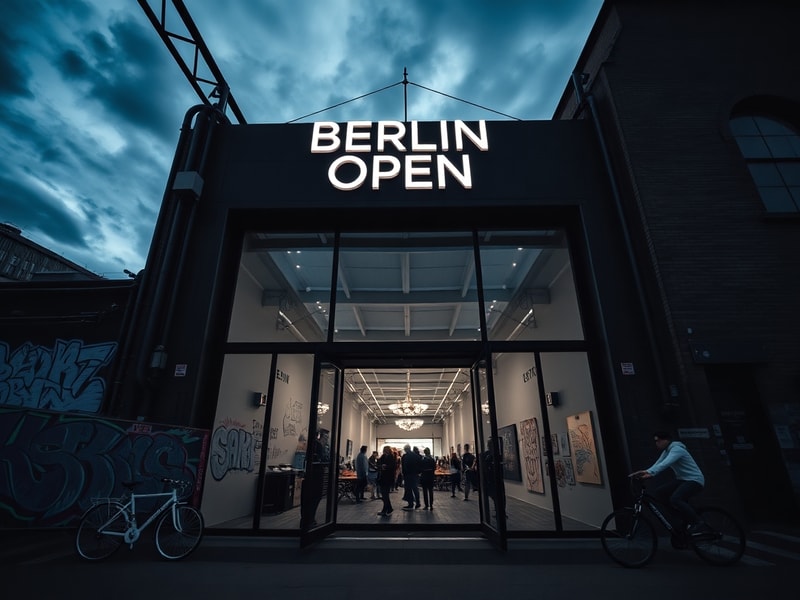
The Berlin Open: Europe’s Premier Table Tennis Showdown
The Berlin Open has quietly cemented itself as one of Europe’s most anticipated table tennis tournaments, drawing elite players, passionate fans, and cutting-edge technology to Germany’s capital each year. Since its launch in 2017, the event has grown from a regional competition into a global spectacle, blending high-stakes athleticism with a vibrant cultural atmosphere. Players from over 50 countries now compete for ranking points, prize money, and the coveted Berlin Open trophy, while spectators enjoy a weekend of non-stop action in one of Europe’s most dynamic cities.
What sets the Berlin Open apart isn’t just the quality of play, though that’s undeniably world-class. The tournament’s organizers have mastered the art of fan engagement, transforming a traditional sporting event into a multi-sensory experience. From interactive fan zones to live DJ sets between matches, the Berlin Open feels less like a tournament and more like a festival celebrating the sport itself. This approach has helped table tennis shed its niche reputation, attracting younger audiences who might otherwise overlook the game.
The event’s rise coincides with a broader surge in table tennis’s popularity worldwide. Major tournaments like the ITTF World Tour have emphasized accessibility, and the Berlin Open reflects that ethos by keeping ticket prices affordable and streaming matches for free online. For a sport often dismissed as “just ping-pong,” the Berlin Open proves there’s far more to it—strategy, speed, and sheer athleticism on display every match.
The Evolution of a Modern Classic
The Berlin Open’s origins trace back to a collaboration between local sports clubs and the International Table Tennis Federation (ITTF). The inaugural event in 2017 featured 128 players and a modest crowd, but its success led to rapid expansion. By 2019, the tournament had moved to the Mercedes-Benz Arena, a state-of-the-art venue capable of hosting 14,000 spectators. The COVID-19 pandemic forced a temporary hiatus, but the tournament returned in 2022 with enhanced safety protocols and a renewed focus on digital engagement.
One of the Berlin Open’s defining features is its commitment to innovation. The 2023 edition introduced real-time data analytics on screens around the arena, allowing fans to track serve speeds, spin rates, and rally lengths as they happened. This wasn’t just for show—players and coaches used the data to refine their strategies mid-tournament, adding a layer of tactical depth rarely seen in table tennis. The ITTF also trialed an AI-powered ball-tracking system, though it remains in development for broader use.
The tournament’s growth mirrors the sport’s own evolution. Table tennis has long been dominated by Asian players, particularly China, but the Berlin Open has become a proving ground for European talent. German players like Dimitrij Ovtcharov and Timo Boll have been fixtures, while rising stars from France, Sweden, and Poland have made deep runs in recent years. This diversity reflects a deliberate effort by the ITTF to globalize the sport, and the Berlin Open is at the forefront of that push.
Behind the Scenes: What Makes the Berlin Open Tick
Organizing a tournament of this scale requires meticulous planning. Months before the first ball is struck, a team of 200+ staff and volunteers begin coordinating everything from court maintenance to player accommodations. The Mercedes-Benz Arena transforms into a high-tech hub, with 24 tables set up across two halls, each equipped with Hawk-Eye technology for instant replay reviews. Sponsors like Butterfly and Andro provide top-tier equipment, ensuring players compete on the same gear they’d use in Olympic qualifiers.
Security is another priority. With international media and VIP guests in attendance, the Berlin Open employs a multi-layered approach, including facial recognition at entry points and bag checks at all gates. The tournament’s reputation for smooth operations has earned it praise from players and officials alike. “Berlin runs like a Swiss watch,” said Sweden’s Mattias Falck after winning the 2023 men’s singles title. “The courts are perfect, the crowd is electric, and everything just works.”
The event’s economic impact on Berlin is substantial. Hotels, restaurants, and local businesses report a 30-40% boost in revenue during tournament weekends. The city’s public transport system even adds extra trams to accommodate the influx of fans. For a municipality known for its creative energy, the Berlin Open is more than a sporting event—it’s a cultural export.
Volunteers play a crucial role, with over 1,000 signing up each year. Many are students from Berlin’s universities, eager to gain experience in event management. In exchange, they receive free access to matches, training sessions with players, and a behind-the-scenes tour of the venue. “It’s the closest you can get to the action without being a pro,” said Lena Bauer, a volunteer from Humboldt University. “I’ve learned more about table tennis in three days than in three years of watching YouTube tutorials.”
The Fan Experience: More Than Just a Match
The Berlin Open isn’t just for die-hard table tennis fans. The organizers have crafted an experience that appeals to casual observers and families alike. The “Ping-Pong Park” in the arena’s foyer features mini-tables where kids can try their hand at the sport, often under the watchful eye of retired champions giving tips. Interactive exhibits showcase the physics of spin, the history of paddles, and the evolution of the game’s most iconic moments.
For those who prefer to stay in their seats, the arena’s giant screens provide close-ups of rallies, player reactions, and even slow-motion replays of serves traveling at 100 km/h. Commentators—including former world champions—add color to the action, blending analysis with humor. “It’s like watching a chess match played at 200 miles per hour,” said British commentator Laura Knight. “The mental aspect is just as important as the physical.”
Food and drink options reflect Berlin’s multicultural identity. Currywurst stands sit alongside vegan falafel stalls, while craft beer vendors offer limited-edition tournament brews. The “Fan Zone” hosts live music, DJ sets, and even a table tennis trivia quiz with prizes. This blend of sport and entertainment has helped the Berlin Open cultivate a loyal following outside the traditional table tennis community.
Accessibility is another key focus. The venue is fully wheelchair-accessible, with sign language interpreters available for key matches. The ITTF has also partnered with local disability advocacy groups to ensure the tournament is inclusive. “Table tennis is a sport that can be played by almost anyone, regardless of ability,” said tournament director Klaus Schmidt. “We want to reflect that in every aspect of the event.”
Looking Ahead: The Future of the Berlin Open
The Berlin Open’s organizers have ambitious plans for the next five years. A proposed expansion to 512 players is in the works, along with a new “Pro-Am” event where amateur players can compete alongside legends like Jan-Ove Waldner. Virtual reality experiences are also in development, allowing fans to “step into” a match from a player’s perspective. “We’re not just hosting a tournament,” said Schmidt. “We’re redefining what it means to be a sports fan.”
Technological integration will continue to play a major role. The ITTF is testing a blockchain-based system to track player rankings in real time, eliminating disputes over points and eligibility. Meanwhile, the Berlin Open’s social media team has embraced short-form video content, with TikTok clips of behind-the-scenes moments going viral. This digital-first approach ensures the tournament stays relevant in an era where attention spans are shorter than ever.
The event’s global ambitions are clear. Discussions are underway to rotate the Berlin Open to other European cities, creating a mini-tour that could rival the ITTF World Tour finals. There’s even talk of bidding to host the 2028 Olympic table tennis qualifiers, though nothing is confirmed. What is certain is that the Berlin Open has become a blueprint for how to modernize and popularize a sport that’s often overlooked.
For players, the tournament offers a chance to test their skills against the best in the world while experiencing Berlin’s legendary nightlife and culture. For fans, it’s a weekend of high-energy competition, unexpected discoveries, and memories that last far beyond the final point. As the 2024 edition approaches, one thing is clear: the Berlin Open isn’t just a tournament. It’s a movement.
Whether you’re a table tennis enthusiast or a first-time spectator, the Berlin Open promises an experience unlike any other. Mark your calendars, book your tickets, and prepare to be surprised by a sport that’s far more than meets the eye.