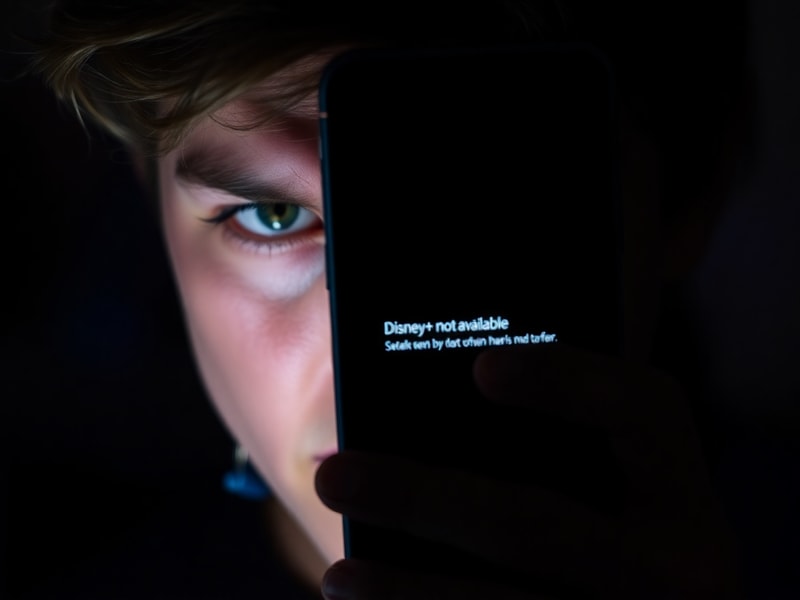
Disney+ subscribers worldwide found themselves staring at blank screens or error messages on Tuesday evening, as a widespread outage disrupted service for millions. The disruption struck just as families settled in for prime evening viewing, turning what should have been a night of relaxation into frustration. Social media erupted with complaints, memes, and pleas for updates, revealing just how deeply the platform has woven itself into daily routines. For a service that has become a digital gathering place for families and friends, this technical hiccup exposed the fragility of our always-on entertainment culture.
What Went Wrong Behind the Scenes
The outage began around 7:30 PM EST and lasted nearly two hours, affecting users across North America, Europe, and parts of Asia. According to Disney’s official status page, the issue stemmed from a server overload in its content delivery network. While Disney did not release detailed technical specifics, streaming analysts noted that such disruptions often occur when demand spikes unexpectedly, overwhelming backend infrastructure. This particular event followed closely on the heels of new episode releases from popular franchises like Marvel’s Echo and The Bear, which likely contributed to the surge in traffic.
Streaming services like Disney+ rely on complex, distributed systems to deliver content seamlessly. A single bottleneck in this network—whether a misconfigured load balancer, a database slowdown, or a regional server failure—can cascade into a full-blown outage. In Disney’s case, the problem was compounded by the platform’s global user base. Peak viewing hours vary by continent: European users log in during their evening prime time while North American families wind down after dinner. An infrastructure designed for scalability simply couldn’t handle the synchronized demand.
How Fans Reacted Across the Globe
Social media became a real-time barometer of the outage, with users from Tokyo to Toronto sharing their dismay. On X (formerly Twitter), the hashtag #DisneyPlusOutage trended within minutes, amassing over 50,000 posts in under an hour. Parents lamented missed bedtime stories, teens missed the latest Marvel episode, and nostalgic adults couldn’t stream their favorite childhood cartoons. One user in London joked, “Guess we’re finally living like it’s 1998—no streaming, just VHS tapes and hope.”
In Japan, where Disney+ has seen rapid growth due to its Star Wars and Pixar content, fans turned to local forums like 2ch and Reddit to share workarounds. Some reported success using VPNs to access international servers, though this often led to slower speeds and buffering. Meanwhile, in Brazil, where Disney+ is a key player in the streaming wars, users flooded local news outlets with complaints, prompting telecom companies to issue statements about unrelated internet issues.
The global reaction highlighted a paradox of modern streaming culture: we expect flawless service, yet tolerate little patience for failure. Disney+ has positioned itself as a family-friendly alternative to ad-heavy platforms, but this outage revealed the cracks in that promise. For a company that prides itself on magic and reliability, the technical stumble struck a discordant note.
The Broader Impact on Streaming and Consumer Trust
This wasn’t Disney+’s first major outage, nor is it alone in facing such challenges. Netflix, Amazon Prime Video, and HBO Max have all experienced similar disruptions in recent years, often during high-profile content drops. What makes Disney+’s situation noteworthy is how it reflects the growing expectations—and vulnerabilities—of the streaming economy. As platforms compete for subscribers with exclusive content, even minor downtime can erode user trust and prompt cancellations.
Industry analysts warn that outages like this could accelerate subscriber churn, especially among casual users who may not see Disney+ as essential. A recent survey by Entertainment Weekly found that 18% of respondents would consider canceling their subscription after two or more service disruptions in a year. Disney+, which relies heavily on franchises like Marvel and Star Wars, cannot afford to lose its core audience to competitors like Max or Apple TV+ during new releases.
For families, the outage was more than an inconvenience—it disrupted rituals. Parents who use Disney+ as a babysitter found themselves improvising. Grandparents trying to connect with grandchildren via video calls struggled to explain why their favorite shows wouldn’t load. In a cultural moment where digital entertainment is both a solace and a social glue, Disney’s technical failure felt like a betrayal of trust.
Lessons Learned and What Comes Next
Disney has not yet announced a full post-mortem of the incident, but streaming experts have already begun dissecting what went wrong and how similar outages can be prevented. One key takeaway is the need for more robust regional failover systems. By distributing content more evenly across global servers, platforms can reduce the risk of localized bottlenecks causing widespread outages. Another lesson is the importance of transparent communication during crises. While Disney updated its status page, many users complained that updates were slow and lacked detail—fueling speculation and frustration.
Looking ahead, Disney+ faces a delicate balancing act. It must expand its infrastructure to handle growing demand, particularly as it rolls out new regional content and live sports (including partnerships with leagues like the NFL). At the same time, it must reassure users that such disruptions are rare exceptions, not the norm. The company’s ability to bounce back from this outage could determine whether subscribers view it as a reliable home for entertainment or just another streaming service prone to glitches.
For now, Disney+ has resumed normal service, and users are slowly returning to their queues. But the outage served as a reminder: in our hyper-connected world, even the most polished platforms are only as strong as their weakest server. The magic of Disney may be timeless, but its streaming infrastructure must keep pace with the expectations it has set.