Five Years After the Fall of Jurassic World, Legacy and Loss Collide
When Jurassic World: Dominion arrived in theaters in June 2022, it wasn’t just another chapter in a franchise that had already spanned six films—it was the first time audiences could see dinosaurs interacting with modern human cities on a global scale. The movie’s opening scene, set in the ruins of the original Jurassic Park on Isla Nublar, immediately signals that this installment is about endings as much as beginnings. Chris Pratt and Bryce Dallas Howard return as Owen Grady and Claire Dearing, now leading Dinosaur Protection Group, while Sam Neill, Laura Dern, and Jeff Goldblum reprise their iconic roles as the scientists who once tried to control life itself.
The film’s plot forces these characters—and the audience—to confront the consequences of their actions. The dinosaurs, once confined to islands, now roam freely across continents, disrupting ecosystems and human societies alike. This shift is more than a plot device; it’s a narrative acknowledgment that the dream of controlled evolution has spiraled into an ecological crisis. The dinosaurs are no longer just attractions or villains; they are refugees, survivors, and, in some cases, apex predators reshaping the planet.
Dinosaurs Meet the Modern World: A Visual and Thematic Revolution
The most striking aspect of Dominion is its visual ambition. Director Colin Trevorrow, returning after Jurassic World (2015), pushes the franchise into uncharted territory by placing dinosaurs in urban environments. The film’s opening sequence in San Francisco’s financial district is a masterclass in tension, as a giant Atrociraptor escapes into the city, its movements captured with a mix of practical effects and cutting-edge CGI. This isn’t just spectacle for spectacle’s sake; it’s a deliberate contrast between the natural world and human civilization, highlighting how unprepared we are for the creatures we once tried to control.
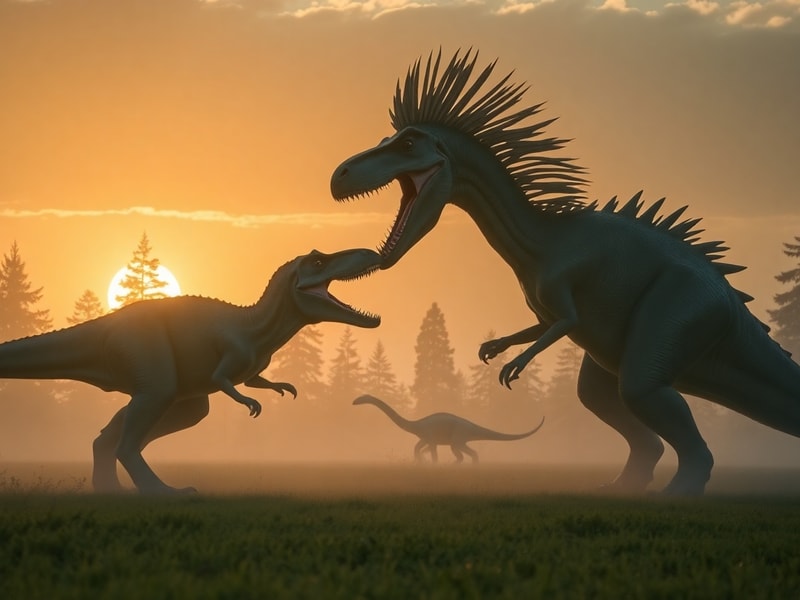
The film also introduces new dinosaur species, including the deadly Giganotosaurus, which serves as the primary antagonist. Unlike the genetically engineered Indominus rex from the previous film, the Giganotosaurus is a real species—albeit one that dwarfs the T. rex in size and aggression. This choice grounds the fantasy in paleontological reality, even as the film indulges in the absurdity of a 30-foot predator stalking a grocery store. The balance between realism and spectacle is a hallmark of the Jurassic franchise, and Dominion leans into it more than ever.
A Franchise at a Crossroads: Legacy Characters and New Directions
Jurassic World: Dominion is as much about its human characters as it is about its dinosaurs. The return of Neill, Dern, and Goldblum as Dr. Alan Grant, Dr. Ellie Sattler, and Dr. Ian Malcolm is a nostalgic callback to the original Jurassic Park trilogy. Their presence serves as a reminder of how far the franchise—and its themes—have come. In Dominion, Grant is now a grandfather, Sattler is running a dinosaur sanctuary, and Malcolm has become a reluctant environmental advocate. Their roles are expanded beyond cameos, giving them agency in the story’s resolution.
However, the film’s treatment of its legacy characters isn’t without controversy. Some fans felt that Pratt and Howard’s Owen and Claire were sidelined in favor of the returning trio, who often steal the spotlight. Others criticized the film’s pacing, arguing that the middle act drags as it juggles multiple subplots, including a subpar romance between a human character and a dinosaur (yes, really) and a convoluted corporate conspiracy involving a biotech company trying to weaponize dinosaurs. These distractions dilute the film’s emotional core, which should have been a meditation on legacy, responsibility, and the unintended consequences of playing god.
Still, the film’s strengths lie in its quieter moments. The scenes between Grant and his granddaughter Maisie (Isabella Sermon) are tender and heartfelt, offering a glimpse into the emotional weight of living in a world where dinosaurs are no longer confined to history books. Similarly, Malcolm’s speeches about chaos theory and human arrogance feel like a callback to his iconic monologues in Jurassic Park (1993), reinforcing the franchise’s long-standing themes about the dangers of hubris.
The Dinosaurs Themselves: Stars of the Show
No discussion of Jurassic World: Dominion would be complete without acknowledging its dinosaur cast. The film’s creature designs are a triumph of modern animatronics and CGI, with the Giganotosaurus and the feathered Pyroraptor standing out as particularly menacing. The feathered dinosaurs, in particular, are a nod to recent paleontological discoveries, adding a layer of scientific authenticity to the fantasy. These creatures don’t just look real—they feel alive, their movements and behaviors grounded in what we know (and guess) about how dinosaurs might have behaved.
The film also introduces the Quetzalcoatlus, a massive flying reptile that soars over the Nevada desert in a thrilling sequence. The Quetzalcoatlus scenes are a visual spectacle, blending the wonder of the original Jurassic Park with the blockbuster scale of Jurassic World. However, some critics argue that the film’s reliance on spectacle over substance reaches its peak here, with moments that feel more like a theme park ride than a cohesive narrative.
Despite these criticisms, the dinosaurs remain the heart of the franchise. Dominion is, at its core, a celebration of these creatures, both as scientific marvels and as symbols of nature’s power. The film’s final act, set in a lush, untamed valley where dinosaurs roam freely, is a bittersweet reminder that these animals belong in the wild, not in cages or theme parks. It’s a message that resonates in an era where debates about animal conservation and human-wildlife conflict are more urgent than ever.
Reception and Legacy: A Franchise in Transition
Jurassic World: Dominion received mixed reviews upon release, with critics praising its visuals and dinosaur sequences but questioning its storytelling and character development. Audiences were similarly divided, with some embracing the film’s nostalgic elements and others frustrated by its uneven pacing. Box office performance reflected this ambivalence, with the film grossing $1 billion worldwide but failing to recapture the cultural impact of the original Jurassic Park.
The film’s legacy is complicated. On one hand, it represents the culmination of a 30-year saga, bringing together characters and themes from across the franchise. On the other, it feels like a step backward in some ways, retreading familiar ground rather than pushing the story forward. The decision to include so many returning characters and plot threads may have been an attempt to satisfy long-time fans, but it also diluted the focus of the film.
Still, Dominion has its defenders. Some argue that its flaws are outweighed by its ambition, particularly in its visual storytelling and thematic depth. The film’s exploration of humanity’s relationship with nature—both as creators and destroyers—feels more relevant than ever in a world grappling with climate change and biodiversity loss. And while the franchise may not have a clear path forward after Dominion, the film’s ending leaves room for interpretation, hinting at new stories yet to be told.
For fans of the Jurassic franchise, Dominion is a bittersweet farewell to the world of Isla Nublar and the characters who inhabited it. For newcomers, it’s a visually stunning (if narratively uneven) introduction to a legacy that spans generations. Whether it’s the beginning of the end or just another chapter in a long-running saga remains to be seen. One thing is certain: the dinosaurs are here to stay, and their story is far from over.
Where to Go Next: The Future of the Jurassic Franchise
The Jurassic franchise has always been a blend of science fiction, adventure, and cautionary tale. Jurassic World: Dominion may not have been the definitive send-off the franchise deserved, but it leaves plenty of room for future stories. Here’s what fans might hope to see next:
- Spin-offs and prequels: With the original Jurassic Park characters now fully integrated into the modern timeline, there’s an opportunity to explore their younger years or other untold stories from the franchise’s history. A Jurassic Park: Origins series, for example, could delve into the early days of InGen and the creation of the first dinosaurs.
- New human-dinosaur dynamics: As dinosaurs become more integrated into human society, stories could explore the ethical and practical challenges of coexistence. Could there be a Jurassic World TV series set in a world where dinosaurs are part of daily life?
- Standalone dinosaur films: With the Jurassic World trilogy concluded, the franchise could return to its roots with a film focused solely on the dinosaurs, akin to Jurassic Park III or The Lost World: Jurassic Park.
- Exploration of other prehistoric eras: While the franchise has focused on the Mesozoic era, there’s potential to explore other time periods, such as the Ice Age or the Paleogene, introducing new creatures and settings.
For now, Jurassic World: Dominion serves as a reminder of the franchise’s enduring appeal—and its limitations. The dinosaurs may be extinct in the real world, but in the world of cinema, they continue to captivate, terrify, and inspire. As long as audiences are willing to suspend their disbelief, the Jurassic saga will live on, one roaring T. rex at a time.
For more on the evolution of the Jurassic franchise, check out our Entertainment category, where we dive into the cultural impact of blockbuster films. And if you’re interested in the science behind the dinosaurs, our Science section offers insights into how paleontology has shaped the creatures we see on screen.