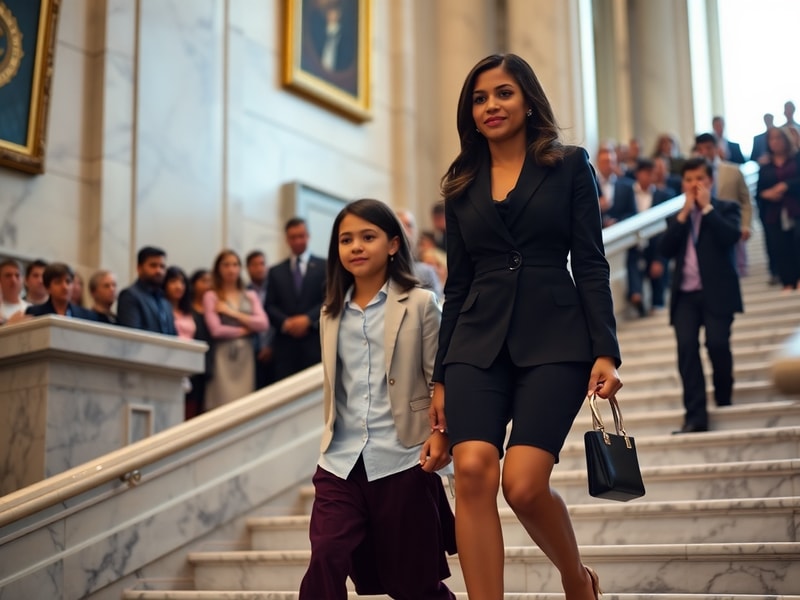
When Malia and Sasha Obama step into the public eye, the moment transcends routine celebrity sightings. The daughters of former U.S. President Barack Obama and First Lady Michelle Obama have grown into public figures in their own right, their appearances triggering global commentary that stretches beyond politics into culture, fashion, and generational influence. Their presence—whether at a charity gala, a university commencement, or a casual outing—reflects a new kind of celebrity: one rooted in legacy, yet evolving into individual identity.
From the White House to the World Stage
Raised under the most scrutinized roof in America, Malia and Sasha Obama spent their formative years navigating the glare of the public eye while their parents occupied the Oval Office. Their childhoods were charted in newspapers, late-night comedy monologues, and viral social media posts, turning moments like Sasha’s first day at Sidwell Friends School into national events. As they entered adulthood, their public appearances began to signal more than just family lineage—they began to represent a bridge between generations of American leadership and the future.
Their emergence into adulthood coincided with a cultural shift in how young women of color are perceived in global media. Malia, now in her mid-20s, has been noted for her poise and cultural interests, while Sasha, still in her early 20s, has cultivated a quieter, more introspective public presence. Their appearances at events like the Obama Foundation’s annual gatherings or high-profile galas are less about recapturing the past and more about shaping their own narratives—ones that honor their parents’ legacy while defining their personal ambitions.
This evolution is not isolated to the United States. In countries like Kenya, where Barack Obama’s father was born, their public appearances resonate deeply. During a 2018 visit to Kenya, Malia and Sasha were greeted as symbols of progress and possibility, drawing crowds and media attention that reflected a broader global fascination with the Obama family’s enduring influence.
Cultural Symbols in a Changing Media Landscape
Malia and Sasha Obama’s public appearances are more than social events—they’re cultural artifacts. Each outing, whether photographed at a music festival or spotted at a film premiere, is dissected through multiple lenses: generational, racial, and socioeconomic. Their fashion choices, for instance, have been analyzed in glossy magazines and academic papers alike, with their appearances at events like the Golden Globes or the Met Gala serving as case studies in how young Black women navigate visibility in elite spaces.
Their influence extends into youth culture, where their social media presence (when visible) and public personas are studied by Gen Z and Millennial audiences. Unlike traditional celebrities, their fame is inherited yet not imposed—they have the privilege of choice, a rare dynamic in the celebrity ecosystem. This has led to a nuanced public perception: they are both celebrated and scrutinized, praised for their privacy while expected to represent something larger than themselves.
In Europe and Asia, their appearances often spark conversations about American identity and leadership. During a 2023 trip to France, Sasha Obama attended a private event in Paris, where her presence was covered by French media not just as a personal moment, but as a reflection of transatlantic cultural exchange. Such moments underscore how their public roles have expanded beyond national borders, becoming touchstones for discussions about race, power, and representation on a global scale.
The Power of Controlled Visibility
One of the most striking aspects of Malia and Sasha Obama’s public appearances is their control over visibility. Unlike many celebrity children who are thrust into the spotlight by parents or agents, the Obama sisters have largely curated their own public engagements. This deliberate approach has allowed them to avoid the pitfalls of overexposure while still leveraging their platform for meaningful causes.
Their appearances at events like the Obama Foundation’s Girls Opportunity Alliance summits or their participation in campaigns for youth mental health highlight a strategic use of public presence—not for fame, but for advocacy. This mirrors a broader trend among young public figures who prioritize impact over attention. For instance, Malia’s documented interest in filmmaking and Sasha’s focus on education have been subtly woven into their public personas, signaling a shift toward substance over spectacle.
This controlled visibility extends to their social media presence, which remains minimal compared to peers. When they do appear in public, the images are often shared by trusted media outlets or official accounts, reinforcing a narrative of intentionality. It’s a stark contrast to the viral, often chaotic nature of modern celebrity culture, where every moment is captured and dissected in real time.
In an age where privacy is increasingly commodified, the Obama sisters’ approach offers a counterpoint. Their public appearances feel like invitations rather than intrusions, moments where the world is allowed to witness—not consume.
Global Reactions and Generational Echoes
The global reaction to Malia and Sasha Obama’s public appearances reveals as much about international audiences as it does about the sisters themselves. In countries with complex histories of race and leadership, their presence can evoke pride, nostalgia, or even political commentary. For example, in South Africa, where Barack Obama remains a symbol of hope for many, their visits are often framed as a continuation of his legacy of progress and unity.
In Japan, where the Obamas have maintained a strong cultural presence since their time in office, their appearances are covered with a mix of reverence and curiosity. Japanese media often highlights their fashion and demeanor, reflecting a fascination with how American identity is expressed through young Black women in the public eye. Similarly, in Brazil, where racial and social dynamics are closely watched globally, their visits are analyzed through the lens of representation and leadership.
Their influence is not merely symbolic—it’s generational. As young women who have grown up in the digital age, they embody a different kind of leadership, one that values authenticity and adaptability. Their public appearances, whether at a film festival or a university commencement, serve as milestones for audiences who see in them a reflection of their own aspirations.
Their global reception also highlights the unique position they occupy: neither fully insulated from their family’s legacy nor entirely free from its weight. Each public appearance is a negotiation between past and future, between expectation and self-determination. In that sense, their visibility is not just a personal choice—it’s a cultural statement.
As Malia and Sasha Obama continue to navigate the complexities of public life, their appearances will remain more than just moments in time. They are snapshots of a generation grappling with identity, legacy, and the evolving nature of fame. And in a world where visibility is both currency and cage, their ability to shape their own narrative offers a quiet but powerful counterpoint to the noise of modern celebrity culture.