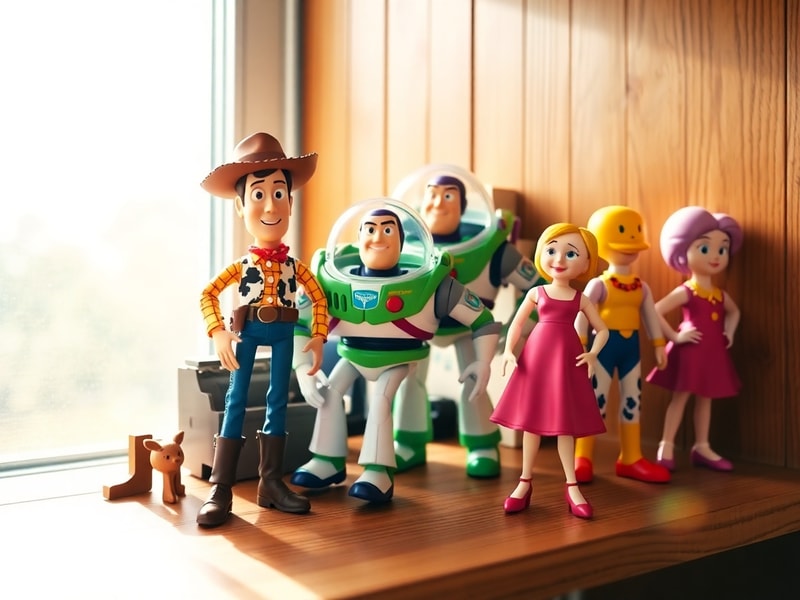
Toy Story 4 arrived in 2019 not just as another chapter in a beloved saga, but as a reflection of how stories evolve when they leave familiar ground. The film’s journey from Pixar’s original plan to its final form mirrors the way animation itself has matured—more willing to explore quiet moments than grand spectacle. Set in a world where toys come to life when humans aren’t looking, the story follows Woody, Buzz, and a new cast of characters as they navigate a landscape far removed from Andy’s bedroom. This time, the toys aren’t just protecting a child; they’re discovering what it means to belong to each other.
From Concept to Reality: The Long Road to Toy Story 4
The idea for a fourth Toy Story film wasn’t immediate. After Toy Story 3 (2010) delivered a definitive ending, Pixar considered the franchise complete. Yet creative teams found themselves returning to the characters, especially Woody and Buzz, who had become icons of modern animation. Early drafts explored a darker tone, including a concept where Bo Peep was eliminated from the story entirely—a decision that sparked internal debate. Director Josh Cooley, who had worked on earlier films, pushed for a more emotionally layered narrative.
Research trips to carnivals and second-hand shops inspired the look and feel of Toy Story 4. The filmmakers wanted to capture the magic of fleeting, transient spaces where toys might be discarded or forgotten. This theme of impermanence became central to the plot, giving depth to characters like Forky, a spork-turned-toy voiced by Tony Hale. His existential crisis over whether he’s truly a toy resonated with audiences navigating their own identities. The film’s animation team used new software to render textures like rusted metal and worn fabric, creating a tactile realism that grounded the story in emotional truth.
Cultural Resonance: Why the Story Stuck Beyond America
Toy Story 4 performed exceptionally well in international markets, ranking among the top animated films of 2019 in China, Japan, and Europe. Its success wasn’t just about Pixar’s brand—it tapped into universal themes of belonging and purpose. In Japan, where the Toy Story franchise has always had strong appeal, the film’s focus on found family struck a chord with audiences familiar with themes of hōjin (orphaned individuals finding new bonds). The character of Gabby Gabby, an antique doll with a damaged voice box, became a cultural talking point, symbolizing the fear of being unwanted—a fear that transcends language.
In Europe, the film’s European tour scenes sparked conversations about travel and freedom. Woody’s brief escape with Bo Peep felt like a metaphor for midlife reinvention, a concept widely discussed in Western Europe’s aging populations. Meanwhile, in Latin America, where dubbing plays a crucial role in film distribution, the Spanish-language version emphasized warmth and humor, making the story feel like a family gathering. These localized interpretations helped the film earn over $1 billion worldwide, proving that even in a digital age, storytelling thrives on emotional connection.
The Animation Revolution: How Toy Story 4 Pushed the Art Form
Toy Story 4 wasn’t just a story—it was a technical achievement. The film introduced new animation tools, including improved cloth simulation and hair dynamics, to make characters like Ducky and Bunny move more realistically. One of the most challenging sequences involved a flashback to Bo Peep’s early days, requiring animators to recreate a softer, more delicate version of her porcelain design without losing the expressive qualities of the original.
The film also experimented with lighting and color to reflect emotional shifts. Scenes set in the antique shop used muted, desaturated tones to evoke nostalgia, while the carnival sequences burst with saturated colors to mirror excitement and danger. This visual contrast helped guide the audience’s emotional response, making transitions between joy and melancholy feel natural.
Pixar’s commitment to innovation extended to sound design. The film’s score, composed by Randy Newman, blended familiar themes with new motifs, creating a musical identity that felt both nostalgic and fresh. The voice cast, led by Tom Hanks and Tim Allen, brought decades of history to their roles, ensuring that Woody and Buzz felt authentic even as their personalities evolved.
Beyond technical feats, Toy Story 4 quietly challenged conventions in animated storytelling. It avoided the traditional villain arc, instead focusing on redemption and self-discovery. Gabby Gabby’s journey from antagonist to ally was particularly notable, offering a nuanced portrayal of a character defined by her flaws rather than her evil intentions. This approach aligned with modern storytelling trends that prioritize complexity over simplicity.
Legacy and Influence: What Toy Story 4 Leaves Behind
As the first Toy Story film to be released after Disney’s acquisition of Pixar, Toy Story 4 symbolized a new era of collaboration between the two studios. It proved that sequels could evolve creatively rather than rely solely on nostalgia. The film’s success paved the way for other long-running franchises to take creative risks, including Incredibles 2 and Frozen II.
Yet its influence extends beyond animation. The film’s themes of purpose and belonging have been referenced in educational programs, particularly in discussions about self-esteem and teamwork. In 2021, a children’s education initiative used Toy Story 4 clips to teach emotional intelligence in classrooms across the U.S. and Europe. The story’s focus on found family also resonated in LGBTQ+ communities, where chosen families play a significant role in support systems.
The film’s final scene, where Bo Peep returns to lead the toys in a new adventure, felt like a metaphor for animation itself—always moving forward, even when it revisits the past. It suggested that Woody, Buzz, and the others would continue to grow, not just in sequels, but in the hearts of audiences who saw themselves in these plastic heroes.
In an industry often criticized for prioritizing franchise over creativity, Toy Story 4 stood as a reminder that great storytelling endures because it connects deeply with human experiences. Whether through the lens of cultural identity, technical innovation, or emotional storytelling, the film proved that even in a world of endless reboots, authenticity still matters.