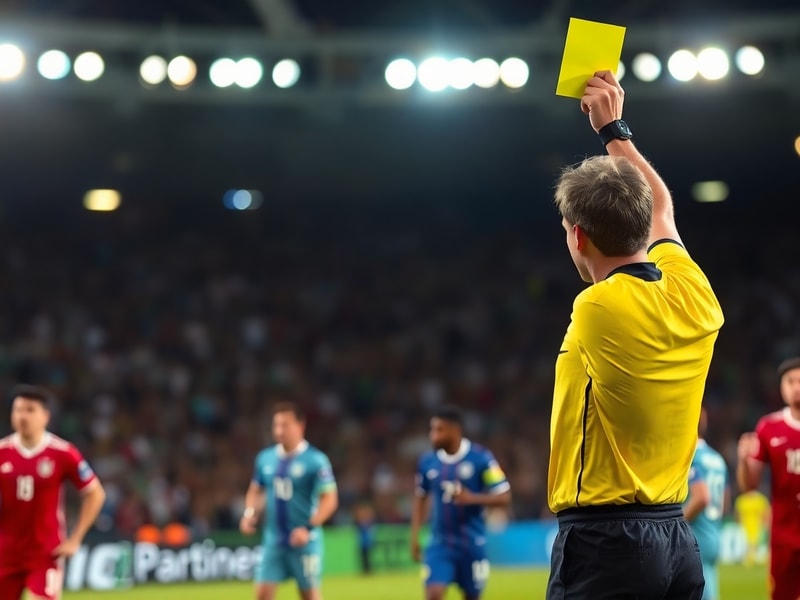
Yellow cards in the World Cup represent more than just a caution—they’re a strategic chess piece in football’s most intense tournament. Since FIFA introduced them in 1970, the yellow card has evolved from a simple warning to a tool that can swing momentum, influence referee decisions, and even alter the outcome of matches. With high stakes and global scrutiny, understanding the rules, their enforcement, and their impact is essential for fans and players alike.
How Yellow Cards Work in the World Cup
The basic premise is straightforward: a player receives a yellow card for unsporting behavior, dissent, persistent fouling, or delaying the restart of play. But in the World Cup, where every decision is magnified, the enforcement isn’t always predictable. FIFA’s Laws of the Game outline these offenses, but referees retain significant discretion, especially in high-pressure moments. A cynical tackle in the first half might earn a yellow, while the same challenge in stoppage time could go unpunished—or worse, lead to a red.
Yellow cards also serve as a disciplinary buffer. Two cautions in a single match result in a red card and an automatic suspension for the next game. This rule prevents reckless play from derailing a team’s tournament ambitions. For example, in the 2022 World Cup, England’s Jude Bellingham received a yellow card in the group stage that later drew scrutiny, though it didn’t lead to suspension. Such incidents highlight how a single card can linger in the minds of players and coaches long after the final whistle.
Key Moments Where Yellow Cards Changed the Game
History is littered with matches where yellow cards decided fates. The 2014 World Cup quarterfinal between Brazil and Colombia saw Neymar’s tournament end after a brutal challenge by Juan Zúñiga, which went unpunished with a card. That moment underscored how referee decisions—right or wrong—can alter careers and tournaments. Conversely, in 2018, Russia’s Roman Zobnin escaped a second yellow for a tactical foul against Spain, allowing his team to hold on for a historic victory.
One of the most analyzed calls came in the 2010 final between Spain and the Netherlands. Nigel de Jong’s high boot on Xabi Alonso seemed to warrant at least a yellow, but referee Howard Webb let it go. Many argue that missed call shifted the match’s tone, fueling Dutch frustration and ultimately contributing to Spain’s victory. These examples prove that yellow cards aren’t just about punishment—they’re about perception and the thin line between control and chaos on the pitch.
Another pivotal instance occurred in the 2022 World Cup group stage, when Portugal’s João Félix was booked for time-wasting during a crucial match against Uruguay. The card didn’t lead to a suspension, but it disrupted Portugal’s rhythm and forced tactical adjustments. Such moments reveal how yellow cards can act as psychological tools, wearing down opponents or forcing teams into unfamiliar strategies.
Controversies and Criticisms of Yellow Card Decisions
No World Cup is complete without controversy, and yellow cards are often at the center. Critics argue that referees apply rules inconsistently, especially when cultural or tactical biases come into play. In 2018, Colombia’s Yerry Mina was booked for removing his shirt after scoring, a rule FIFA has clamped down on in recent years. Yet, other players receive leniency for similar celebrations, sparking accusations of unfair treatment. The use of Video Assistant Referee (VAR) technology has helped reduce egregious errors, but it hasn’t eliminated debate.
Another flashpoint is the treatment of dissent. Players like Argentina’s Lionel Messi and Portugal’s Cristiano Ronaldo have been booked for minor protests, while others face no consequences for far more aggressive reactions. This inconsistency fuels perceptions of a double standard, particularly when high-profile players are involved. The 2022 World Cup saw multiple instances where players escaped cards for verbal abuse or tactical fouls, raising questions about whether the rules are applied fairly across all teams.
Tactical fouling is another gray area. Coaches often instruct players to commit cynical fouls to break up attacks, and referees frequently let these slide with a warning. While this strategy can be effective, it risks normalizing unsporting behavior. FIFA has attempted to curb this by cracking down on tactical fouls, but enforcement remains inconsistent. The result? Fans and analysts alike grow frustrated when key matches are decided by questionable officiating rather than pure skill.
How Teams Adapt to Yellow Card Rules
World Cup-bound teams spend months preparing for the physical and mental challenges of the tournament, and adapting to yellow card risks is a critical part of that process. Coaches often rotate key players in high-intensity games to avoid fatigue-related fouls. For example, France’s 2018 squad carefully managed N’Golo Kanté’s minutes to prevent burnout and reduce his chances of picking up a yellow card in knockout rounds.
Defensive strategies also evolve. Teams may deploy a “high press” to force turnovers but must balance aggression with caution to avoid accumulating cards. Germany’s 2018 World Cup campaign collapsed partly due to defensive errors and a lack of discipline, leading to multiple yellow cards in critical matches. This taught future German squads the importance of structured defending and situational awareness.
Off the pitch, teams invest in psychological conditioning to help players manage stress and avoid rash challenges. Sports psychologists work with squads to develop coping mechanisms for high-pressure moments, such as the dying minutes of a match where a yellow card could be catastrophic. The mental aspect of the game is as crucial as the physical, and World Cup teams that master this balance often progress further than those that rely solely on talent.
Looking Ahead: Will FIFA Change the Rules?
As football evolves, so too do discussions about yellow card rules. FIFA has experimented with temporary dismissals in other competitions, and some pundits argue this could reduce cynical play in the World Cup. Others advocate for stricter enforcement of tactical fouls, ensuring that yellow cards are reserved for clear cases of misconduct rather than strategic necessity.
Technology will also play a bigger role. VAR has already reduced blatant errors, but debates continue about whether referees should be given more leeway to use their discretion in marginal cases. The 2026 World Cup, which will expand to 48 teams, will test these systems on a larger scale, making consistency even more vital. For now, yellow cards remain a blend of law, interpretation, and luck—elements that keep the World Cup’s drama alive.
One thing is certain: yellow cards will continue to shape World Cup narratives, for better or worse. Whether they decide a single match or define a tournament, their impact is undeniable. Fans may groan at missed calls or celebrate tight refereeing, but in the end, the yellow card’s legacy is written in the stories that unfold on football’s biggest stage.
For more insights into World Cup tactics and referee decisions, explore our News and Sports categories.