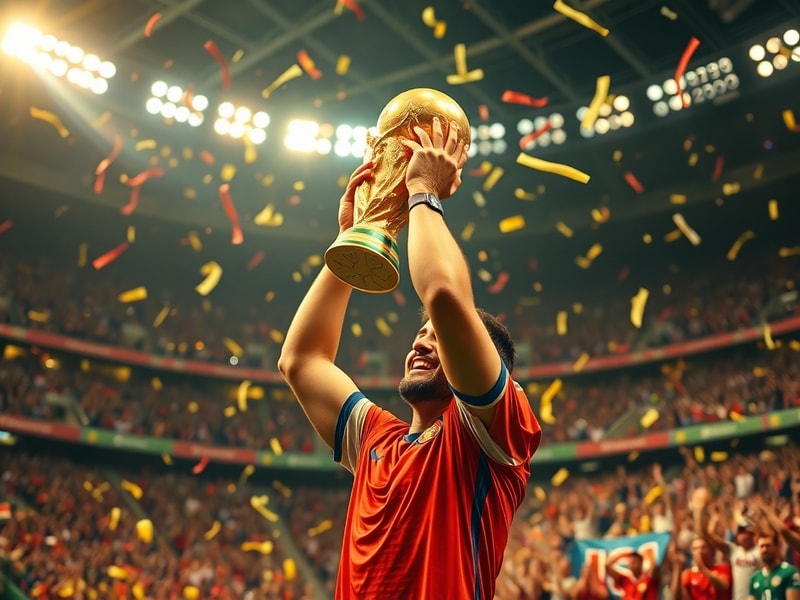
The FIFA World Cup, known in Spanish as the Copa Mundial de Fútbol, stands as the pinnacle of international football. Every four years, nations pause to celebrate this global tournament, where the world’s best players don their national colors and compete for glory on the pitch. More than just a sporting event, the World Cup is a cultural phenomenon that transcends borders, uniting billions in shared moments of triumph and heartbreak.
The tournament’s history stretches back to 1930, when Uruguay hosted the inaugural competition. Since then, the Copa Mundial has grown into a spectacle of unparalleled scale, evolving from a modest 13-team affair to a month-long extravaganza featuring 32 nations—and expanding to 48 teams in 2026. Its influence extends far beyond the football field, shaping economies, politics, and even social movements around the globe.
The Global Stage: More Than Just a Game
The World Cup is a rare moment when the world’s attention converges on a single event. Unlike club football, which is often dominated by a handful of elite teams, the Copa Mundial gives smaller nations a chance to shine. Iceland’s 2016 European Championship run and Morocco’s 2022 quarterfinal appearance proved that football is truly a global game. These underdog stories captivate audiences, reminding fans that passion and teamwork can overcome financial disparities.
Economically, the tournament is a powerhouse. Host nations invest billions in infrastructure, from stadiums to transportation, banking on the event to boost tourism and long-term development. Qatar’s 2022 World Cup, for example, was preceded by intense scrutiny over labor conditions, yet it also accelerated modernization projects worth over $200 billion. The tournament’s commercial appeal is undeniable, with broadcasting rights alone generating billions in revenue for FIFA and its partners.
Politically, the World Cup has often been a stage for diplomacy—or tension. The 1970 Mexico World Cup saw Pelé and Brazil enchant the world amid Cold War tensions, while the 1978 tournament in Argentina became entangled in the country’s brutal military dictatorship. More recently, the 2022 event in Qatar sparked debates over human rights, prompting FIFA to implement reforms. The Copa Mundial doesn’t just reflect geopolitics; it actively shapes it.
Cultural Impact: A Mirror of Society
Football is the world’s most popular sport, and the World Cup amplifies that reach. The tournament’s cultural footprint is vast, influencing music, fashion, and even language. Iconic moments—Maradona’s “Hand of God,” Zidane’s headbutt, Messi’s 2022 triumph—become ingrained in collective memory. These incidents are more than just highlights; they’re catalysts for national pride, debate, and even social change.
Consider the impact of the 2018 World Cup in Russia. Beyond the football, the tournament showcased a modernizing Russia eager to present itself as a global player. Meanwhile, the 2014 event in Brazil highlighted the stark contrast between the country’s footballing brilliance and its socioeconomic challenges, as protests erupted over public spending. The Copa Mundial forces host nations to confront their realities, for better or worse.
Commercially, the World Cup is a marketing goldmine. Brands invest heavily in sponsorships, knowing that a single viral moment—like Paul the Octopus predicting results in 2010—can yield global exposure. The tournament’s mascot, anthem, and even the controversial VAR (Video Assistant Referee) system become part of the cultural lexicon. In an era of fragmentation, the World Cup remains one of the few unifying forces in entertainment.
What’s Next? The Future of the Copa Mundial
The 2026 World Cup, co-hosted by the United States, Canada, and Mexico, will mark a historic expansion to 48 teams. This change aims to grow the game globally, but it also raises questions about quality and accessibility. Will smaller nations get a real chance, or will the tournament become diluted? FIFA insists the move will deepen football’s reach, but critics argue it could dilute the prestige of the competition.
Another critical issue is sustainability. Climate change and human rights concerns have forced organizers to rethink their approaches. The 2022 Qatar World Cup was criticized for its environmental impact and labor practices, prompting FIFA to pledge more sustainable and ethical standards for future tournaments. Whether these promises translate into action remains to be seen.
For fans, the future of the Copa Mundial is both exciting and uncertain. The tournament’s ability to adapt will determine its longevity. Can it balance commercial interests with social responsibility? Will technology like VAR continue to enhance the game, or will it erode its spontaneity? One thing is certain: the World Cup’s allure is timeless, but its evolution will shape the next century of football.
Key Takeaways from the Copa Mundial
- The World Cup is a global cultural event that transcends sport, influencing economies, politics, and social movements.
- Underdog stories and iconic moments make the tournament a unifying force, despite controversies.
- Host nations face economic and political pressures, often using the event to modernize or address criticism.
- The 2026 expansion to 48 teams aims to grow football globally but risks diluting the tournament’s prestige.
- Sustainability and human rights remain critical challenges for FIFA and future host nations.
The FIFA World Cup is more than a tournament; it’s a global ritual. From the streets of Buenos Aires to the deserts of Qatar, the Copa Mundial de Fútbol brings the world together in ways few other events can. As it evolves, the tournament will continue to reflect the triumphs and struggles of our time—on and off the pitch.