From Toffees to Tartan: Ferguson’s Legacy Beyond the Pitch
Duncan Ferguson’s name still carries weight in British football, not just for his reputation as one of the most fearsome strikers of the 1990s, but for the uncompromising style that defined his career. Standing at 6’3”, Ferguson played with a physicality that forced defenders into uncomfortable choices: either stand their ground and risk injury or retreat and concede space. His time at Everton, in particular, cemented his status as a cult hero, but his influence extended far beyond the blue side of Liverpool. Ferguson’s journey—from Scotland to England, through managerial roles and back into the public eye—offers a case study in how footballers transition into broader cultural narratives.
Born in Stirling, Scotland, in 1971, Ferguson’s early career with Dundee United showcased his raw potential. Yet it was his move to Rangers in 1993 that first drew wider attention, though his tenure was short-lived and marred by a conviction for headbutting a spectator. The incident, which resulted in a three-month prison sentence, became a defining moment in his early career, illustrating the volatile mix of talent and temperament that would follow him. By the mid-1990s, Ferguson had landed at Everton, where he transformed from a promising prospect into a club legend.
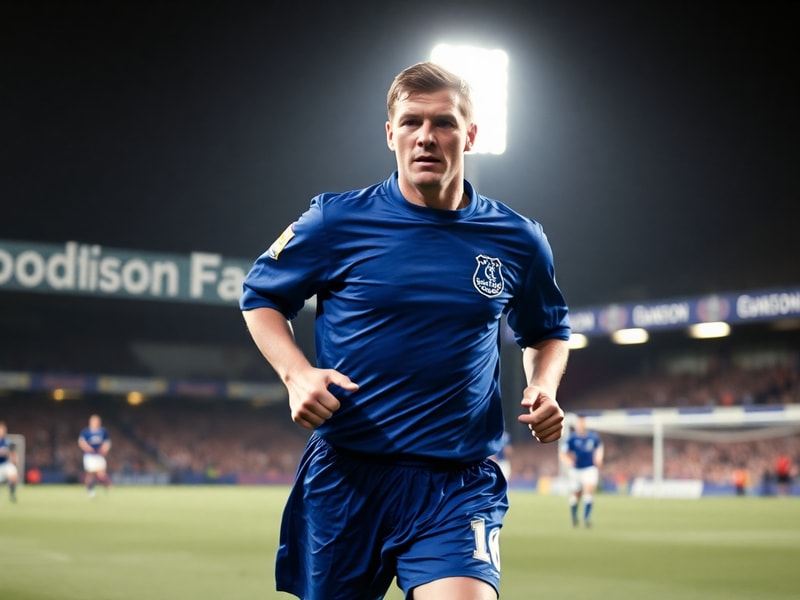
At Goodison Park, Ferguson’s arrival coincided with a resurgence in the Toffees’ fortunes. His partnership with players like Andrei Kanchelskis and later Kevin Campbell formed the backbone of a team that pushed for European qualification. Ferguson’s aerial dominance, relentless pressing, and no-nonsense approach made him a nightmare for defenders but a dream for fans. His iconic goal against Liverpool in the 1995 FA Cup quarter-final—a towering header from a Kanchelskis cross—remains one of the most celebrated moments in Everton’s recent history. That performance wasn’t just a victory; it was a statement, one that Ferguson delivered with his customary intensity.
Defining Characteristics of Ferguson’s Playing Style
Ferguson’s career can be distilled into a few key traits that set him apart from his peers. First, his physical presence was undeniable. Defenders often described facing him as akin to colliding with a brick wall, and his ability to win headers made him a constant threat in the box. Second, his work rate set a standard. Ferguson rarely shied away from defensive duties, pressing opponents relentlessly and forcing mistakes. Third, his mentality was unyielding. Whether leading the line or battling in midfield, he played with an edge that bordered on aggression, a quality that endeared him to fans but sometimes complicated his professional relationships.
These attributes weren’t just personal quirks; they reflected the tactical demands of the era. The Premier League in the mid-to-late 1990s was a more physical competition than today, with fewer rules protecting attackers. Ferguson thrived in this environment, but his style also posed challenges. His disciplinary record—including multiple red cards and suspensions—highlighted the fine line between intensity and recklessness. Yet, for Everton, his contributions were invaluable. The club’s 1995 FA Cup triumph, in which Ferguson played a pivotal role, was a rare highlight during a period of financial instability and managerial turnover.
The Ferguson Effect: Beyond Everton’s Boundaries
Ferguson’s impact extended beyond his playing days. His managerial career, though less illustrious, offered a glimpse into his leadership philosophy. After retiring, he returned to Everton in various roles, including a brief stint as caretaker manager in 2019. While his tenure was short, it underscored his deep connection to the club and its culture. Ferguson’s approach to management mirrored his playing style: direct, uncompromising, and rooted in a belief in hard work. However, the transition from player to manager also revealed the challenges of translating his on-field persona into a broader tactical framework.
Off the pitch, Ferguson’s legacy has been shaped by his authenticity. In an era where footballers often curate carefully controlled public images, Ferguson’s unfiltered personality—whether in interviews, social media, or public appearances—has made him a relatable figure. His post-retirement life has included ventures into punditry and charity work, further cementing his role as a cultural touchstone in British football. Yet his story also raises broader questions about the expectations placed on former athletes. How much of Ferguson’s identity is tied to his playing career, and how much can he redefine himself beyond it?
A Career in Context: The 1990s Football Landscape
To understand Ferguson’s career, it’s essential to contextualize it within the football landscape of the 1990s. The Premier League was in its infancy, and the division was defined by physicality, pace, and direct play. Players like Ferguson, Eric Cantona, and Tony Yeboah embodied this era’s ethos: football as a battleground where skill and strength were equally valued. The lack of VAR and stricter officiating meant that referees often allowed more physicality, creating an environment where Ferguson could thrive.
Yet this context also highlights the risks Ferguson took. His playing style, while effective, came at a cost. Injuries and suspensions frequently disrupted his career, and his confrontational demeanor led to high-profile clashes with opponents and officials alike. His infamous headbutt incident at Rangers remains a cautionary tale about the consequences of unchecked aggression. However, it also serves as a reminder that Ferguson’s career was as much about defiance as it was about talent. He played by his own rules, and that defiance became part of his appeal.
Ferguson’s later years at Newcastle United and Wolves provided a contrast to his Everton heyday. At Newcastle, under the ownership of Freddy Shepherd and the management of Kenny Dalglish and later Ruud Gullit, Ferguson’s role was more limited. His physical decline was evident, but his presence in the dressing room was undeniable. His stint at Wolves, though brief, added another layer to his journey, showcasing his adaptability and resilience.
Key Takeaways from Ferguson’s Career
The story of Duncan Ferguson is more than a tale of goals and tackles; it’s a narrative about identity, legacy, and the evolution of football itself. Here are the core elements that define his career:
- Physical Dominance: Ferguson’s 6’3” frame and aerial ability made him a constant threat in the box, a trait that defined his playing style and frustrated defenders.
- Cultural Icon: His connection with Everton fans transcended his on-field contributions, making him a symbol of the club’s underdog spirit during a turbulent period.
- Discipline and Controversy: Ferguson’s disciplinary record—marked by red cards and suspensions—highlighted the fine line between intensity and recklessness, a tension that defined his career.
- Post-Retirement Impact: From managerial roles to punditry, Ferguson’s transition off the pitch has been as much about authenticity as it has been about adaptation.
- Era-Defining Style: Ferguson embodied the physical, direct football of the 1990s, a style that is now largely consigned to history but remains a nostalgic touchstone for fans of the era.
Ferguson’s Legacy in the Broader Football Narrative
Duncan Ferguson’s career offers a lens through which to view the evolution of British football. The 1990s were a time of transition, with the Premier League’s global expansion coinciding with a shift in playing styles. Ferguson’s rise and fall mirror this transition: his physicality was a product of an era that valued strength, but his disciplinary record foreshadowed the stricter regulations of modern football. Today, players like Virgil van Dijk or Erling Haaland dominate through a different kind of physicality—one that prioritizes technical ability and tactical awareness alongside power.
Yet Ferguson’s legacy endures because of his authenticity. In an age where footballers are often packaged as marketable products, Ferguson’s refusal to conform to expectations made him stand out. His post-retirement ventures, whether in media or charity, have reinforced his role as a figure who transcends the pitch. For Everton fans, he remains a hero; for football historians, he is a relic of a bygone era. His story is a reminder that football is not just about trophies or statistics—it’s about identity, culture, and the unscripted moments that define a career.
As the Premier League continues to evolve, Ferguson’s career serves as a counterpoint to the modern game’s emphasis on technical skill and tactical sophistication. His story challenges us to consider what we value in football: is it the elegance of a Messi dribble or the raw, unfiltered intensity of a Ferguson charge? Perhaps the answer lies in the balance between the two, a blend of artistry and athleticism that Ferguson embodied in his own, unforgettable way.