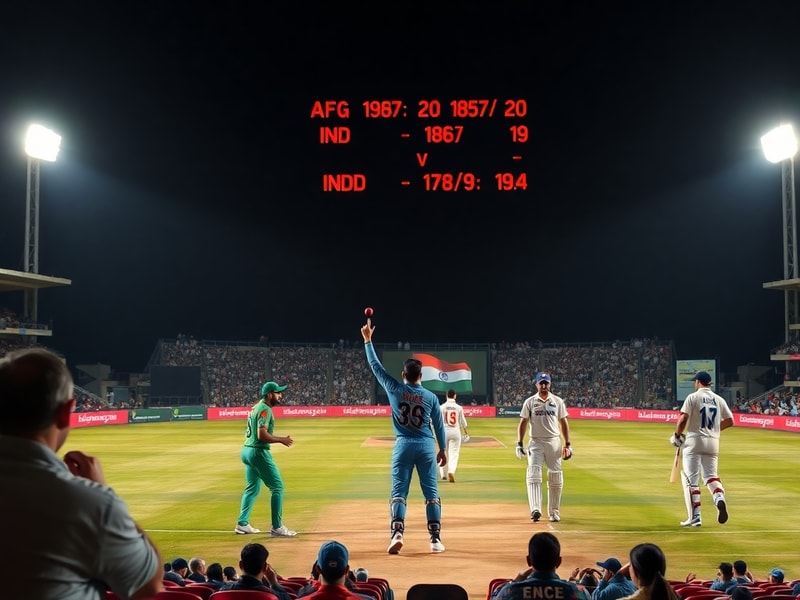
India vs Afghanistan Cricket: A Rivalry That Defines Modern Sport
Beyond the Boundary: How India vs Afghanistan Cricket Rivalry Reflects Global Shifts
The India vs Afghanistan cricket match isn’t just another game on the schedule—it’s a snapshot of how the sport is evolving across continents, cultures, and political landscapes. When these two teams face off, the contest on the pitch is matched by the quiet transformations happening off it: Afghanistan’s cricketers, many of whom grew up playing in refugee camps or under Taliban restrictions, now represent a nation rebuilding itself through sport. Meanwhile, India’s cricket juggernaut, powered by billion-dollar leagues and a billion-strong fanbase, offers a sharp contrast in resources and infrastructure.
This rivalry isn’t rooted in decades of shared history like India-Pakistan or Australia-England. Instead, it’s a relatively new chapter in cricket’s global expansion, one that reflects broader geopolitical and social currents. Afghanistan’s rapid rise in international cricket—from being granted ICC associate membership in 2001 to Test status in 2017—mirrors the country’s own journey toward recognition and self-determination. Their matches against India are more than wins and losses; they’re statements of resilience and ambition.
From the dusty pitches of Kabul to the high-tech stadiums of Mumbai, the India-Afghanistan cricket dynamic tells a story of cricket’s power to transcend borders. It’s a narrative that resonates far beyond the stumps and scoreboards, touching on themes of identity, national pride, and the unifying force of sport in a fractured world.
The Making of a Modern Rivalry: Cricket’s Globalization in Action
Cricket’s spread from its colonial heartlands to the far corners of the globe has been one of the most remarkable stories in modern sports. The game’s governing body, the ICC, has actively promoted it as a global sport, offering development programs and financial support to associate nations. Afghanistan’s cricket journey is a textbook example of this strategy in action.
Many Afghan players learned the game in refugee camps in Pakistan, where cricket became a way to pass time and escape harsh realities. Players like Rashid Khan and Mohammad Nabi rose from those humble beginnings to become world-class athletes, carrying the hopes of a nation rebuilding after decades of war. Their performances against top teams like India aren’t just athletic feats—they’re symbols of progress.
India, on the other hand, has leveraged cricket as both a cultural export and a commercial enterprise. The Indian Premier League (IPL), now in its sixteenth season, has become a global phenomenon, attracting talent from across the world and pumping millions into the sport. While Afghanistan’s team is still finding its footing in bilateral series, India’s dominance reflects the widening gap in resources and infrastructure. Yet, the emotional stakes remain high for Afghan fans, who see their team as a point of national pride.
This disparity raises important questions about the future of cricket. As the sport grows in non-traditional markets, how can associate nations like Afghanistan compete on equal footing? The answer may lie in continued investment, grassroots development, and perhaps, more opportunities for associate teams to face top opposition regularly.
The Cultural Clash and Connection: What These Matches Really Mean
The India vs Afghanistan cricket rivalry isn’t just about cricket—it’s about culture, identity, and the complex relationship between two nations that share historical ties but vastly different realities. For many Afghans, cricket is more than a sport; it’s a form of soft power, a way to assert their presence on the world stage. When Afghanistan plays India, it’s not just a game—it’s a cultural exchange, a moment where two worlds collide and connect.
Consider the fan experience. In India, cricket matches are massive spectacles, with stadiums packed to capacity, broadcast to millions, and accompanied by Bollywood-style entertainment. In Afghanistan, even international matches are intimate affairs, with fans gathering around radios or small screens in homes and tea shops. The contrast is stark, but the passion is universal.
There’s also a historical dimension to this rivalry. India and Afghanistan share deep cultural and civilizational links, from shared cuisine and music to ancient trade routes. Cricket, in many ways, is a modern extension of that connection. Yet, geopolitical tensions—particularly India’s strained relationship with Pakistan, Afghanistan’s neighbor—add layers of complexity to the narrative. When Afghanistan plays India, it’s not just about cricket; it’s about navigating a web of regional politics and alliances.
This cultural interplay is what makes the India-Afghanistan cricket rivalry so unique. It’s a reminder that sports are never played in a vacuum. They reflect the societies they come from, the histories they carry, and the aspirations they inspire.
What’s Next for India and Afghanistan on the Cricket Field?
The future of the India vs Afghanistan cricket rivalry is as unpredictable as the sport itself. Afghanistan’s rapid rise suggests that they could soon become a consistent threat to top teams, including India. Their spin bowling attack, led by Rashid Khan, has already caused upsets against stronger teams, proving that talent and grit can overcome resource disparities.
For India, the challenge isn’t just about winning—it’s about nurturing the next generation of cricketers who can handle pressure in all conditions. While India’s domestic structure is robust, there’s a growing need to invest in associate nations and give them more opportunities to compete. This isn’t just altruism; it’s strategic foresight. A stronger global cricket community benefits everyone, from players to fans.
Looking ahead, the ICC could play a pivotal role in shaping this rivalry. More bilateral series, participation in multi-nation tournaments, and financial support for associate nations could help level the playing field. Meanwhile, India’s BCCI could take a leadership role by organizing more matches against Afghanistan and other associate teams, both at home and abroad.
The India vs Afghanistan cricket rivalry is still in its infancy, but its potential is immense. It’s a story of underdogs rising, of cultures colliding and connecting, and of a sport that continues to redefine itself in the 21st century. Whether it’s in a packed stadium in Delhi or a makeshift ground in Kandahar, the next chapter of this rivalry will be worth watching.
Key Takeaways from the India vs Afghanistan Cricket Rivalry
- Afghanistan’s rise: From refugee camps to international cricket, Afghanistan’s journey reflects resilience and ambition. Their performances against top teams like India are a testament to their rapid development.
- India’s dominance: With a billion-dollar league and world-class players, India remains the powerhouse of world cricket. But their role in nurturing associate nations could define the sport’s future.
- Cultural exchange: The rivalry is more than cricket—it’s about shared history, regional politics, and the unifying power of sport. It’s a reminder that sports are never played in a vacuum.
- Future outlook: More bilateral series, financial support for associate nations, and strategic investments could make this rivalry even more compelling in the years to come.
As cricket continues to evolve, the India vs Afghanistan rivalry will likely become a defining narrative of the sport’s global expansion. It’s a story that transcends boundaries, cultures, and politics—a reminder that cricket, at its heart, is about more than just runs and wickets. It’s about people, dreams, and the power to inspire.
For fans and followers of the game, there’s never been a more exciting time to watch cricket’s next chapter unfold.