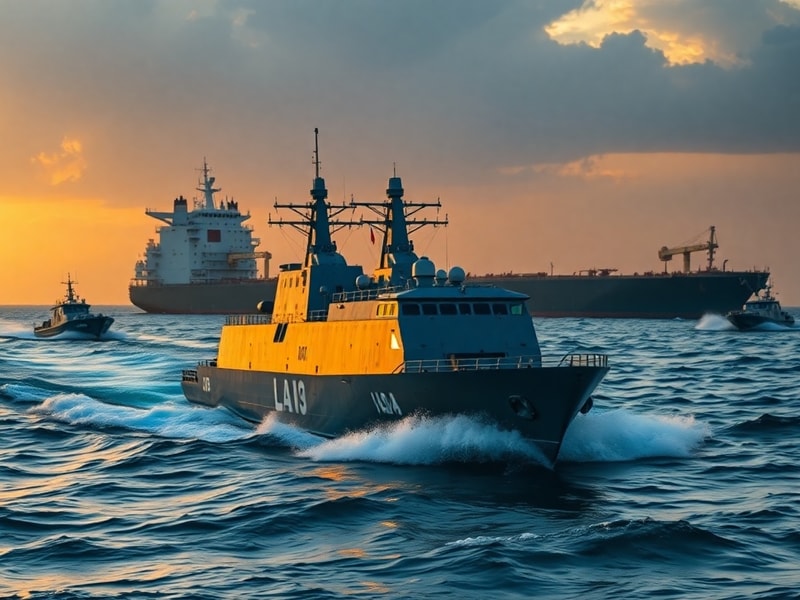
Strait of Hormuz: Why This Waterway Controls Global Oil Markets
The Strait of Hormuz remains one of the most critical chokepoints in global energy markets, a narrow waterway where geopolitical tensions often spill into economic disruptions. Roughly 20 to 30 percent of the world’s seaborne oil passes through this 21-mile-wide passage between Iran and Oman, making it a flashpoint for international shipping, military patrols, and diplomatic maneuvering. Recent developments have reinforced its status as a pressure valve for global stability—where a single incident can send ripples across stock markets, fuel prices, and international relations.
In July, reports emerged of increased Iranian naval activity near the strait, including the seizure of an oil tanker linked to Greece. The incident followed a pattern of tit-for-tat maritime confrontations that have escalated since 2019, when Iran began detaining foreign vessels in response to sanctions and perceived provocations. Analysts warn that such actions are not isolated but part of a broader strategy to project influence amid stalled nuclear negotiations and rising regional insecurity.
Global oil prices reacted immediately to the news. Brent crude futures climbed over 2 percent within hours of the tanker seizure, reflecting concerns over potential supply disruptions. While the market later stabilized, the episode underscored the strait’s enduring role as a geopolitical pressure point. Traders and policymakers alike remain on edge, knowing that any disruption—whether due to conflict, accident, or deliberate action—could ripple through economies still recovering from inflation and supply chain strains.
Why the Strait of Hormuz Matters in 2024
The strait’s significance extends beyond oil. It is a corridor for liquefied natural gas (LNG) shipments from Qatar, the world’s largest exporter, and a transit route for container ships carrying electronics, automobiles, and consumer goods. Any prolonged closure or disruption would not only drive up fuel costs but also delay shipments of critical goods, affecting industries from manufacturing to retail.
Oil analysts point to three key factors that make the strait indispensable:
- Energy Security: Over 17 million barrels of crude oil traverse the strait daily. Even a temporary halt would strain global inventories and send prices soaring.
- Military Presence: The U.S. Fifth Fleet, based in Bahrain, maintains a visible presence to deter aggression and ensure free navigation. Iran, meanwhile, has invested in asymmetric capabilities like fast-attack boats and anti-ship missiles to assert control.
- Diplomatic Leverage: Iran has historically used the strait as a bargaining chip, linking maritime security to nuclear talks and regional negotiations.
This delicate balance creates a paradox: the strait is both a vital artery for the global economy and a potential trigger for conflict. As tensions rise, nations are forced to weigh the cost of intervention against the risk of escalation—a calculation that grows more complex with each passing crisis.
The Human Cost of Maritime Disputes
Behind the headlines are the human stories of seafarers caught in the crossfire. Merchant mariners, often from developing nations, face detention, harassment, or worse when geopolitical tensions escalate. In 2021, an Iranian court sentenced a South Korean tanker captain to death on charges of spying—a case that highlighted the vulnerability of crews navigating high-risk waters.
Families of detained sailors endure months or years of uncertainty, relying on sporadic updates from embassies and advocacy groups. Organizations like the International Chamber of Shipping have called for stronger international protections, but enforcement remains inconsistent. The psychological toll on sailors and their loved ones is a silent crisis, often overshadowed by geopolitical posturing.
Cultural narratives in the region reflect this tension. In Iranian cinema and literature, the strait is frequently portrayed as a symbol of resilience and resistance. Films like Muhammad: The Messenger of God emphasize historical maritime trade routes, while modern works critique foreign interference. Meanwhile, in Gulf states, the strait is framed as a shared heritage under threat—a reminder of the need for regional cooperation.
These contrasting perspectives highlight the strait’s dual identity: a lifeline for global trade and a stage for competing national narratives. Resolving the underlying disputes will require more than military deterrence; it will demand dialogue that acknowledges both economic imperatives and cultural sensitivities.
Global Responses and the Future of the Strait
International reactions to recent incidents have been swift but fragmented. The United States has reaffirmed its commitment to “freedom of navigation,” conducting joint patrols with allies like the United Kingdom and Australia. Meanwhile, China and Russia have called for restraint, emphasizing diplomatic solutions over military confrontation. This divergence reflects broader shifts in global alliances, with nations hedging bets in a multipolar world.
Economic alternatives are also being explored. Saudi Arabia, for example, has invested in overland pipelines to bypass the strait, reducing its reliance on Hormuz for oil exports. Other nations are diversifying supply chains, but these measures are costly and slow to implement. For now, the strait remains indispensable.
A recent report by the U.S. Energy Information Administration outlined three possible scenarios for the strait’s future:
- Stalemate: Continued low-level tensions with periodic disruptions, but no full-scale conflict. This scenario would keep prices volatile but manageable.
- Escalation: A deliberate or accidental confrontation leading to a temporary closure. This would trigger a supply shock and a sharp price spike.
- Diplomatic Breakthrough: A regional agreement addressing security concerns and easing sanctions. This remains the least likely but most desirable outcome.
For businesses and policymakers, the strait’s future is a question of risk management. Energy companies are adjusting shipping routes and insurance premiums, while governments are stockpiling strategic reserves. Yet, in a world where energy transitions are accelerating, the strait’s role may evolve rather than disappear. As nations invest in renewables and alternative fuels, the geopolitical calculus could shift—but not overnight.
One thing is clear: the Strait of Hormuz will continue to shape global affairs for decades to come. Its waters are not just a conduit for oil; they are a mirror reflecting the world’s competing interests, fears, and aspirations. Navigating this reality will require more than military power or economic leverage—it will demand a shared commitment to stability and dialogue.