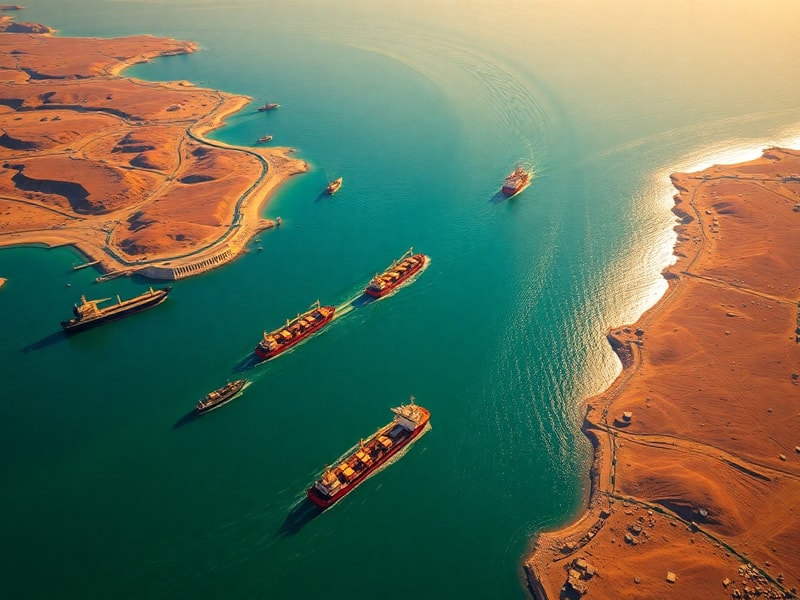
Why the Strait of Hormuz Is the World’s Most Critical Energy Chokepoint
The Strait of Hormuz: A Global Chokepoint Shaping Energy and Diplomacy
The Strait of Hormuz is more than a narrow waterway between Iran and Oman—it is a critical artery of the world’s energy system, a flashpoint in geopolitical tensions, and a symbol of how geography can dictate global power dynamics. Connecting the Persian Gulf with the Gulf of Oman and the Arabian Sea, this 21-mile-wide passage sees roughly 20% of the world’s oil pass through its waters each day. For nations dependent on Middle Eastern oil, the strait is not just a route; it is a lifeline. Disruptions here send tremors through global markets, influence diplomatic negotiations, and sometimes escalate into military posturing.
Historically, the strait has been a crossroads of trade, culture, and conflict. Ancient trade routes once carried spices and silk through its waters, linking the Indian subcontinent with the Mediterranean. Today, its significance is measured in barrels of oil and cubic meters of liquefied natural gas. The region’s strategic importance has made it a stage for power plays between regional heavyweights like Iran, Saudi Arabia, and the United Arab Emirates, as well as global players including the United States, China, and Russia. Understanding the Strait of Hormuz requires looking beyond its narrow confines to see how it reflects broader struggles for influence in the Middle East.
Geopolitical Tensions and the Risk of Escalation
The Strait of Hormuz has become synonymous with geopolitical volatility. Since the 1979 Iranian Revolution, tensions between Iran and Western powers have often played out in these waters. In 2019, attacks on oil tankers near the strait, attributed to Iran by the U.S. and its allies, sent oil prices surging and raised fears of a broader conflict. Similarly, Iran’s threats to close the strait in response to sanctions have repeatedly brought the region to the brink. These incidents underscore how a single chokepoint can become a tool of coercion in international relations.
The presence of naval forces from multiple countries adds another layer of complexity. The U.S. Fifth Fleet, based in Bahrain, patrols the strait to ensure freedom of navigation. Meanwhile, Iran conducts military exercises and deploys patrol boats, asserting its control over territorial waters. The 2021 seizure of a South Korean tanker by Iran, followed by a retaliatory detention of an Iranian ship by Seoul, illustrated how even non-regional players can get entangled in these disputes. Such events highlight the strait’s role as a pressure valve for broader diplomatic conflicts.
For smaller Gulf states like Oman and the UAE, the strait’s stability is a matter of economic survival. Oman, which shares the strait’s southern entrance, has positioned itself as a mediator in regional disputes. The UAE, meanwhile, has invested in alternative oil export routes, such as the Abu Dhabi Crude Oil Pipeline, to reduce its dependence on Hormuz. These efforts reflect a pragmatic approach to mitigating risk in an unpredictable environment.
Economic Dependence and the Search for Alternatives
The global economy’s reliance on the Strait of Hormuz is staggering. According to the U.S. Energy Information Administration, about 21 million barrels of oil passed through the strait daily in 2022. For countries like China, Japan, and South Korea, which import a significant portion of their oil from the Middle East, any disruption in Hormuz could trigger energy shortages and economic instability. This dependence has driven some nations to explore alternative supply routes, but none have fully replaced the strait’s capacity.
One such alternative is the East-West Pipeline in Saudi Arabia, which transports oil from the Persian Gulf to the Red Sea, bypassing Hormuz. Similarly, the UAE’s Habshan-Fujairah pipeline offers another route to the Indian Ocean. While these projects provide some flexibility, they are not without limitations. The East-West Pipeline, for instance, has a capacity of only 5 million barrels per day—less than a third of the oil that typically passes through Hormuz. Moreover, these routes remain vulnerable to attacks or sabotage in their own right.
Beyond pipelines, some countries are investing in liquefied natural gas (LNG) infrastructure to diversify their energy sources. Qatar, the world’s largest LNG exporter, has expanded its export terminals to ship gas directly to Europe and Asia, reducing its reliance on Hormuz. However, even LNG shipments must eventually pass through the strait for a significant portion of their journey. The energy transition is gradually shifting global trade patterns, but for now, the Strait of Hormuz remains indispensable.
The Cultural and Historical Fabric of the Region
The Strait of Hormuz is not just a geopolitical or economic concern—it is also a cultural crossroads. The coastal cities of Iran, Oman, and the UAE bear the imprint of centuries of trade and migration. Musandam, an Omani exclave jutting into the strait, is known as the “Norway of Arabia” for its dramatic fjords and traditional fishing villages. Meanwhile, the Iranian port of Bandar Abbas has long been a melting pot of Persian, Arab, and South Asian influences, reflected in its architecture, cuisine, and music.
This cultural diversity is mirrored in the strait’s maritime traditions. Fishermen from Oman and the UAE navigate its waters using dhows, traditional wooden boats, while modern tankers and cargo ships navigate alongside them. The strait’s waters are also home to diverse marine life, including dugongs, sea turtles, and coral reefs. Conservation efforts, such as Oman’s Daymaniyat Islands marine protected area, highlight the need to balance economic exploitation with environmental stewardship.
The strait’s cultural significance extends to its role in regional identity. For Iranians, the strait is a symbol of national pride and resistance, particularly in the face of sanctions and external pressures. In Oman, it is a source of stability and neutrality, allowing the country to maintain cordial relations with both Iran and Gulf Cooperation Council states. These differing perspectives illustrate how a single geographic feature can shape national narratives and regional alliances.
Navigating the Future: Challenges and Opportunities
The Strait of Hormuz’s future is fraught with challenges, but it also presents opportunities for innovation and diplomacy. The rise of renewable energy and the global push for net-zero emissions could reduce dependence on Middle Eastern oil, but this transition will take decades. In the meantime, the strait will remain a focal point for energy security and geopolitical maneuvering.
Diplomatic efforts to stabilize the region have had mixed results. The 2015 nuclear deal with Iran, for example, temporarily eased tensions, but its collapse in 2018 reignited hostilities. Multilateral frameworks, such as the proposed Gulf maritime security initiative, aim to reduce the risk of miscalculation and accidental conflict. However, deep-seated mistrust and competing interests make progress difficult.
For businesses and investors, the strait’s volatility demands a nuanced approach. Companies operating in the region must account for geopolitical risks, from insurance premiums to contingency planning. Meanwhile, technological advancements in shipping and energy infrastructure could offer partial solutions. Autonomous vessels, for instance, might reduce the human risks associated with navigating conflict zones, while floating LNG terminals could provide alternative export routes.
Ultimately, the Strait of Hormuz reminds us that geography is not destiny, but it is a powerful force shaping history. Its waters have witnessed empires rise and fall, wars fought, and trade flourish. Today, as the world grapples with energy transitions and shifting power balances, the strait remains a barometer of global stability. Whether through diplomacy, innovation, or conflict, its future will continue to reverberate far beyond its shores.