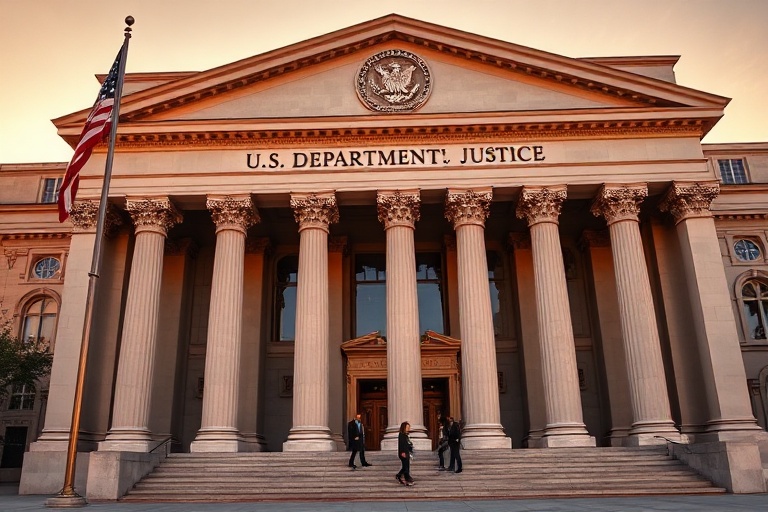
How the US Department of Justice Shapes Justice and Controversy
“`html
The United States Department of Justice: A Pillar of American Justice
The United States Department of Justice (DOJ) stands as one of the most critical institutions in the federal government, tasked with upholding the rule of law, protecting civil rights, and ensuring justice for all Americans. Established in 1870, the DOJ has evolved into a complex and powerful agency that influences every aspect of the legal system, from prosecuting crimes to defending federal policies in court.
Its reach extends far beyond courtrooms. The DOJ oversees federal law enforcement, manages immigration courts, and plays a pivotal role in shaping national security policies. Understanding its structure, functions, and controversies offers insight into how justice is administered—and sometimes contested—in the United States.
The DOJ’s Structure: Agencies and Responsibilities
The Department of Justice is not a monolithic entity but a collection of specialized agencies, each with distinct yet interconnected roles. At its core, the DOJ is led by the Attorney General, a cabinet-level position appointed by the President and confirmed by the Senate. Below the Attorney General, several key components operate under the DOJ’s umbrella:
- Federal Bureau of Investigation (FBI): The nation’s premier law enforcement agency, responsible for investigating federal crimes, counterterrorism, cybercrime, and public corruption. The FBI also serves as the primary domestic intelligence agency.
- Drug Enforcement Administration (DEA): Focuses on combating drug trafficking and the illegal distribution of controlled substances, both domestically and internationally.
- Bureau of Alcohol, Tobacco, Firearms and Explosives (ATF): Enforces federal laws related to firearms, explosives, and alcohol/tobacco trafficking.
- U.S. Marshals Service: The oldest federal law enforcement agency, handling fugitive apprehension, witness protection, and the transport of federal prisoners.
- Office of the Solicitor General: Represents the federal government in cases before the U.S. Supreme Court and shapes the legal arguments that define national policy.
- Civil Rights Division: Investigates and prosecutes violations of civil rights laws, including hate crimes, human trafficking, and discrimination in housing and employment.
Each of these agencies operates with a degree of autonomy but ultimately reports to the Attorney General, who answers to the President. This structure allows the DOJ to address a wide range of legal and criminal challenges while maintaining centralized oversight.
Key Functions: Enforcement, Litigation, and Policy
The DOJ’s responsibilities can be broadly categorized into three main functions: law enforcement, litigation, and policy development. These roles often overlap, creating a dynamic where the DOJ both enforces existing laws and influences how they are interpreted and applied.
Law Enforcement and Investigations
The DOJ’s law enforcement arm is perhaps its most visible function. Agencies like the FBI and DEA conduct investigations that can span years, uncovering corruption, terrorism plots, and organized crime networks. High-profile cases, such as the investigation into Russian interference in the 2016 election or the prosecution of opioid manufacturers, highlight the DOJ’s role in addressing national crises.
However, law enforcement is not without controversy. Critics argue that federal agencies disproportionately target marginalized communities, citing racial disparities in drug enforcement and policing. The DOJ has also faced scrutiny over its handling of protests, particularly during civil rights movements, where its role has been seen as both protective and oppressive depending on the political climate.
Litigation and Legal Advocacy
Beyond investigations, the DOJ is a major player in the U.S. legal system. The Civil Rights Division, for example, has been instrumental in cases involving police reform, voting rights, and LGBTQ+ discrimination. The Solicitor General’s office, meanwhile, argues before the Supreme Court in cases that can set legal precedents for decades.
One of the DOJ’s most contentious roles is its authority to decline to prosecute certain cases. This discretionary power has been a focal point in debates over criminal justice reform, particularly in cases involving police misconduct or corporate crimes. The decision to prosecute—or not—can have profound societal impacts, reinforcing or challenging existing power structures.
Policy Development and Executive Influence
The DOJ doesn’t just enforce laws; it helps shape them. Through legal opinions, amicus briefs, and policy guidance, the department influences how laws are interpreted and applied. For instance, the DOJ’s stance on issues like marijuana legalization, immigration enforcement, and surveillance has far-reaching consequences for state and local governments.
This policy-making role has drawn criticism, particularly when the DOJ’s positions align closely with presidential agendas. During the Trump administration, for example, the DOJ’s reversal of its stance on transgender rights in employment cases sparked legal challenges and public outrage. Such controversies underscore the tension between the DOJ’s legal obligations and its political dependencies.
Controversies and Challenges: A Department Under Scrutiny
The DOJ has long been a flashpoint for political and social debates. Its actions—or inactions—often reflect broader tensions in American society, from racial justice to executive power. Several high-profile controversies have shaped public perception of the department:
- Politicization of the DOJ: Critics argue that the DOJ has been weaponized by presidential administrations to target political opponents. The firing of former FBI Director James Comey in 2017, for instance, raised alarms about the DOJ’s independence from the White House.
- Police Reform and Accountability: The DOJ’s Civil Rights Division has investigated police departments across the country, such as in Ferguson, Missouri, and Baltimore, Maryland, uncovering systemic abuses. However, the pace and effectiveness of these reforms remain subjects of intense debate.
- Whistleblower Protections and Leaks: The DOJ’s aggressive pursuit of leakers and whistleblowers, including Chelsea Manning and Edward Snowden, has sparked First Amendment concerns. Critics argue that such actions chill dissent and undermine transparency.
- Corporate Accountability vs. Impunity: The DOJ’s deferred prosecution agreements with corporations like Boeing and Purdue Pharma have drawn criticism for allowing companies to avoid criminal liability despite egregious misconduct.
These controversies highlight a fundamental tension within the DOJ: it must balance its duty to uphold the law with the realities of political pressure and institutional inertia. The department’s ability to navigate these challenges often determines its legitimacy in the eyes of the public.
The DOJ’s Future: Reform, Reformulation, or Reformulation?
The DOJ stands at a crossroads. As the U.S. grapples with issues like racial injustice, mass incarceration, and technological disruption, the department’s role is being redefined. Some advocates call for sweeping reforms, such as ending qualified immunity for police officers or decriminalizing certain drug offenses. Others argue for a more aggressive approach to corporate accountability and environmental enforcement.
Technological advancements also present new challenges. The DOJ’s handling of cases involving artificial intelligence, data privacy, and cybercrime will shape how justice is administered in the digital age. The rise of cryptocurrency, for instance, has forced the DOJ to adapt its investigative techniques to track illicit transactions.
Meanwhile, the department’s relationship with the public remains fraught. Trust in law enforcement has eroded in many communities, and the DOJ’s response to these concerns will determine its long-term relevance. Whether through policy changes, transparency initiatives, or structural reforms, the DOJ must address the criticisms that have dogged it for decades.
For those interested in exploring the DOJ’s impact further, the Politics and Analysis sections on Dave’s Locker offer deeper dives into related topics, from criminal justice reform to the intersection of law and technology.
Conclusion: A Department in Need of Reinvention
The United States Department of Justice is a cornerstone of American democracy, yet it is far from perfect. Its history is marked by both triumphs and failures, moments of progress and periods of regression. As the country continues to evolve, so too must the DOJ—adapting to new challenges while addressing its longstanding flaws.
For the DOJ to regain public trust, it must prioritize transparency, accountability, and equity. This means overhauling policies that disproportionately harm marginalized communities, holding powerful actors accountable, and ensuring that its actions align with the principles of justice it is sworn to uphold. The path forward is not easy, but it is necessary—for the DOJ and for the nation it serves.