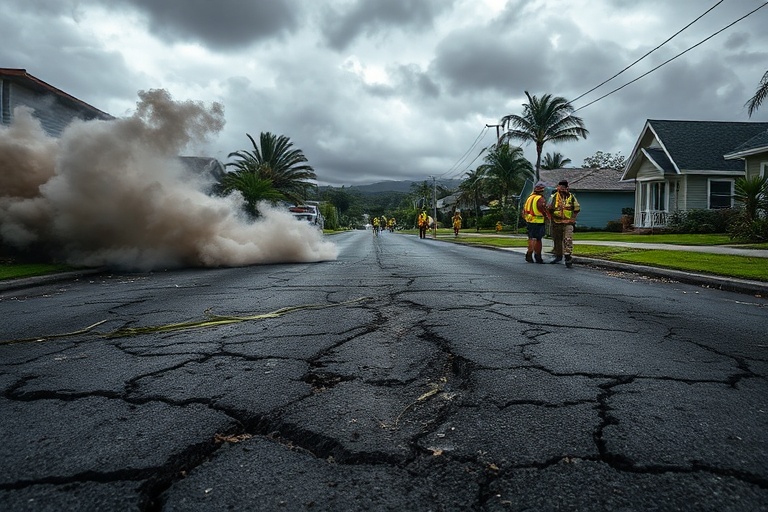
Earthquake in Hawaii: Safety Guide for Residents and Visitors
“`html
Earthquake in Hawaii: What Residents Need to Know
The Hawaiian Islands are no stranger to seismic activity. Located in the middle of the Pacific Plate, the archipelago experiences frequent earthquakes due to its unique geological setting. While most tremors are minor, stronger quakes can pose significant risks to residents and infrastructure. Understanding the nature of these events, preparedness measures, and response protocols is essential for anyone living in or visiting Hawaii.
Why Do Earthquakes Happen in Hawaii?
Hawaii’s earthquakes are primarily driven by volcanic activity and tectonic shifts. The islands sit atop the Pacific Plate, which moves northwestward over the Hawaiian hotspot—a plume of molten rock rising from deep within the Earth. This movement creates stress on the crust, leading to fractures and tremors.
Volcanic earthquakes, such as those near Kīlauea and Mauna Loa, are particularly common. These quakes often occur as magma moves beneath the surface, causing the ground to shift. In 2018, for example, a series of earthquakes accompanied the eruption of Kīlauea, including a magnitude 6.9 temblor—the strongest in Hawaii in over 40 years.
Tectonic earthquakes also play a role. These occur along fault lines where the Pacific Plate interacts with other tectonic plates. The 2006 Kīholo Bay earthquake, a magnitude 6.7 event, caused widespread damage across the Big Island and Oahu, highlighting the potential for significant impact.
Types of Earthquakes in Hawaii
- Volcanic earthquakes: Triggered by magma movement beneath active volcanoes.
- Tectonic earthquakes: Result from the shifting of tectonic plates.
- Aftershocks: Smaller tremors that follow a larger quake, sometimes persisting for weeks or months.
Recent Earthquakes and Their Impact
In late 2023, Hawaii experienced a notable seismic event when a magnitude 5.1 earthquake struck off the coast of the Big Island. While no major damage was reported, the quake served as a reminder of the islands’ vulnerability. The U.S. Geological Survey (USGS) noted that the temblor originated near the Hilina Slump, a massive underwater landslide zone that could pose tsunami risks if it were to shift suddenly.
Historically, Hawaii has faced more severe earthquakes. The 1975 Kalapana earthquake, a magnitude 7.2 event, triggered a tsunami that caused two fatalities and significant structural damage. Such events underscore the importance of preparedness and early warning systems.
For those interested in tracking seismic activity, the Science section of Dave’s Locker provides updates on recent earthquakes and volcanic activity in Hawaii.
How to Prepare for an Earthquake in Hawaii
Preparedness is key to minimizing risks during an earthquake. Hawaii’s emergency management agencies recommend several steps to ensure safety:
- Create an emergency kit: Include water, non-perishable food, flashlights, batteries, a first-aid kit, and a portable charger.
- Develop a family plan: Identify safe spots in your home, such as under sturdy furniture, and establish a meeting point in case family members are separated.
- Secure your home: Bolt heavy furniture to walls, install latches on cabinets, and consider retrofitting your home to better withstand seismic activity.
- Stay informed: Sign up for local emergency alerts and monitor updates from the Hawaii Emergency Management Agency.
During an earthquake, the USGS advises residents to “Drop, Cover, and Hold On.” This means dropping to your hands and knees, taking cover under a sturdy table or desk, and holding on until the shaking stops. Avoid doorways and windows, as they can pose hazards from flying debris.
Response and Recovery Efforts
In the aftermath of a significant earthquake, Hawaii’s emergency response teams spring into action. The Hawaii National Guard, along with local and federal agencies, coordinates search-and-rescue operations, damage assessments, and relief efforts. The Hawaii Volcanoes National Park, for instance, often closes trails and areas near active volcanic vents following seismic activity to ensure visitor safety.
Recovery can take weeks or even months, depending on the severity of the quake. In 2021, a magnitude 6.2 earthquake near the Kīlauea volcano caused structural damage to buildings in the Volcano Village area. The community rallied together, with local organizations providing support to affected residents.
For those looking to contribute to recovery efforts, organizations like the Hawaii Community Foundation accept donations to aid in relief and rebuilding initiatives.
Conclusion
Earthquakes are an inevitable part of life in Hawaii, but they don’t have to be a source of fear. By understanding the causes of seismic activity, preparing for potential risks, and staying informed, residents can mitigate the impact of these natural events. Hawaii’s resilience is evident in its communities, which come together to support one another in times of crisis.
As the islands continue to evolve geologically, ongoing research and preparedness efforts will remain critical. Whether you’re a longtime resident or a visitor, taking the time to educate yourself about earthquake safety can make all the difference in ensuring your well-being.