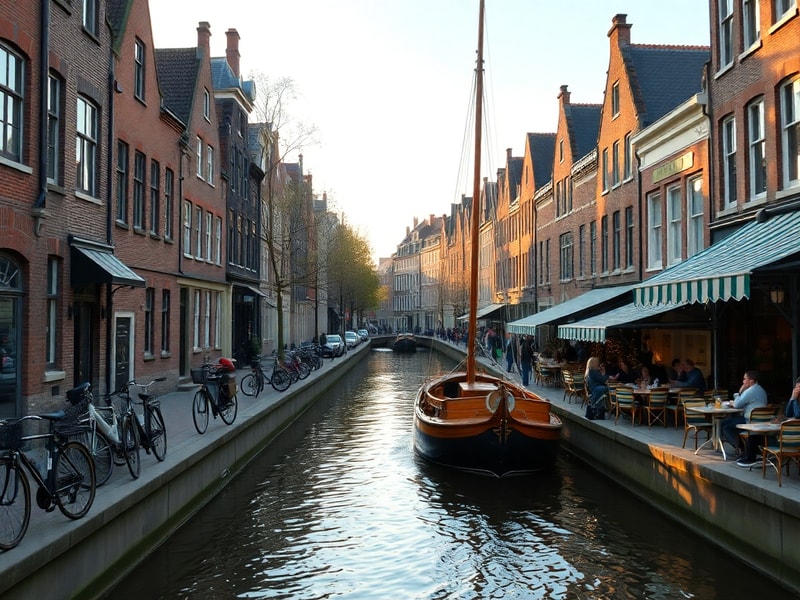
When most people think of the Netherlands, they picture windmills, tulips, and canals winding through charming cities. But beyond the postcard images lies a country with a complex identity—one that balances tradition with innovation, openness with pragmatism, and global engagement with local charm. Officially known as the Netherlands, though often referred to by its Dutch name, Nederland, or its Latin-derived form, Pays-Bas (hence “países bajos”), this small European nation punches far above its weight in culture, economics, and diplomacy.
Beyond the stereotypes: A country of contrasts
The Netherlands defies easy categorization. It’s a flat, low-lying land—about a quarter of which lies below sea level—yet it has risen to become a global leader in water management and sustainable technology. While Amsterdam’s canals and bicycles dominate tourist imagery, the country is also home to some of Europe’s most advanced ports, including Rotterdam, the largest in the continent. This juxtaposition of pastoral beauty and industrial might reflects a national ethos rooted in adaptability and forward-thinking.
Dutch society is famously tolerant and liberal, yet it operates within a framework of strict pragmatism. The Netherlands was among the first countries to legalize same-sex marriage in 2001 and has long been a hub for progressive policies. At the same time, it maintains one of the world’s most efficient healthcare systems and a robust social welfare state. This balance of openness and efficiency is not accidental—it’s the result of centuries of trade, colonial history, and a relentless drive to solve problems through consensus and innovation.
Consider its approach to drugs. The Netherlands’ policy of tolerance toward cannabis in licensed cafés has made it a case study in harm reduction. While not legalization in the strictest sense, this pragmatic stance has kept drug-related public nuisance relatively low compared to neighboring countries. Similarly, the Dutch euthanasia laws, among the most liberal in the world, reflect a society that prioritizes individual autonomy within a highly regulated system.
The economic engine: From trade to tech
The Netherlands is the 17th-largest economy in the world and the fifth-largest in the European Union, with a GDP of over $1 trillion. What fuels this success? Trade has always been at its core. The Dutch East India Company, founded in 1602, was the world’s first multinational corporation and a pioneer in global commerce. Today, the port of Rotterdam handles more cargo than any other in Europe, while Amsterdam’s Schiphol Airport is a major European hub.
But the Dutch economy has evolved well beyond its mercantile roots. The country is a global leader in agriculture, thanks to innovations like vertical farming and precision agriculture. Dutch agri-tech exports total nearly €100 billion annually, making the Netherlands the world’s second-largest agricultural exporter after the United States, despite being roughly the size of Maryland. Its strength in high-tech industries—from semiconductor equipment (ASML is the world’s dominant supplier of chip-making machines) to renewable energy—shows how a small nation can dominate niche markets.
The financial sector is another pillar of the Dutch economy. Amsterdam is home to the European Banking Authority and a growing fintech scene. The country’s stable political environment and strong legal framework make it an attractive destination for international businesses. Yet this economic success hasn’t come without challenges. Housing shortages in cities like Amsterdam and Utrecht have driven prices to record highs, straining social cohesion and prompting debates about urban planning and affordability.
For those interested in the intersection of economics and culture, the Netherlands offers a compelling case study. Its success in balancing tradition and modernity is mirrored in its cities—where historic buildings stand alongside cutting-edge architecture, and centuries-old markets thrive alongside coworking spaces and startup incubators. If you’re looking to explore how a nation innovates without losing its soul, the Dutch model is worth studying. You can dive deeper into the country’s economic evolution by exploring our Economy section.
Culture and identity: More than just clogs and cheese
The Netherlands has produced some of the most influential artists, philosophers, and scientists in history. Rembrandt van Rijn, Vincent van Gogh, and Piet Mondrian redefined visual art, while philosophers like Erasmus and Spinoza shaped Western thought. The country’s Golden Age in the 17th century saw an explosion of creativity and intellectual curiosity, a legacy that continues today in its world-class museums and cultural institutions.
Dutch culture is also defined by its DIY spirit. From the iconic poldermodel of consensus-based decision-making to the country’s vibrant underground music scene, the Netherlands thrives on self-organization and grassroots initiatives. This ethos is perhaps best embodied in events like King’s Day, a national holiday where the entire country transforms into a massive flea market and street party. The celebration, held on April 27th (or the 26th if the 27th falls on a Sunday), sees canals filled with orange-painted boats, neighborhoods transformed into impromptu stages, and people of all ages joining in the revelry.
Yet beneath this celebratory surface lies a society deeply engaged with existential questions. Dutch literature, for instance, often grapples with themes of identity, morality, and the human condition. Authors like Harry Mulisch and Gerard Reve explored the complexities of post-war Netherlands, while contemporary writers continue to challenge societal norms. The Netherlands’ approach to euthanasia, as mentioned earlier, also reflects a cultural comfort with discussing death openly—a topic many societies shy away from.
Food is another area where the Netherlands defies expectations. While Gouda cheese and stroopwafels are undeniably delicious, the country’s culinary scene has evolved far beyond these staples. Amsterdam’s food markets, like the Foodhallen, showcase everything from Indonesian rijsttafel (a legacy of the Dutch colonial past) to modern plant-based cuisine. The Netherlands is also a leader in sustainable food innovation, with companies like Meatable and Mosa Meat pioneering lab-grown meat as a solution to global food security challenges.
A global citizen: Diplomacy and environmental leadership
The Netherlands may be small, but its influence on the global stage is outsized. As the host of the International Court of Justice and the International Criminal Court in The Hague, the country positions itself as a hub for international law and conflict resolution. Dutch diplomats are often at the forefront of climate negotiations, and the Netherlands has pledged to cut its carbon emissions by 49% by 2030. Its innovative water management techniques—like the Room for the River project, which involves widening riverbeds to prevent flooding—have been adopted worldwide.
The Dutch approach to climate adaptation is particularly noteworthy. With much of its land vulnerable to rising sea levels, the country has become a global leader in flood control and sustainable urban design. Rotterdam, for example, has transformed itself into a testing ground for climate-resilient architecture, with projects like the Waterplein Benthemplein, a public square designed to collect and store rainwater during storms. These initiatives highlight a broader Dutch philosophy: instead of fighting nature, work with it.
In the realm of international development, the Netherlands is a key player. It consistently ranks among the top donors to global health initiatives, including efforts to combat HIV/AIDS, tuberculosis, and malaria. The country’s development agency, RVO.nl, supports entrepreneurs and startups in emerging markets, particularly in Africa and Southeast Asia. This global engagement is not just about charity—it’s a strategic investment in stability and prosperity that benefits Dutch businesses and citizens alike.
Yet the Netherlands’ global role is not without controversy. Its colonial history, particularly in Indonesia and the Caribbean, remains a sensitive topic. The Dutch government has only recently begun to acknowledge and address the legacy of slavery and colonialism, with Prime Minister Mark Rutte offering a formal apology in 2022. This reckoning with the past is part of a broader societal shift toward greater inclusivity and recognition of diversity within the Netherlands itself.
The country’s approach to migration and integration is another area of global interest. The Netherlands has long been a destination for immigrants, from former colonial subjects to guest workers in the mid-20th century. Today, nearly 25% of the population has a migration background. This diversity has enriched Dutch culture but also sparked debates about national identity and social cohesion. Cities like Amsterdam and Rotterdam are vibrant multicultural hubs, while smaller towns grapple with the challenges of integration and rising nationalism.
Why the Netherlands matters now
In an era of rising nationalism and geopolitical tension, the Netherlands offers a counterpoint—a country that thrives on openness, collaboration, and pragmatic problem-solving. Its ability to balance progress with tradition, global engagement with local identity, and economic growth with social welfare makes it a model worth examining. Whether it’s in water management, technology, or cultural innovation, the Dutch demonstrate how small nations can have an outsized impact.
The challenges the Netherlands faces—housing shortages, climate change, social inequality—are not unique, but its solutions often are. From pioneering renewable energy cooperatives to reimagining urban spaces, the country continues to push boundaries. And while it may be known for its tulips and windmills, the real story of the Netherlands is one of resilience, adaptability, and quiet determination.
As the world grapples with complex global issues, the Dutch experience offers valuable lessons. It reminds us that progress doesn’t require abandoning tradition, nor does innovation have to come at the expense of community. In a time of division, the Netherlands stands as a testament to what’s possible when a society commits to solving problems together—pragmatically, inclusively, and with an eye toward the future.