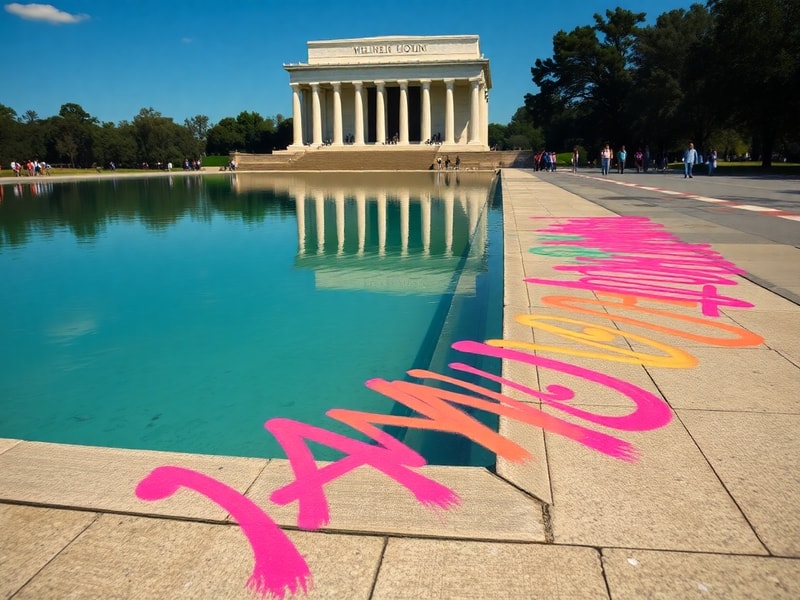
The National Mall’s reflecting pool, an iconic symbol of American democracy and unity, has long stood as a serene mirror to the sky. Its still waters have reflected monuments, protests, and everyday visitors, each ripple carrying stories of the nation’s past and present. But in recent weeks, the pool has become an unintended canvas for a different kind of expression—vandalism. This isn’t an isolated incident. Across the globe, public water features, memorials, and civic spaces have increasingly become targets for acts of defacement, often tied to broader social or political tensions.
Vandalism as a Form of Protest: A Global Pattern
Vandalism at public landmarks rarely occurs in a vacuum. It often emerges from frustration, anger, or a desire to make a statement. In 2023, the reflecting pool in Washington, D.C., saw multiple instances of graffiti and damage, including paint splatters on its marble edges. Similar acts have been documented in other major cities, from London’s Trafalgar Square to Paris’s Pont des Arts. These incidents aren’t just about defacement; they’re about reclaiming public space for dissent.
In some cases, the vandalism is symbolic. Messages scrawled in spray paint or etched into surfaces become unintended slogans, echoing the voices of those who feel unheard. In others, it’s simply destruction for the sake of visibility. The reflecting pool, with its high foot traffic and symbolic weight, presents an irresistible target for those seeking attention or disruption. Whether the act is political or purely mischievous, the result is the same: a once-pristine symbol of national pride now bears the scars of conflict.
Cultural Context: Why Public Spaces Become Battlegrounds
Public spaces like the reflecting pool are more than just physical locations—they’re repositories of collective memory and identity. When these spaces are vandalized, the damage transcends the physical. It sends a message that the ideals they represent—democracy, unity, remembrance—are under threat. This phenomenon isn’t unique to the United States. In 2020, during global protests over racial injustice, statues and memorials worldwide became focal points for both reverence and defacement. The reflecting pool, with its proximity to the Lincoln Memorial, has been a silent witness to such moments.
Cultural attitudes toward vandalism vary widely. In some societies, acts of defacement are seen as legitimate forms of protest, especially when institutional channels fail to address grievances. In others, they’re met with swift condemnation, viewed as disrespectful to shared heritage. The reflecting pool’s vandalism forces a confrontation with these differing perspectives. Is the damage an act of free speech, or is it an assault on collective memory? The answer often depends on who you ask.
The Consequences: Beyond the Surface
The immediate impact of vandalism is visible—peeling paint, broken fixtures, or littered trash. But the ripple effects extend further. Maintenance crews face increased workloads, taxpayers absorb the costs of repairs, and the public’s perception of safety in these spaces can erode. In the case of the reflecting pool, repeated incidents have led to calls for heightened security measures, including surveillance cameras and increased patrols. Yet, such solutions risk turning a place meant for reflection into one of surveillance and suspicion.
There’s also the question of precedent. If vandalism at the reflecting pool goes unchecked, will other landmarks become targets? The fear isn’t unfounded. A 2022 report by the National Trust for Historic Preservation highlighted a rise in attacks on public monuments, with nearly 40% of surveyed sites reporting some form of damage in the past five years. The reflecting pool’s situation is a microcosm of a larger trend—one where public spaces are increasingly contested ground.
What’s Next for the Reflecting Pool?
As debates over the meaning and impact of vandalism continue, the reflecting pool remains caught in the middle. Some argue for stricter enforcement and penalties to deter future acts. Others advocate for dialogue, suggesting that the vandalism itself is a symptom of deeper societal issues that need addressing. The National Park Service, which manages the site, has remained tight-lipped about specific measures but has emphasized community engagement and education as part of its strategy.
Community responses have been mixed. Local advocacy groups have organized clean-up efforts, framing the vandalism as an opportunity for collective action rather than division. Meanwhile, critics point to the need for systemic change, arguing that patching up the pool without addressing the root causes of the vandalism is like treating a symptom rather than the disease. The reflecting pool, with its reflective waters and towering monuments, continues to mirror not just the sky but the nation’s unresolved tensions.
For visitors, the sight of the vandalized pool is a stark reminder of how public spaces can become battlegrounds for ideas. It’s a call to reflect—not just on the damage done, but on the ideals these spaces are meant to uphold. Whether through dialogue, enforcement, or a combination of both, the path forward will require more than just cleaning up the mess. It will demand a recommitment to the values that these spaces were built to represent.