Tyler Reddick: NASCAR’s Rising Star and Cultural Icon
Tyler Reddick didn’t just arrive on the NASCAR scene—he arrived with a reputation built on precision, aggression, and an uncanny ability to rise to the occasion when it mattered most. Born on January 11, 1996, in Corinth, North Carolina, Reddick’s journey from local karting circuits to the highest level of stock car racing is a story of relentless work ethic and calculated risk-taking. Unlike many drivers who follow the traditional developmental ladder step by step, Reddick’s path was marked by bold decisions and a refusal to settle for incremental progress.
His early years in racing were defined by success in the United States Auto Club (USAC) ranks, where he dominated sprint car and midget car championships. Winning the USAC National Midget title in 2015 and the Silver Crown Series in 2016, Reddick demonstrated a mastery of diverse racing disciplines long before he became a household name in NASCAR. These formative years weren’t just about collecting trophies—they were about crafting a driving style that blended raw speed with surgical consistency, a combination that would later define his approach to stock car racing.
Reddick’s transition to NASCAR in 2017 was met with cautious optimism. Many drivers struggle to adapt to the unique demands of stock car racing, but Reddick’s technical understanding of vehicle dynamics and his experience in high-downforce cars made the adjustment smoother than expected. His rookie season in the Truck Series ended with a win at Las Vegas Motor Speedway, a performance that signaled his arrival as a serious contender. Yet, it was his move to the Xfinity Series in 2018 that truly showcased his potential, culminating in a championship in 2018 and a repeat title in 2019. These back-to-back titles weren’t just personal triumphs—they were validation of his ability to elevate his game in high-pressure environments.
Challenging the NASCAR Establishment
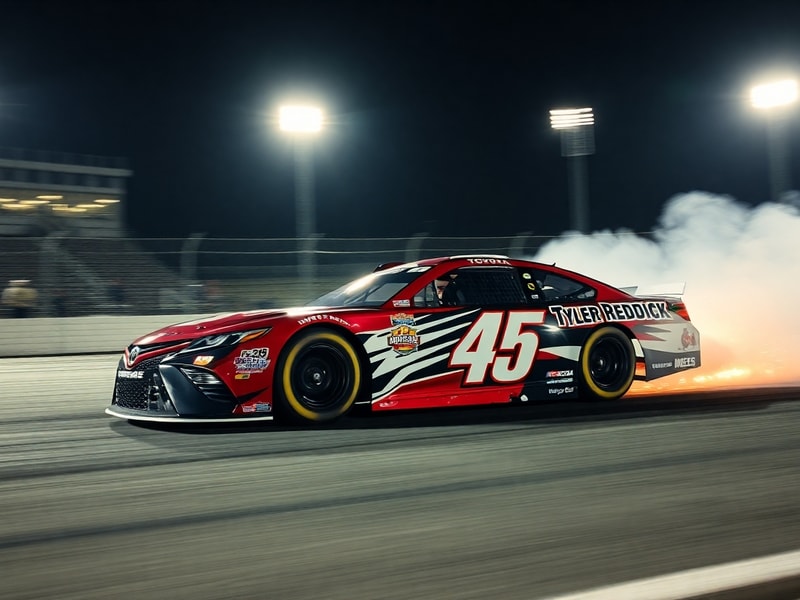
In 2020, Reddick made the leap to the premier NASCAR Cup Series, joining Richard Childress Racing (RCR). The move was risky. Cup Series competition is notoriously unforgiving, and many rookies struggle to find their footing. Reddick, however, defied expectations. Despite driving for a team still searching for its footing in the modern NASCAR era, he consistently outperformed his equipment, securing multiple top-five finishes and proving he belonged among the sport’s elite.
His breakthrough moment came in 2022 at the Indianapolis Road Course, where he won his first Cup Series race in dramatic fashion. The victory wasn’t just a milestone for Reddick—it was a statement. NASCAR had long been dominated by a handful of organizations with deep pockets and long histories of success. Reddick’s win, achieved with a team not traditionally in contention, highlighted the growing parity in the sport and the increasing difficulty of predicting who might win on any given Sunday.
That win also underscored Reddick’s ability to excel on road courses, a skill set that sets him apart in a series often criticized for its reliance on oval-track specialists. His performances at circuits like Watkins Glen and the Charlotte Roval demonstrated a rare versatility, one that could redefine what it means to be a successful Cup Series driver in an era where road course racing is becoming increasingly prominent.
Cultural Impact and Fan Connection
Beyond his on-track achievements, Reddick has cultivated a fanbase that transcends traditional NASCAR demographics. His laid-back demeanor, combined with a willingness to engage with fans on social media, has made him one of the sport’s most relatable figures. In an era where motorsports struggles to attract younger audiences, Reddick’s approachability offers a glimpse into how NASCAR might evolve to stay relevant.
His presence on platforms like TikTok and Instagram, where he shares behind-the-scenes content and casual interactions with fans, has helped humanize him in ways that older generations of drivers often couldn’t. This digital savvy isn’t just about self-promotion—it’s about connecting with a global audience that may not have grown up watching NASCAR but appreciates the intensity and skill of its athletes.
Reddick’s appeal also extends beyond the confines of the United States. NASCAR’s global footprint has grown steadily, with races in Canada, Mexico, and even Europe drawing international attention. Reddick’s success has made him a recognizable figure in these markets, particularly in Mexico, where NASCAR has a strong following. His performances in the sport’s Mexican races have not only bolstered his fanbase but also highlighted NASCAR’s efforts to expand its international presence.
Reddick’s Driving Style and Mechanical Insight
What truly sets Reddick apart is his deep understanding of race car engineering. Unlike many drivers who rely solely on instinct, Reddick has a reputation for providing precise feedback to his crew, often contributing to setup adjustments that improve the car’s performance. This technical acumen is a product of his early years in open-wheel and sprint car racing, where drivers must be intimately involved in the mechanics of their vehicles.
His ability to communicate effectively with engineers has made him a valuable asset to any team he joins. This skill is particularly important in an era where data and telemetry play an increasingly critical role in racing. Reddick’s knack for translating his on-track experiences into actionable adjustments has earned him respect across the garage, from crew chiefs to team owners.
Reddick’s career trajectory also reflects a broader shift in NASCAR’s driver development philosophy. The sport is moving away from the traditional model of grooming drivers through a single developmental team or series. Instead, drivers like Reddick are taking unconventional paths—racing in multiple disciplines, leveraging social media, and building their brands independently. This evolution mirrors changes in other global motorsports series, where versatility and adaptability are increasingly prized over rigid adherence to a prescribed career path.
The Road Ahead: What’s Next for Tyler Reddick
As Reddick enters the prime years of his career, the question on many fans’ minds is simple: Can he translate his recent success into a championship? The 2023 season was a mixed bag, with flashes of brilliance tempered by mechanical issues and inconsistency. Yet, for a driver of his caliber, setbacks are often temporary. The Cup Series is as much a mental challenge as it is a physical one, and Reddick’s ability to bounce back from adversity will determine how his legacy unfolds.
Looking ahead, Reddick’s future could take several paths. He might stay with RCR, aiming to secure the organization’s first Cup Series title in decades. Alternatively, a move to a top-tier team like Hendrick Motorsports or Joe Gibbs Racing could provide the resources needed to contend for championships on a regular basis. Whatever the case, one thing is clear: Reddick is no longer an up-and-coming talent—he’s a proven winner with the potential to shape the future of NASCAR.
Off the track, Reddick’s influence extends into areas like driver safety and sustainability in motorsports. He has been vocal about the importance of improving safety standards, particularly in light of recent high-profile accidents. His advocacy aligns with a growing movement within NASCAR to prioritize driver well-being without compromising the sport’s competitive edge.
Reddick’s story is still being written, but the chapters that have already been published reveal a driver who defies convention at every turn. From his early days in USAC to his Cup Series breakthroughs, he has consistently demonstrated that success in racing isn’t just about raw talent—it’s about preparation, adaptability, and the courage to challenge the status quo.
As NASCAR continues to evolve, drivers like Reddick will play a pivotal role in shaping its future. Whether he ultimately stands atop the championship standings or becomes a mentor to the next generation of racers, one thing is certain: Tyler Reddick is a name that will be remembered in the annals of motorsports history.