Understanding Tornadoes: Science, Impact, and How to Stay Safe
Weather has always been one of nature’s most unpredictable forces, but few phenomena demonstrate its raw power as dramatically as tornadoes. These violently rotating columns of air extend from thunderstorms to the ground, capable of destroying entire neighborhoods in minutes. While tornadoes occur on every continent except Antarctica, the United States experiences more than 1,200 annually—the highest frequency in the world. Understanding their formation, behavior, and broader impact is essential not just for meteorologists, but for anyone living in or traveling through tornado-prone regions.
How Tornadoes Form: The Science Behind the Swirl
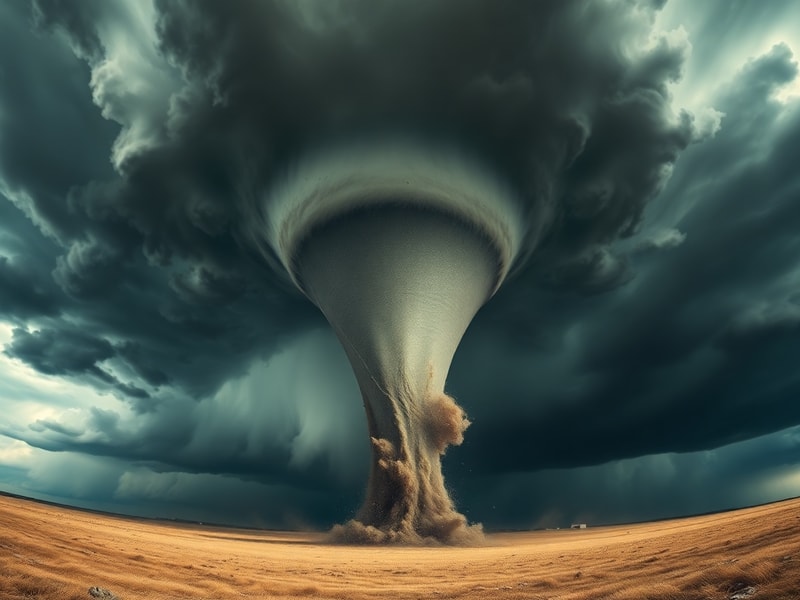
Tornadoes don’t just appear randomly. They develop under specific atmospheric conditions, typically within severe thunderstorms known as supercells. These storms contain a rotating updraft called a mesocyclone, which provides the necessary spin for a tornado to form. When wind shear—changes in wind speed and direction with altitude—tilts the rotating air vertically, the result is a funnel cloud that may eventually touch down.
Not all funnel clouds become tornadoes. Only about 30% of mesocyclones produce tornadoes, and their intensity varies widely. The Enhanced Fujita Scale (EF-Scale), ranging from EF0 (weak) to EF5 (violent), classifies tornadoes based on damage and estimated wind speeds. An EF5 tornado, packing winds over 200 mph, can strip bark from trees and hurl cars hundreds of yards.
The National Oceanic and Atmospheric Administration (NOAA) tracks tornadoes using Doppler radar, which detects rotation within storms. Advanced warning systems now provide an average lead time of 13 minutes, a significant improvement from decades ago. Still, predicting exact touchdown points remains a challenge, especially in densely populated areas where minutes matter.
Tornado Alley and Beyond: Where the Storms Strike
While tornadoes can occur anywhere, the central United States is known as “Tornado Alley,” a region stretching from Texas to South Dakota. Warm, moist air from the Gulf of Mexico collides with cool, dry air from Canada and hot, dry air from the Southwest, creating the perfect storm for supercells. Oklahoma, Kansas, and Nebraska see the highest concentrations, but tornadoes also frequent the Southeast, particularly Alabama and Mississippi, where they’re often more deadly due to denser populations and faster-moving storms.
Globally, tornadoes have been reported in Europe, Australia, South America, and Asia, though they’re less frequent and usually weaker. Bangladesh experiences some of the deadliest tornadoes outside the U.S., partly due to poor infrastructure and high population density. In 2021, a tornado in Manikganj killed over 20 people and injured hundreds more, highlighting the global vulnerability to these storms.
Climate change may be altering tornado patterns. A 2021 study in Climate Dynamics found that tornado activity is shifting eastward, with more frequent and intense storms in the Mississippi River Valley. Rising temperatures and humidity in the Southeast could increase the number of tornado outbreaks, posing new challenges for emergency planners and insurers alike.
The Human Cost: Preparedness and Response
The human toll of tornadoes is staggering. Since 1950, more than 60,000 Americans have been injured and nearly 2,000 killed by tornadoes. The deadliest outbreak on record occurred in 2011, when 362 people died across six states during a four-day event. Joplin, Missouri, suffered an EF5 tornado that killed 161 and caused $2.8 billion in damage, making it the costliest in U.S. history.
Preparedness saves lives. The Federal Emergency Management Agency (FEMA) recommends having a tornado plan, identifying a safe room (preferably a basement or interior room on the lowest floor), and staying informed via weather radios or smartphone alerts. Many communities now conduct annual tornado drills, especially in schools and nursing homes. Yet, complacency remains a risk. A 2022 survey found that only 42% of Americans have a tornado emergency plan, despite 62% living in tornado-prone areas.
After a tornado, recovery can take years. The emotional trauma lingers long after the debris is cleared. Survivors often report anxiety, sleep disturbances, and PTSD, particularly children. Mental health professionals emphasize the importance of community support networks and access to counseling services in the aftermath.
Technology is improving response efforts. Drones equipped with thermal imaging help locate survivors under rubble, while AI-powered damage assessment tools allow insurers to process claims faster. Social media has also become a lifeline, enabling real-time communication during and after storms. Still, digital divides persist, leaving some rural communities underserved during emergencies.
Beyond the Storm: Economic and Environmental Ripples
The economic impact of tornadoes extends far beyond immediate damage. In 2020, U.S. tornadoes caused $3.1 billion in insured losses, according to the Insurance Information Institute. Agriculture suffers heavily, especially in Tornado Alley, where storms can flatten crops and destroy livestock barns. The 2021 Kentucky tornado outbreak disrupted supply chains, delaying shipments of bourbon barrels and automotive parts.
Environmentally, tornadoes can reshape ecosystems. Forests may lose decades of growth in minutes, while wetlands are altered by sudden flooding. Paradoxically, some ecosystems benefit. Downed trees create habitats for birds and small mammals, and disturbed soil can promote new plant growth. However, the long-term effects are poorly studied, making recovery efforts more challenging.
Insurance premiums in high-risk areas are rising. In Oklahoma, some homeowners have seen rates double in the past five years. This has led to calls for policy reforms, including incentives for storm-resistant construction and community-wide resilience programs. The National Institute of Standards and Technology (NIST) has proposed building codes that require impact-resistant roofs and reinforced walls in tornado-prone regions.
The psychological ripple effects are equally profound. Studies show that tornado anxiety has increased among children, with many fearing storms will disrupt school or summer activities. Parents and educators are responding with education campaigns that teach preparedness without instilling fear, using tools like the “Ready Wrigley” tornado preparedness book series from the CDC.
Looking Ahead: Can We Reduce the Risk?
While tornadoes cannot be prevented, risk reduction is possible through better forecasting, resilient infrastructure, and public education. The NOAA’s Warn-on-Forecast system aims to provide street-level tornado warnings within minutes by integrating high-resolution radar data with machine learning. Early tests show promise, with improved lead times in Oklahoma and Texas.
Architectural innovation also plays a role. Safe rooms certified to FEMA standards can withstand EF5 winds. In Alabama, a pilot program offers grants to low-income families for safe room installation. These rooms, often built with reinforced concrete, have saved hundreds of lives during major outbreaks.
Community engagement is vital. Neighborhood tornado watch groups share real-time updates and assist vulnerable residents, such as the elderly or disabled. In Wichita, Kansas, volunteers with ham radios provide backup communication when cell towers fail. These grassroots efforts fill gaps left by underfunded emergency services.
Ultimately, the goal isn’t just survival—it’s resilience. Tornadoes will continue to strike, but with better tools and collective action, communities can bounce back stronger. As climate patterns shift, the need for adaptation grows. The question isn’t whether another deadly tornado will hit, but how prepared we’ll be when it does.