World Cup Standings Explained: How Rankings Shape Tournament Drama
How World Cup Standings Shape Tournament Narratives
The World Cup standings do more than just rank teams—they create the drama that defines each tournament. Every four years, the FIFA World Cup transforms from a global competition into a story told through points, goal differentials, and dramatic turnarounds. These standings aren’t just numbers; they dictate who advances, who goes home early, and which underdog stories capture the imagination of billions. From last-minute goals to controversial referee decisions, the standings reflect the unpredictable nature of football itself. Understanding how these rankings work—and why they matter—can deepen your appreciation for the tournament beyond the surface-level excitement.
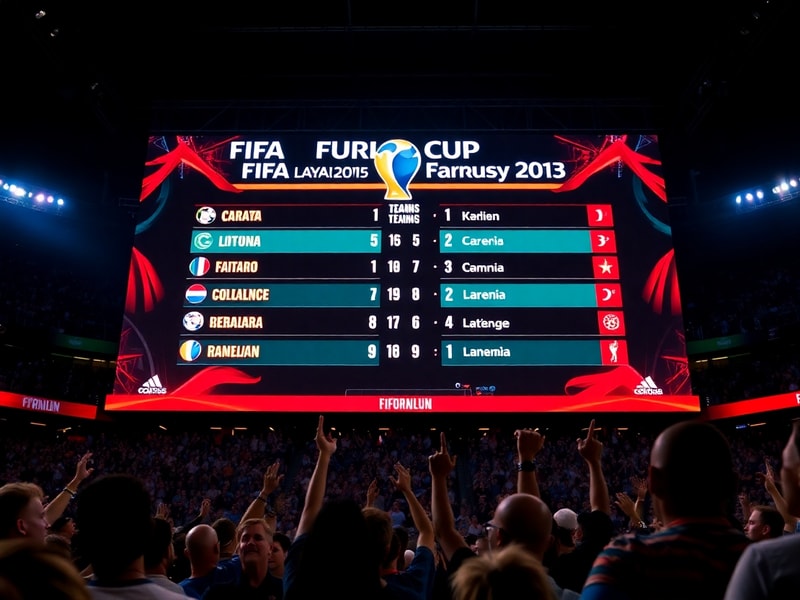
At its core, the World Cup standings follow a simple yet effective system: three points for a win, one for a draw, and none for a loss. This structure rewards teams that dominate matches while still allowing room for dramatic draws that can shift entire groups. The top two teams from each group advance, but the third-place cutoff often becomes a point of contention. A single goal or a refereeing error can mean the difference between a knockout-stage berth and an early flight home. This high-stakes environment is what makes the standings so compelling, turning what might seem like routine group-stage games into must-watch spectacles.
The Psychological Battle Behind the Numbers
Teams don’t just play for points—they play for momentum. A strong start in the group stage can propel a squad into the knockout rounds with confidence, while a slow beginning can create a sense of desperation. Psychological pressure plays a massive role in how standings evolve. Consider the 2014 World Cup, where Spain’s early exit after losing to the Netherlands and Chile exposed deep flaws in their aging squad. Their standings plummeted from defending champions to last place in their group, a collapse that reverberated across the football world. That kind of humiliation lingers, affecting player reputations and national team strategies for years.
Conversely, teams that exceed expectations often ride a wave of confidence. Croatia’s 2018 World Cup run is a prime example. After finishing second in their group behind Argentina, they went on to reach the final, defying pre-tournament predictions. Their standings steadily climbed as they knocked out powerhouse teams like Russia and England, proving that belief in the squad’s abilities could overcome statistical disadvantages. This psychological edge isn’t just about talent—it’s about how players and coaches interpret their position in the standings. A team in second place might play conservatively to secure advancement, while one in third might take more risks to climb into contention.
The standings also influence fan engagement. When a team’s fate hangs on goal difference or tiebreakers, supporters become more invested in every match, not just the ones involving their own nation. For instance, during the 2022 World Cup, Japan’s stunning upset of Germany created a ripple effect across Group E, with Spain ultimately advancing despite a loss to Japan. Fans worldwide tuned in not just to watch their team, but to see how other matches would impact the standings. This interconnectedness turns the World Cup into a global conversation, where every result has consequences far beyond the pitch.
Controversies and Criticisms of the Standings System
While the standings system is designed to be fair, it’s not without flaws. One of the most debated aspects is the use of goal difference as a tiebreaker. Critics argue that this rewards teams that score lopsided victories rather than those that grind out results through solid defense. In 2010, the Netherlands advanced from their group despite scoring only three goals in three matches, relying on a +3 goal difference thanks to a 2-1 win over Denmark and a 2-1 victory over Cameroon. Meanwhile, Italy, a three-time champion, crashed out after drawing all three group games, scoring just two goals and finishing with a goal difference of zero. The contrast highlighted how the standings can sometimes prioritize attacking flair over tactical discipline.
Another contentious issue is the fairness of scheduling. Teams in the same group don’t always play their matches simultaneously, meaning that later games can be influenced by earlier results. In 2018, Japan’s final group-stage match against Poland saw both teams playing for pride rather than advancement, as Japan had already secured a spot in the knockout rounds. Poland, already eliminated, chose to field a weakened lineup, leading to a lackluster performance. This scenario raised questions about whether the standings system inadvertently encourages teams to prioritize their own interests over competitive integrity.
Referees also play an outsized role in shaping the standings. A controversial penalty or disallowed goal can completely alter a team’s trajectory. The infamous 2002 World Cup match between South Korea and Spain saw two contentious penalty decisions go against Spain in a quarterfinal shootout, eliminating them despite dominating much of the game. Such moments underscore how the standings aren’t always a pure reflection of performance—they’re also a product of human judgment. FIFA has attempted to mitigate these issues with VAR technology, but debates about officiating fairness continue to shape how fans and pundits view the standings.
Knockout-Stage Dynamics: How Standings Dictate Strategy
Once the group stage ends, the standings take on a new level of significance. The knockout rounds are where standings history is made—and often rewritten. Teams that finish second in their group often face a much tougher path than group winners, a quirk of the tournament’s bracket structure. For example, in 2014, the Netherlands advanced as group runners-up and went on to reach the semifinals, while group winners like Spain and England were eliminated early. This phenomenon, known as the “group of death curse,” forces second-place teams to adapt quickly, often playing with more freedom and creativity than their higher-ranked opponents.
The matchups in the Round of 16 are determined by the standings, creating potential mismatches early in the knockout stage. A team finishing second might face a group winner that dominated their group, leading to lopsided encounters. In 2006, Portugal, which finished second in their group, faced the Netherlands in a brutal Round of 16 clash that became known as the “Battle of Nuremberg” for its aggressive play and four red cards. Such high-stakes games test the mental resilience of players, as a single mistake can end a tournament dreams. The standings, therefore, set the stage for these dramatic encounters, ensuring that every match carries weight.
Tactical adjustments become critical in the knockout rounds. Teams that advanced as group runners-up often employ counterattacking strategies to exploit weaknesses in better-ranked opponents. Germany’s 2014 World Cup victory is a case study in this approach. After finishing second in their group, they relied on a disciplined defensive structure and lethal counterattacks to dismantle opponents like France and Brazil. Their standings in the knockout rounds didn’t reflect their dominance, but their tactical flexibility allowed them to overcome the challenges posed by higher-ranked teams. This adaptability is what separates the champions from the also-rans.
The road to the final is paved with the remnants of teams that fell just short. Standings from the group stage can haunt teams long after elimination. France’s 2018 World Cup campaign is a perfect example. After a shaky group-stage start, they peaked at the right time, using their standings as motivation to elevate their performance. By the time they reached the final, their journey from third in their group to world champions demonstrated how standings can serve as both a burden and a catalyst. Teams that use their early struggles as fuel often find themselves in the best position to challenge for the title.
What the Standings Tell Us About Football’s Evolution
The World Cup standings are more than just a snapshot of who’s winning—they’re a reflection of how football itself has changed over the decades. In the early tournaments, standings were dominated by European and South American teams, with a handful of upsets sprinkled in. Today, however, the landscape is far more diverse. Asian, African, and North American teams regularly advance from the group stage, challenging the traditional powerhouses. Japan’s back-to-back Round of 16 appearances in 2018 and 2022, for instance, signal a shift in global competitiveness. The standings now tell a story of football’s globalization, where talent is no longer confined to a few dominant regions.
Another evolution can be seen in the rise of “smaller” nations punching above their weight. Iceland’s 2016 European Championship run, followed by their 2018 World Cup appearance, showed that passion and organization can overcome traditional footballing hierarchies. While their World Cup standings didn’t reflect a deep tournament run—they were eliminated in the group stage—their impact on the standings system itself was significant. FIFA responded by expanding the World Cup to 48 teams starting in 2026, a move that will further diversify the standings and give more nations a chance to compete. This change underscores how the standings are not just a reflection of current ability but also a driver of future development.
The data behind the standings also reveals trends in modern football. For example, possession-based teams like Spain and Germany have historically thrived in the standings, dominating group stages before faltering in knockout rounds. Meanwhile, counterattacking teams like Belgium and Croatia have used their group-stage results as a springboard to deeper runs. Analyzing these patterns can offer insights into what makes a team successful in the World Cup. It’s not just about star players—it’s about how those players fit into a system that maximizes their strengths while minimizing weaknesses. The standings, therefore, serve as a real-time laboratory for football innovation.
Looking ahead, the World Cup standings will continue to evolve as the game itself changes. The introduction of new technologies, such as semi-automated offside calls, will further refine how standings are determined. Meanwhile, the expansion of the tournament will create more opportunities for smaller nations to climb the ranks, potentially reshaping the global football hierarchy. One thing is certain: the standings will remain at the heart of the World Cup experience, turning every match into a high-stakes battle for glory.
For fans looking to dive deeper into the strategies that shape these standings, exploring the tactical breakdowns on Dave’s Locker Sports can provide valuable context. Whether it’s analyzing a team’s approach to goal difference or dissecting the psychological impact of standings pressure, these resources offer a closer look at the forces shaping World Cup narratives.