Ben Malgeri has quietly built an impressive body of work across multiple creative disciplines, yet his name remains unfamiliar to many outside niche circles. A New Jersey native with roots in both music and visual arts, Malgeri’s career reflects the kind of fluid reinvention that defines the modern creative professional. He first gained attention in the late 2010s as a producer and songwriter, contributing to indie rock and alternative projects that blended raw instrumentation with electronic textures. His production credits on several EPs and full-length albums revealed a knack for balancing warmth with experimentation—an approach that set him apart in an era dominated by either hyper-polished pop or lo-fi bedroom recordings.
What makes Malgeri’s trajectory noteworthy is his refusal to be pigeonholed. While many artists double down on a single medium, he has consistently moved between roles: producer, mixer, session musician, and visual artist. His studio work often involves extended collaborations with bands that prioritize organic soundscapes over rigid genre conventions. One standout project, the 2021 album Dusk in the Hollow, showcased his ability to weave acoustic guitars with ambient synth layers, creating an immersive listening experience that felt both retro and forward-thinking. Critics noted the record’s cohesive atmosphere, a testament to Malgeri’s ear for space and subtlety.
From the Stage to the Studio
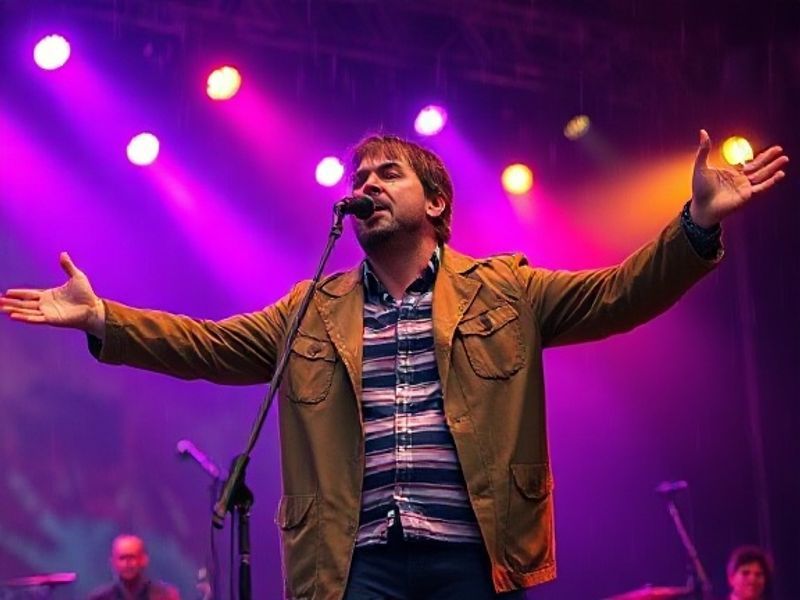
Before his behind-the-scenes success, Malgeri cut his teeth as a touring musician, playing bass in several regional bands that toured the Northeast and Mid-Atlantic. Those years were formative, exposing him to the demands of live performance and the realities of the music industry. He often cites the grind of loading gear, driving long distances, and adapting to unpredictable venues as lessons that shaped his work ethic. “Playing live taught me how to listen,” he said in a 2022 interview. “You can’t hide behind layers in a room with 30 people. You either connect or you don’t.”
That ethos carried over into his production work. Bands frequently remark on his ability to coax emotional performances from artists who might otherwise feel self-conscious in a studio setting. His approach isn’t about over-polishing; it’s about capturing authenticity. This philosophy aligns with a growing movement in independent music toward indie rock that values rawness over perfection. Malgeri has worked with artists from Philadelphia’s warehouse scene to Brooklyn’s DIY lofts, bridging gaps between regional scenes that rarely intersect.
The Visual Side: Art as Another Language
Malgeri’s visual art practice operates in parallel to his music career, though it receives far less attention. His paintings and digital collages explore themes of isolation, memory, and the uncanny beauty of everyday spaces. He often uses muted tones and fragmented imagery, creating works that feel like stills from a half-remembered dream. In 2020, he released a limited-edition zine titled Static Hymns, which paired his artwork with original poetry and ambient soundscapes. The project sold out within weeks, surprising even Malgeri, who hadn’t anticipated such demand.
What ties his visual and musical work together is a shared interest in texture—both sonic and visual. His album covers often feature his own photography, shot in locations that double as creative retreats. A recurring motif is the interplay between natural light and artificial structures, a visual metaphor for the tension between organic expression and technical precision. “I’m not trying to solve anything with my art,” he explained in a 2023 artist statement. “I’m just trying to make things feel less lonely.”
Collaboration and Community
One of Malgeri’s most valuable contributions may be his commitment to fostering community among artists. He co-founded Hollow Sessions, a monthly residency in Asbury Park, New Jersey, that provides a low-pressure space for musicians, poets, and visual artists to experiment. The events are free, and participants are encouraged to share works-in-progress without the pressure of immediate validation. Since its launch in 2021, the residency has hosted over 150 creators and helped launch several small-scale releases.
Malgeri also curates a biweekly playlist on Bandcamp called Static Hymns Radio, which features obscure tracks from artists he admires. The curation isn’t based on genre but on mood and atmosphere, reflecting his broader aesthetic. The playlist has amassed a dedicated following, with listeners often reaching out to share how a particular track resonated during a difficult time. “Music should be a comfort, not a competition,” he said. “If my work can be a small part of someone’s day, that’s enough.”
His collaborative spirit extends to his technical work as well. Malgeri is known for his willingness to share knowledge, whether through informal mentorship or detailed breakdowns of his mixing process on YouTube. He frequently emphasizes the importance of demystifying production techniques for emerging artists, a stance that contrasts with the gatekeeping often seen in professional circles. Music production forums now cite his tutorials as foundational resources, particularly for those working with limited budgets.
The Future: Balancing Experimentation and Accessibility
As Malgeri approaches his fifteenth year in creative fields, he shows no signs of slowing down. He’s currently at work on his first solo album as a primary artist, which he describes as a “sonic collage” blending field recordings, modular synths, and spoken-word poetry. The project is a departure from his production work, allowing him to explore his own voice more directly. A Kickstarter campaign for the album’s vinyl pressing exceeded its goal within 48 hours, signaling strong interest from fans.
Looking ahead, Malgeri is also expanding his visual practice. He’s begun experimenting with augmented reality, creating interactive installations that respond to sound. The work aligns with his long-standing interest in how technology can enhance, rather than replace, human creativity. “We’re at a point where tools can either isolate us or connect us,” he noted in a recent interview. “I want to build bridges, not walls.”
Whether through music, art, or community-building, Ben Malgeri’s work consistently reflects a quiet but unshakable belief in the power of creativity to heal and connect. In an era where art is often reduced to metrics—streams, likes, shares—his focus remains refreshingly human. He doesn’t chase trends, nor does he seek validation through algorithms. Instead, he creates with intention, trusting that the right audience will find his work when the time is right. For those paying attention, his output is a reminder that creativity isn’t about being the loudest in the room. It’s about being the most present.