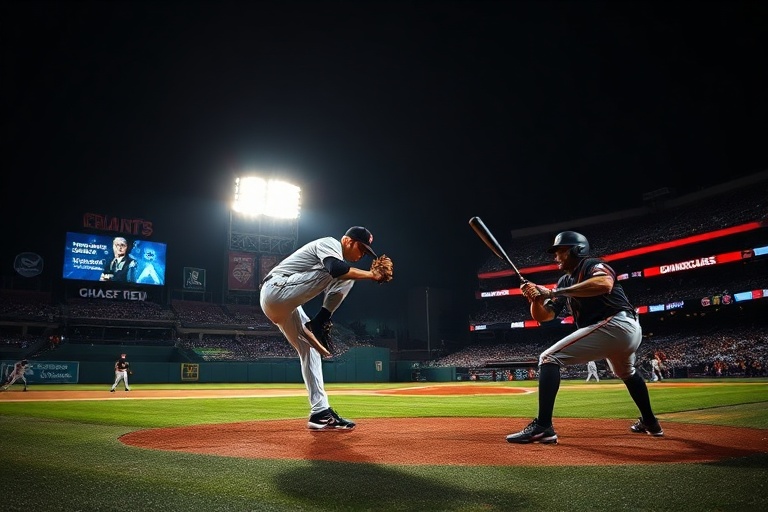
The Arizona Diamondbacks and St. Louis Cardinals have built one of the most intriguing rivalries in modern baseball. Their matchups often hinge on pitching, timely hitting, and late-inning heroics. The teams first met during Arizona’s expansion season in 1998, and since then, they’ve developed a competitive tension that extends beyond divisional play. While the Diamondbacks have won a World Series and the Cardinals are one of the most storied franchises in MLB history, their head-to-head battles remain must-watch affairs.
Pitching as the Deciding Factor
When the Diamondbacks and Cardinals face off, the outcome frequently comes down to pitching. Both teams prioritize strong arms in their rotations and bullpens, making for tight, low-scoring games. Arizona’s Zac Gallen has emerged as one of the National League’s most reliable starters, combining pinpoint control with a devastating changeup. Meanwhile, St. Louis leans on Miles Mikolas, whose sinker-heavy approach induces ground balls at an elite rate. In their most recent series at Busch Stadium, Gallen struck out 11 over seven innings, but Mikolas limited the D-backs to two runs over six, proving why pitching often decides these matchups.
The bullpens add another layer of strategy. Arizona’s closer, Paul Sewald, ranks among the league leaders in strikeout rate, while the Cardinals deploy Ryan Helsley, whose triple-digit fastball can change a game in an instant. When these relievers take the mound in high-leverage spots, the margin for error shrinks dramatically. In fact, over the past three seasons, games between these teams have averaged fewer than seven combined runs—highlighting how dominant pitching suppresses offensive explosions.
Offensive Matchups and Key Players
While pitching dominates these matchups, the offenses still produce moments that define the rivalry. The Diamondbacks rely on a core of power hitters, led by first baseman Christian Walker, who has quietly become one of the NL’s most consistent run producers. His ability to drive in runners with two strikes has bailed Arizona out of tight spots multiple times. The Cardinals counter with Nolan Arenado, whose defensive brilliance at third base is matched only by his clutch hitting. In a recent series, Arenado went 5-for-12 with a home run and two doubles, keeping St. Louis in games when their pitching wasn’t at its best.
Speed and small-ball tactics also play a role. The D-backs’ Corbin Carroll uses his elite athleticism to leg out infield hits and steal bases at an above-average clip. The Cardinals, meanwhile, deploy Tyler O’Neill—one of the game’s most aggressive baserunners—who can change the complexion of an inning with a single aggressive move. These contrasting styles force managers to adjust their game plans on the fly, whether by shifting infielders or holding runners closer to bag.
Historically, the Cardinals have had the edge in head-to-head matchups, but the Diamondbacks have closed the gap in recent years. Over the last five seasons, the two teams have split their 18-game series, with each squad winning nine. This parity makes their upcoming meetings particularly unpredictable, especially as both teams push for playoff contention.
Managerial Decisions That Shape the Outcome
No rivalry is complete without strategic decisions that sway momentum. Arizona manager Torey Lovullo is known for his bullpen management, often using Sewald in the seventh or eighth inning to preserve late-game leads. This approach has paid off, as the Diamondbacks rank in the top five in the NL for bullpen ERA since 2022. However, it also means Lovullo must navigate the delicate balance of using his best relievers without overworking them.
For the Cardinals, Oliver Marmol frequently turns to Helsley in high-leverage situations, even in non-save scenarios. This trust has paid dividends, as Helsley has converted 16 of his last 18 save opportunities. But the Cardinals’ reliance on Helsley can backfire if he tires late in the season, especially in a grueling division that includes the Brewers and Cubs.
One of the most debated moments in recent matchups came when Lovullo chose to let Gallen, his ace, face the heart of the Cardinals’ order in the seventh inning with runners on base. The decision paid off when Gallen struck out Arenado and Paul Goldschmidt in succession, but it also risked overexposing Arizona’s best pitcher. Such tactical choices often become the difference in tight series between these two teams.
What’s Next for This Rivalry?
The Diamondbacks and Cardinals are on divergent paths entering the second half of the season. Arizona, coming off a surprising 2023 playoff run, is built to contend now, with young stars like Carroll and Alek Thomas anchoring a lineup that can explode offensively. The Cardinals, meanwhile, are in a transitional phase, with veterans like Goldschmidt and Sonny Gray holding the fort while top prospects like Masyn Winn prepare to take over.
As these teams gear up for their next series, fans can expect another chapter in a rivalry defined by pitching, clutch performances, and managerial chess matches. Whether it’s a Gallen vs. Mikolas duel or a late-inning Sewald-Helsley showdown, these games rarely disappoint. With playoff spots on the line, every matchup carries added weight, making this one of the NL’s most compelling storylines.
For baseball purists, the Diamondbacks-Cardinals rivalry offers a refreshing alternative to the usual big-market clashes. It’s a reminder that baseball’s beauty lies in its unpredictability—and that even in an era of analytics and specialization, moments of pure competition still decide championships.
- MLB coverage on Dave’s Locker keeps fans updated on every twist and turn in this rivalry.
- Check out our Analysis section for deeper breakdowns of pitching matchups and managerial strategies.
As the season unfolds, one thing is certain: when these two teams meet, the stakes are always high, and the baseball is always first-rate.