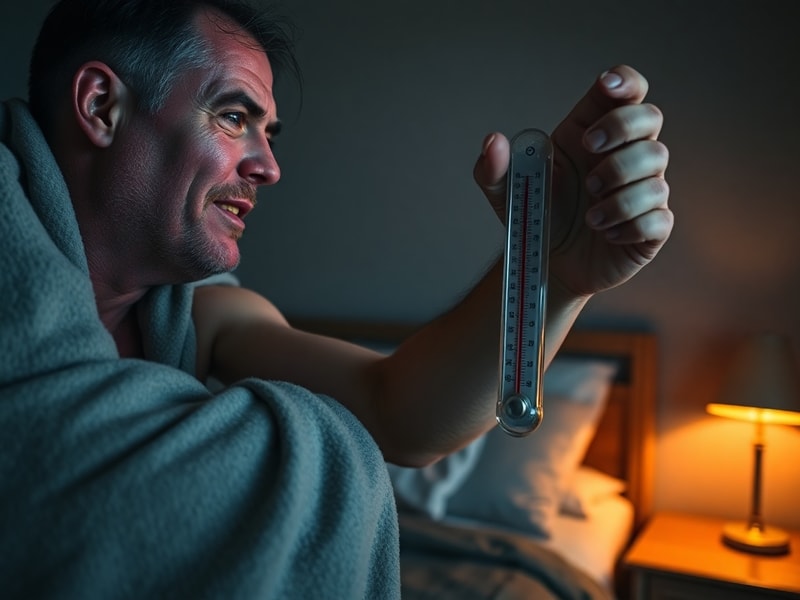
When the mercury in a thermometer begins to climb, most people recognize it as a warning sign—but is a fever always as straightforward as the rising red line? The relationship between fever and mercury, though seemingly simple, carries layers of historical, medical, and even psychological significance. While mercury thermometers have largely faded from daily use, their legacy persists in how we perceive temperature, health, and even risk. Understanding the distinctions between fever as a symptom and mercury as a measurement tool reveals broader truths about medicine, technology, and public trust.
The Science Behind Fever: More Than Just a Number
Fever is the body’s natural response to infection, inflammation, or other stressors. When pathogens invade, the immune system releases cytokines that signal the brain’s hypothalamus to raise the body’s temperature set point. This hyperthermia isn’t just a byproduct—it’s a defense mechanism. Studies show that higher body temperatures can inhibit viral replication and enhance immune cell activity. In short, fever isn’t the enemy; it’s a soldier in the body’s war against illness.
But fever isn’t a uniform experience. Its severity and duration vary widely depending on the cause. A low-grade fever of 100.4°F (38°C) might accompany a mild cold, while a spike to 104°F (40°C) could indicate a serious bacterial infection or heatstroke. The body’s ability to regulate temperature also differs across age groups. Infants and elderly individuals often struggle to mount a strong fever response, making them more vulnerable to severe infections. Meanwhile, some chronic conditions, like autoimmune disorders, can cause persistent low-grade fevers without clear triggers.
This variability underscores why temperature alone isn’t a diagnostic tool. A single reading doesn’t reveal the underlying cause—whether it’s a virus, bacteria, medication side effect, or even cancer. Doctors rely on context: accompanying symptoms like coughing, rash, or fatigue, as well as trends over time. A fever that spikes suddenly and resolves quickly is often less concerning than one that lingers for days. The key takeaway? Fever is a signal, not a verdict.
Mercury Thermometers: A Legacy of Precision and Peril
For over a century, mercury thermometers were the gold standard for measuring body temperature. Invented in the early 18th century, they offered unparalleled accuracy and reliability. The slender glass tubes, filled with liquid mercury, expanded predictably with heat, providing a clear, precise reading. Hospitals, clinics, and homes alike trusted them as indispensable tools. Yet their dominance came with a hidden cost: mercury itself is a potent neurotoxin. Exposure, even in small amounts, can lead to tremors, cognitive impairment, and kidney damage. Accidental breakage could turn a routine temperature check into a hazardous event.
The risks of mercury thermometers became impossible to ignore by the late 20th century. Environmental groups and health organizations campaigned for their phase-out, citing contamination risks from broken devices and the long-term ecological damage caused by mercury pollution. In 2002, the World Health Organization urged countries to replace mercury thermometers with safer alternatives, such as digital or infrared models. The European Union banned them outright in 2007, followed by the U.S. in 2011. Today, mercury thermometers are a relic of the past in most developed nations, though they may still be found in some older medical facilities or informal settings.
The transition wasn’t without controversy. Some medical professionals argued that mercury thermometers remained the most accurate option, especially for core body temperature readings. Digital thermometers, while convenient, could sometimes underestimate temperatures due to probe placement or battery issues. However, the trade-off between precision and safety ultimately tilted in favor of alternatives. Modern digital thermometers now offer comparable accuracy without the toxic risks, and infrared models provide instantaneous readings without physical contact. The mercury thermometer’s decline reflects a broader shift in medicine: prioritizing patient safety and environmental responsibility over tradition.
Beyond the Thermometer: Cultural and Psychological Factors
The way we interpret fever and temperature isn’t purely scientific—it’s deeply cultural. In many societies, a high fever is met with immediate alarm, often prompting urgent medical visits. This reaction stems from centuries of folklore and limited medical knowledge. Before germ theory, fevers were often attributed to supernatural causes, from curses to divine punishment. Even today, phrases like “feeling feverish” carry a sense of dread, conjuring images of contagion and isolation. The psychological weight of a fever can be as impactful as the physical symptoms themselves.
This cultural anxiety extends to how we perceive temperature measurement. Mercury thermometers, with their smooth glass and silvery liquid, became symbols of authority and reliability. Their presence in a doctor’s office or home medicine cabinet lent them an almost sacred trust. When they were phased out, some people felt a loss of confidence in medical tools—a phenomenon known as the “thermometer gap.” Digital displays, while practical, lack the tangible reassurance of a slowly rising mercury column. This nostalgia isn’t just sentimental; it reflects a deeper unease about the intangibility of modern technology. How can a number on a screen compete with the visceral experience of watching a liquid rise in a glass tube?
There’s also the matter of trust in institutions. The replacement of mercury thermometers coincided with growing skepticism toward medical advice. Anti-vaccine movements, conspiracy theories, and misinformation campaigns have eroded public confidence in health authorities. In this climate, even well-intentioned technological advancements can be met with suspicion. Some parents, for example, prefer analog thermometers despite the risks, viewing them as more “natural” or less susceptible to electronic malfunctions. This skepticism isn’t irrational—it’s a response to a world where trust is increasingly fragile.
Key Takeaways: What Fever vs. Mercury Tells Us About Health and Technology
To distill the lessons from this historical and medical journey, here are the core insights:
- Fever is a symptom, not a disease. It’s a sign of the body’s fight against illness, not the illness itself. Monitoring its pattern—rather than fixating on a single reading—is crucial for accurate diagnosis.
- Mercury thermometers were revolutionary but flawed. They provided unmatched precision but at a hidden environmental and health cost. Their decline marks a necessary evolution in medical safety.
- Technology replaces tradition, but trust lags behind. Digital thermometers are safer and more efficient, yet some people still prefer analog methods out of habit or skepticism. Bridging this gap requires clear communication and education.
- Cultural perceptions shape health behaviors. Fear of fever and nostalgia for old medical tools reveal how deeply ingrained beliefs influence our approach to wellness. Addressing these biases is key to effective healthcare.
The story of fever and mercury is more than a historical footnote—it’s a microcosm of how medicine evolves. We trade old tools for new ones, not just for convenience, but for survival. Yet the human element remains constant: our need for clarity, trust, and agency in the face of illness. Whether through the steady rise of mercury or the blinking numbers of a digital display, we seek the same thing—a reliable guide to our health.
As we move toward an era of wearable health tech and AI-driven diagnostics, the lessons of the mercury thermometer remind us to balance innovation with caution. Progress shouldn’t come at the expense of safety or trust. After all, the most advanced thermometer in the world is useless if no one believes its readings. The future of health measurement lies not just in precision, but in understanding the fears and hopes that accompany every degree of temperature change.
For those interested in exploring how modern technology continues to reshape health monitoring, check out our Health and Technology categories on Dave’s Locker. There, you’ll find deeper dives into the tools and trends shaping how we understand our bodies—and the world around us.