The Absurdist Revolution: How Eric André Redefined Comedy for a Global Audience
Eric André isn’t just a comedian—he’s a cultural disruptor who turned the absurd into a language understood worldwide. For over a decade, his self-titled late-night show The Eric André Show has defied conventions, blending surreal humor with unfiltered chaos that resonates far beyond American late-night television. What began as a niche Adult Swim experiment grew into a global phenomenon, influencing comedians from Tokyo to Toronto and proving that the most boundary-pushing humor often crosses borders effortlessly.
Born in South Florida to Haitian immigrant parents, André’s upbringing was far from the polished world of mainstream comedy. His Haitian heritage introduced him to a tradition of storytelling rich in satire and critique, while his move to Los Angeles in the early 2000s placed him at the intersection of alternative comedy scenes. It was there that he honed a style that rejected the polished delivery of traditional late-night hosts in favor of raw, unpredictable absurdity—a choice that would define his career.
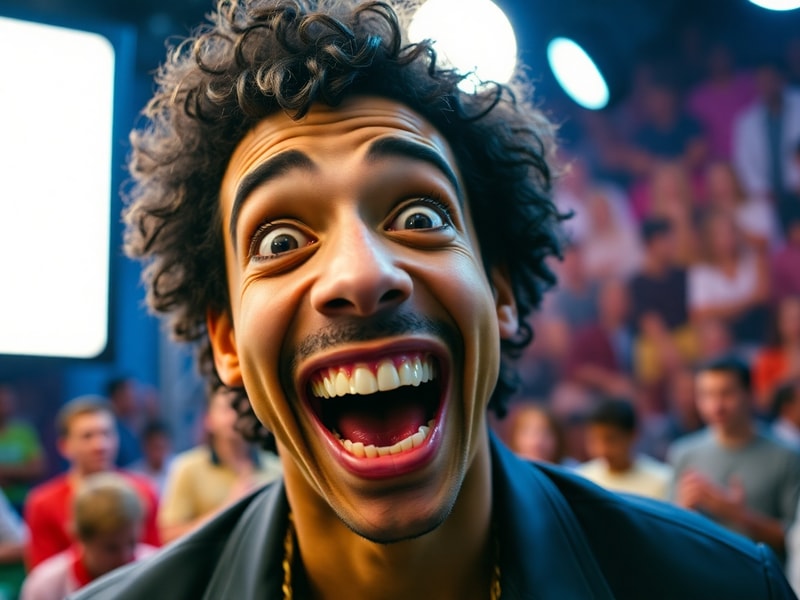
André’s breakthrough came in 2012 with the debut of The Eric André Show, a surreal parody of late-night talk shows that gleefully discarded every rule of the format. There were no scripts, no rehearsals, and no holds barred. Guests—often celebrities like Seth Rogen or Bill Hader—were subjected to bizarre physical comedy, grotesque props, and André’s signature manic energy. The show’s chaotic aesthetic mirrored the global shift toward irreverent, internet-native humor, where unpredictability was currency and authenticity often trumped polish.
The Global Ripple Effect: How André’s Humor Traveled
What makes André’s comedy resonate internationally isn’t just its absurdity, but its universality. Absurdism, after all, transcends language. Whether in Japan’s Downtown no Gaki no Tsukai or the UK’s Garth Marenghi’s Darkplace, comedians have long used surrealism to critique cultural norms in ways that feel immediate and relatable. André’s work sits comfortably in this tradition, but with a distinctly 21st-century twist: his humor thrives in the age of memes and viral clips, where context is secondary to impact.
The show’s global appeal became undeniable during its fourth season in 2016, when a clip of André interviewing actor Keanu Reeves went viral in multiple languages. The exchange—where André aggressively questioned Reeves about his film roles while Reeves responded with deadpan amusement—became a meme template across platforms like Weibo, Twitter, and Reddit. It wasn’t just Reeves’ reactions that captivated audiences; it was the sheer unpredictability of the moment, a quality that feels increasingly rare in an era of algorithm-driven content.
This viral moment highlighted another key aspect of André’s global influence: his ability to turn interviews into participatory entertainment. Unlike traditional late-night hosts who prioritize polished banter, André’s confrontational style invites viewers to engage actively. It’s a format that translates seamlessly across cultures because it relies on shared human reactions—confusion, surprise, and dark humor—rather than cultural references.
Breaking Barriers: Race, Representation, and Comedy’s Evolving Landscape
André’s career also intersects with broader conversations about representation in comedy. As one of the few Black hosts of a mainstream late-night show, he navigates a space where racial expectations often clash with comedic rebellion. His humor frequently touches on race, whether through exaggerated stereotypes or direct confrontation with guests about their own biases. Yet André avoids the trap of being pigeonholed as a “Black comedian” first and a comedian second. Instead, he uses his platform to challenge audiences to laugh at discomfort—a strategy that feels particularly relevant in today’s polarized cultural climate.
This duality is evident in episodes where he skewers both systemic racism and the performative allyship of celebrities. In one memorable segment, he forced a guest to confront their own problematic statements about race, a tactic that sparked both praise and backlash. The controversy underscored a truth about André’s comedy: it doesn’t seek universal approval. It thrives on provocation, a quality that aligns with his global fanbase’s growing appetite for unfiltered perspectives.
André’s approach also reflects a generational shift in how marginalized voices use humor to reclaim narratives. In countries like France, where debates about identity and immigration dominate public discourse, comedians like Gad Elmaleh and Florence Foresti have similarly used absurdity to critique societal norms. André’s work sits alongside these voices, offering a distinctly American take on a global theme: the power of laughter to expose uncomfortable truths.
The André Effect: How His Style Influenced a New Wave of Comedians
The most lasting impact of André’s career may be the legion of comedians he’s inspired to ditch the rulebook. From Nathan Fielder’s deadpan surrealism in Nathan for You to the chaotic energy of Tim and Eric Awesome Show, Great Job!, André’s fingerprints are all over contemporary alternative comedy. Even mainstream figures like John Mulaney and Pete Davidson have cited him as an influence, though their work takes a more tempered approach.
What these comedians borrow from André isn’t just his humor, but his philosophy: that comedy should feel alive, unpredictable, and occasionally uncomfortable. This ethos has seeped into digital spaces as well. YouTube channels like Jake and Amir and CollegeHumor owe a debt to André’s willingness to embrace the ridiculous, while TikTok’s short-form absurdity feels like a distilled version of his late-night chaos.
André’s influence extends beyond comedy into broader cultural commentary. His 2020 stand-up special Legalize Everything tackled topics like racial injustice and police brutality with a blend of irreverence and sincerity that felt jarring yet necessary. In a year marked by global protests, André’s humor provided a counterpoint to the solemnity of traditional activism—a reminder that laughter can be a form of resistance.
The Future: What’s Next for Eric André?
As André’s career evolves, so does the conversation around his legacy. With The Eric André Show entering its ninth season and his foray into film with 2023’s The Eric André Show: The Movie, it’s clear he’s not slowing down. Yet the challenge for André—and for the comedians he’s inspired—will be sustaining this level of disruption in an entertainment landscape dominated by streaming algorithms and corporate mandates.
There’s also the question of cultural saturation. Can absurdism remain subversive when it’s increasingly co-opted by brands and influencers? André has already faced criticism for his forays into advertising, where his chaotic energy risks being diluted into marketable soundbites. The tension between authenticity and commercial viability is one that will define the next phase of his career—and that of the comedians who follow in his footsteps.
What’s certain is that André has already cemented his place as a pivotal figure in 21st-century comedy. His work bridges continents and cultures, proving that the most universal humor often emerges from the most personal places. In an era where audiences crave genuine connection, André’s willingness to embrace the absurd—flaws, failures, and all—feels like a breath of fresh air.
For aspiring comedians, the lesson is clear: rules are made to be broken, and the best humor often lies in the spaces where logic fails. Whether you’re in Los Angeles or Lagos, Tokyo or Toronto, André’s message is the same: laugh first, ask questions never. The world is strange enough without pretending otherwise.