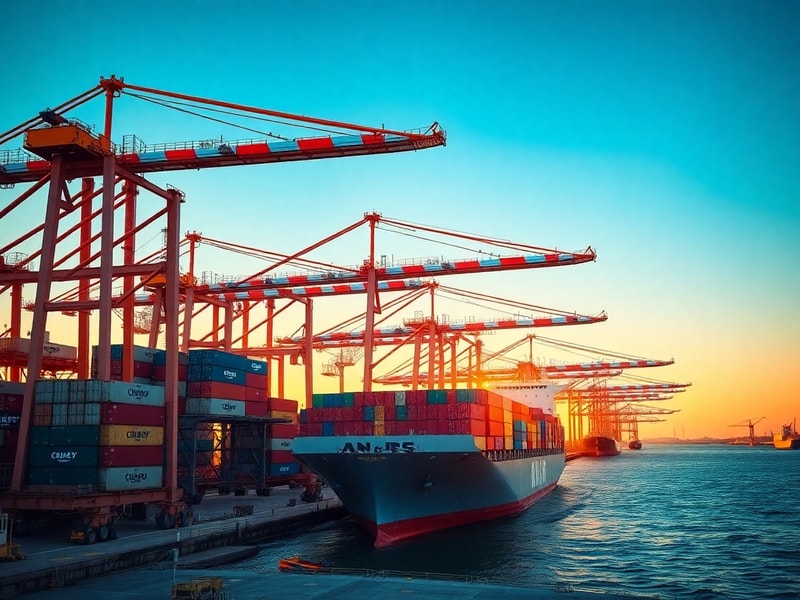
Shipping has quietly become one of the most transformative forces in global commerce, shaping everything from consumer expectations to international trade flows. What began as a simple logistical function—moving goods from point A to point B—has evolved into a sophisticated, technology-driven ecosystem that touches nearly every industry. Behind the scenes, shipping companies, port authorities, and digital platforms work in unison to keep supply chains humming, even as geopolitical tensions, climate concerns, and labor shortages threaten to disrupt the status quo.
How shipping reshapes the global economy
The economic impact of shipping is staggering. According to the United Nations Conference on Trade and Development (UNCTAD), over 80% of global trade by volume is transported by sea. This means that the price of a smartphone in Chicago or a carton of milk in Berlin is, in part, determined by the efficiency of container ships navigating the Suez Canal or the labor conditions at ports in Shanghai. The cost of shipping a single container from China to Europe has fluctuated wildly in recent years—spiking during the COVID-19 pandemic and then plummeting as demand normalized—highlighting how sensitive global trade is to disruptions.
But shipping’s influence extends beyond cost. It has redefined manufacturing strategies. Companies no longer need to produce goods near their end markets to remain competitive. Instead, they can manufacture in low-cost regions and rely on just-in-time shipping to deliver products quickly. This shift has fueled the rise of megacities like Shenzhen and Rotterdam, where ports serve as economic engines. It has also created vulnerabilities. A single delay at a critical chokepoint—such as the Panama Canal or the Strait of Malacca—can ripple across industries, causing delays in car production lines or emptying supermarket shelves.
The environmental cost of global trade
While shipping enables economic growth, it also carries a heavy environmental burden. Commercial ships burn heavy fuel oil, emitting significant levels of sulfur oxides, nitrogen oxides, and carbon dioxide. The International Maritime Organization (IMO) estimates that shipping accounts for nearly 3% of global greenhouse gas emissions. In response, new regulations like the IMO 2020 sulfur cap have pushed the industry toward cleaner fuels and technologies, but progress remains uneven.
The push for sustainability has led to innovations such as slow steaming—reducing ship speeds to cut fuel consumption—and the development of hybrid and electric vessels. Some companies are even experimenting with wind-assisted propulsion and biofuels. Yet, these solutions often come with trade-offs. Slow steaming increases transit times, which can be costly for time-sensitive goods. Meanwhile, alternative fuels are still expensive and not widely available, particularly in developing regions.
The environmental debate has also spilled into consumer behavior. A growing number of shoppers now consider the carbon footprint of their purchases, prompting brands to adopt “green shipping” options—even if they come at a premium. This shift is pushing logistics giants like Maersk and DHL to invest in carbon-neutral shipping initiatives, signaling a potential industry-wide transformation.
The digital transformation of shipping
Technology is reshaping shipping from the warehouse to the dock. The rise of blockchain, artificial intelligence, and the Internet of Things (IoT) has introduced new levels of transparency and efficiency. Blockchain, for instance, allows all parties in a supply chain—from manufacturers to customs agents—to track a shipment in real time, reducing fraud and delays. Maersk and IBM’s TradeLens platform is a prime example, enabling secure, immutable records of shipping documents.
AI is being used to optimize routes, predict delays, and manage inventory. Machine learning models analyze historical data to forecast demand, helping retailers avoid overstocking or stockouts. Meanwhile, IoT sensors embedded in containers monitor temperature, humidity, and location, ensuring perishable goods like pharmaceuticals or fresh produce remain in optimal condition during transit.
These innovations are not just for large corporations. Small and medium-sized businesses are also benefiting from digital freight platforms like Freightos and Flexport, which aggregate shipping rates and streamline bookings. For entrepreneurs looking to scale globally, these tools lower the barriers to entry, making it easier to compete with established players.
Key players and emerging trends
The shipping industry is dominated by a handful of global giants, but new players are constantly emerging. Here are some of the most influential companies and trends currently shaping the sector:
- Maersk – The Danish conglomerate remains a leader in container shipping, with a fleet of over 700 vessels. Its recent focus on decarbonization and digital logistics has set a benchmark for the industry.
- Cosco Shipping – China’s state-owned shipping behemoth has expanded aggressively, acquiring terminals and routes worldwide. Its growth reflects China’s broader strategy to dominate global trade routes.
- Hapag-Lloyd – A German shipping line with a strong presence in transatlantic and Asia-Europe routes, known for its reliability and customer service.
- Digital Freight Forwarders – Startups like Flexport and Project44 are disrupting traditional freight forwarding by offering tech-driven solutions that reduce paperwork and improve tracking.
- Autonomous Ships – Companies like Rolls-Royce and Sea Machines are developing autonomous vessels that could reduce labor costs and improve safety, though regulatory hurdles remain.
Another notable trend is the rise of “port-as-a-service” models, where ports offer modular, scalable infrastructure to accommodate growing vessel sizes and diverse cargo types. Rotterdam and Singapore are leading this shift, investing in automated terminals and green energy infrastructure to future-proof their operations.
Challenges on the horizon
Despite its resilience, the shipping industry faces persistent challenges. Geopolitical tensions, such as the Russia-Ukraine war and U.S.-China trade disputes, continue to disrupt established trade routes. The Red Sea crisis in early 2024, triggered by Houthi rebel attacks on commercial ships, forced vessels to reroute around Africa, adding weeks to transit times and spiking fuel costs.
Labor shortages also pose a threat. The global shipping workforce is aging, and younger generations are often reluctant to take on the grueling schedules and remote postings required in maritime roles. Automation could fill some gaps, but it also risks displacing thousands of workers, raising ethical and economic concerns.
Cybersecurity is another growing vulnerability. As shipping becomes more digitized, it becomes a target for ransomware attacks and data breaches. A 2023 report by the U.S. Coast Guard found that cyber incidents in the maritime sector had increased by 400% since 2017. Protecting digital infrastructure is now as critical as securing physical assets.
Finally, climate change itself is reshaping the industry. Rising sea levels threaten coastal ports, while extreme weather events—like hurricanes and heatwaves—disrupt operations. The IMO’s goal of achieving net-zero emissions by 2050 is ambitious, but achieving it will require unprecedented collaboration between governments, corporations, and researchers.
The future of shipping: What’s next?
The shipping industry is at a crossroads. On one hand, it is essential to global prosperity, enabling the flow of goods that sustain economies and livelihoods. On the other, it must urgently address its environmental and social impacts to remain viable in a climate-conscious world. The path forward will likely involve a mix of technological innovation, regulatory reform, and industry-wide cooperation.
One promising development is the adoption of green ammonia and hydrogen as alternative fuels. These could drastically reduce emissions, though their production and distribution infrastructure is still in its infancy. Another area of focus is circular shipping—designing vessels and logistics systems that minimize waste and maximize resource efficiency. Companies like Wallenius Wilhelmsen are already testing “ocean-based recycling” models, where ships are built to be disassembled and reused at the end of their lifecycle.
For consumers, the future of shipping may mean more transparency. Blockchain-enabled tracking could soon allow shoppers to see the exact carbon footprint of their online orders, empowering them to make more sustainable choices. Brands that prioritize ethical shipping—such as those using electric delivery vans or carbon-offset programs—could gain a competitive edge in a market increasingly driven by values.
The shipping industry is no longer just a backstage player in global trade—it is a dynamic force that will shape the next chapter of economic and environmental history. As technology advances and consumer demands evolve, the companies and policymakers that adapt will define the future of how we move, consume, and live.
For businesses looking to navigate this complex landscape, staying informed is key. Explore more about the latest trends in logistics and supply chain management on Dave’s Locker Trending page, or dive deeper into technology’s role in modern shipping at Dave’s Locker Technology.