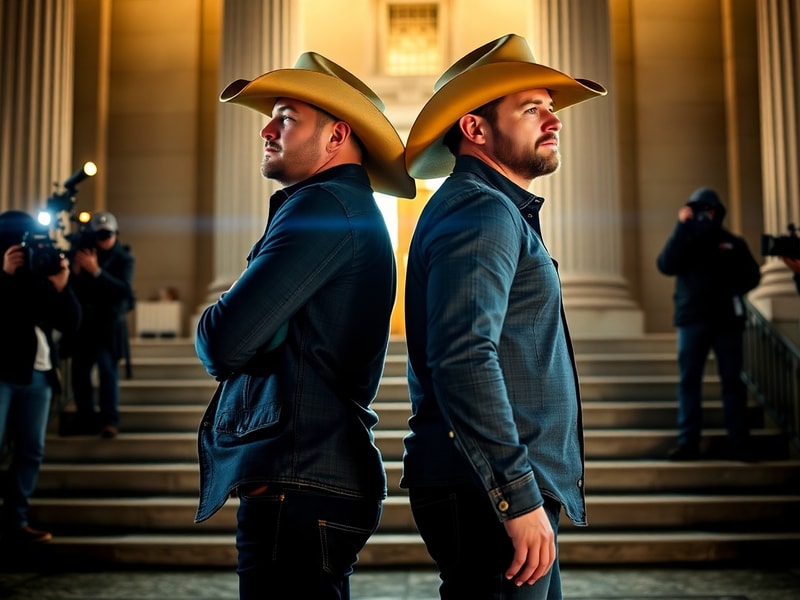
Country music’s top-tier stars Luke Bryan and Jason Aldean rarely share the same stage these days, but their names are now tied together in a legal dispute that has sent ripples across the industry. The lawsuit, filed in late July 2024, centers on allegations of breach of contract, unauthorized use of intellectual property, and interference with business relationships. While both artists have remained largely silent publicly, court filings reveal a tangled web of claims involving a third-party promoter and a series of concert events that were either canceled or rescheduled under disputed circumstances.
The Origins of the Dispute
According to the initial complaint filed in the U.S. District Court for the Middle District of Tennessee, Aldean’s representatives allege that Bryan’s production company, Luke Bryan Touring, failed to honor contractual obligations tied to a 2023 co-headlining tour. The tour, marketed as “Double Down Summer,” was intended to span 25 cities across the southern United States, with joint marketing efforts and shared revenue from ticket sales. However, Bryan’s team is accused of unilaterally canceling several dates without Aldean’s consent and reallocating promotional funds originally earmarked for the tour.
Among the most contentious allegations is the claim that Bryan’s team used Aldean’s name and likeness in promotional materials after Aldean had requested its removal. Aldean’s legal team argues this constitutes a violation of personality rights and could damage his brand. “When you’re building a brand around authenticity and connection with fans, unauthorized use of your image isn’t just a legal issue—it’s a breach of trust,” said a Nashville-based entertainment attorney familiar with the case.
The lawsuit also names Big Machine Touring, a Nashville-based promotion company, as a co-defendant. Big Machine is accused of coordinating with Bryan’s team to reroute tour funds, redirecting money intended for joint marketing into separate accounts controlled by Bryan’s company. Aldean’s attorneys allege this action violated the tour’s joint venture agreement, which required equal oversight of all financial decisions.
What the Lawsuit Claims: Key Points
Below are the core allegations outlined in Aldean’s 38-page complaint, filed on July 22, 2024:
- Breach of Contract: Bryan’s production company allegedly failed to fulfill its obligations under the co-headlining agreement, including providing agreed-upon marketing budgets and maintaining scheduled performance dates.
- Misappropriation of Name and Likeness: Aldean’s name, image, and voice were used in promotional materials—including social media posts and email campaigns—after he formally requested their removal.
- Breach of Fiduciary Duty: Big Machine Touring is accused of mismanaging joint funds, diverting $1.2 million in tour revenue into accounts controlled by Bryan’s team without Aldean’s consent.
- Tortious Interference: Aldean claims Bryan’s team actively discouraged other artists from participating in a planned 2024 holiday tour that Aldean was organizing independently, citing “ongoing disputes.”
- Unjust Enrichment: The lawsuit seeks damages for financial losses attributed to canceled shows, lost merchandise sales, and reduced sponsorship opportunities.
The complaint seeks monetary damages in excess of $25 million, along with injunctive relief to prevent further unauthorized use of Aldean’s intellectual property. Legal experts suggest the case could hinge on the interpretation of partnership agreements and the extent of shared control over joint ventures in the touring industry.
Industry Impact: Why This Case Matters Beyond the Two Stars
While the Bryan-Aldean feud dominates headlines, the lawsuit spotlights deeper structural issues within the touring business. Co-headlining tours have become a cornerstone of country music’s revenue model, with artists increasingly relying on shared billing to maximize ticket sales and reduce logistical costs. Yet, as this case reveals, the financial and creative risks are substantial when partnerships sour.
“When two big names team up, the contracts are supposed to protect both sides,” said Nashville attorney Sarah Whitaker, who specializes in entertainment litigation. “But in practice, these agreements are often vague about financial oversight and creative control. One party can easily overstep when the other isn’t watching closely.”
Industry insiders also point to a growing trend of artists bypassing traditional promoters and managing their own tours—partly to avoid disputes like this. Bryan’s company, for example, has been expanding its in-house production capabilities, which may have contributed to tensions with external partners like Big Machine. Meanwhile, Aldean has increasingly aligned with artists like Morgan Wallen and HARDY, suggesting a strategic pivot toward independent collaborations.
Beyond the legal and financial implications, the lawsuit raises questions about fan trust. Country music fans, known for their loyalty to individual artists, may struggle to reconcile public feuds with the family-friendly image both Bryan and Aldean have cultivated. Social media has already seen a surge in speculation, with hashtags like #BryanVsAldean trending on X (formerly Twitter) within hours of the filing.
What Comes Next: Legal Timeline and Possible Outcomes
The case is still in its early stages, with Bryan’s legal team yet to file a formal response. Court documents indicate a scheduling conference is set for September 12, 2024, where both sides will likely discuss motion filings and potential settlement talks. Legal analysts suggest mediation is probable, given the high-profile nature of the dispute and the potential reputational damage to both artists.
Possible outcomes include:
- Settlement: Both parties could agree to a confidential settlement, avoiding a public trial and preserving their public images. This is the most likely scenario, given the financial and reputational stakes.
- Summary Judgment: If one side can prove clear breach of contract, a judge may rule in their favor without a full trial. However, this is less likely due to the complexity of the agreements involved.
- Prolonged Litigation: If the case proceeds to trial, it could drag on for months or even years, with both sides calling industry experts to testify about standard operating procedures in touring contracts.
- Industry Reforms: Regardless of the outcome, the case could prompt industry organizations like the Academy of Country Music or the Country Music Association to develop standardized co-headlining contracts, adding clarity to financial oversight and creative control.
One thing is clear: the outcome will be closely watched by managers, agents, and artists across multiple genres. If Aldean prevails, it could embolden other artists to challenge contractual terms more aggressively. Conversely, a ruling in Bryan’s favor might reinforce the power of established production companies in controlling tour logistics and revenue streams.
Looking Ahead: What Fans and Industry Can Expect
For now, both artists continue their solo tours, with Bryan wrapping up a successful run of outdoor amphitheater shows and Aldean headlining a series of stadium events. Their absence from the same stage—once a staple of summer tours—signals a shift in the country music landscape. Promoters are already scrambling to fill the void with alternative pairings, including collaborations between mid-tier artists and rising stars.
Meanwhile, fans remain divided. Some view the lawsuit as a natural consequence of the high-stakes touring industry, while others see it as a betrayal of the camaraderie that once defined country music’s biggest stars. One fan on Reddit summed up the sentiment: “I just want to see good music. I don’t care who’s feuding behind the scenes.”
Regardless of the legal outcome, the Bryan-Aldean dispute serves as a cautionary tale for an industry built on collaboration but increasingly driven by competition. As touring revenues become more critical to artists’ bottom lines, the contracts that govern those partnerships will need to evolve—before the next feud erupts.