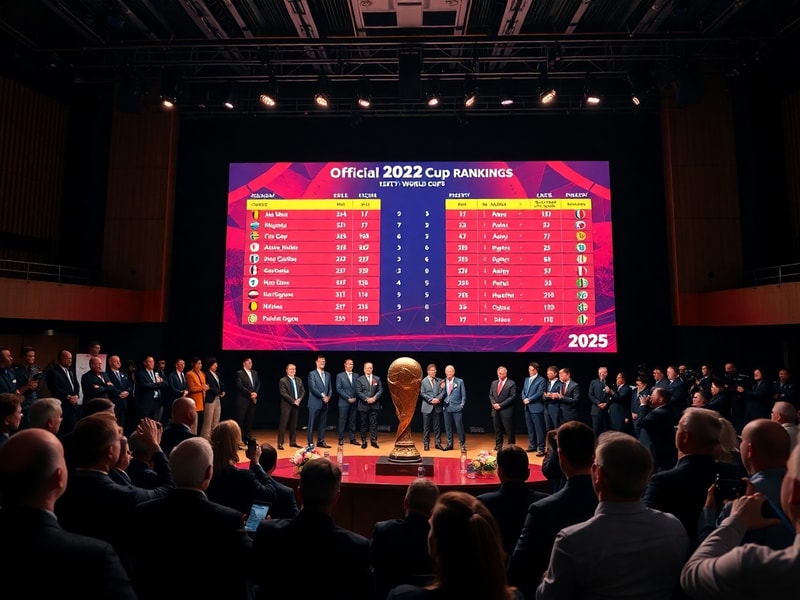
The 2026 FIFA World Cup is already reshaping the global football landscape, and with the rankings update released this month, the stakes for national teams have never been higher. While traditional powerhouses like Brazil, France, and Argentina remain at the top, emerging teams are making bold moves that could redefine the tournament’s outcome. The new rankings, calculated by FIFA’s updated algorithm, reflect recent performances in qualifying matches and international friendlies, offering a snapshot of which nations are peaking—and which are lagging behind.
How the 2026 World Cup Rankings Are Calculated
FIFA’s ranking system, introduced in 2018, prioritizes recent results over historical performance. Points are awarded based on match outcomes, the strength of opponents, and competition importance. For the 2026 edition, the formula has been tweaked again, this time including a higher weighting for World Cup qualifiers and continental championships. This means teams like Morocco and Japan, which dominated their regional tournaments, have seen significant jumps in the standings.
The system now also accounts for the quality of goals scored, not just wins. A dominant 4-0 victory over a top-20 opponent, for instance, yields more points than a narrow 1-0 win against a lower-ranked side. This adjustment favors attacking, possession-based teams while penalizing overly defensive tactics that rely on set-piece brilliance.
Key Factors Influencing the Rankings
The 2026 rankings are shaped by several broader trends in international football:
- Rise of African and Asian Teams: Morocco’s historic World Cup run in 2022 was no fluke. Their current ranking (No. 13) reflects a generation of African talent emerging from clubs like Wydad Casablanca and Al Ahly. Japan (No. 20) and South Korea (No. 27) continue to churn out technically gifted players from academies like JFA’s youth programs.
- European Domination: Despite Brexit and financial constraints at some clubs, European nations still hold 13 of the top 20 spots. England (No. 5) and Spain (No. 7) benefit from deep youth development systems, while Germany (No. 15) is rebuilding after a disappointing Euro 2024.
- South American Resilience: Brazil (No. 1) and Argentina (No. 2) remain the gold standard, but Uruguay (No. 9) and Colombia (No. 11) are proving that smaller federations can punch above their weight. Their reliance on homegrown talent over expensive imports keeps their rankings stable.
- North America’s Ambition: The U.S. (No. 12) and Mexico (No. 14) are both investing heavily in infrastructure, but inconsistent results in CONCACAF competitions have kept them from breaking into the top 10. Canada (No. 49), however, is on the rise thanks to a wave of MLS talent.
For a deeper look at how rankings impact betting markets and fan expectations, check out our Sports section, where we break down odds and underdog stories.
Controversies and Criticisms of the New System
Not everyone is sold on FIFA’s updated rankings. Critics argue that the system still undervalues consistency. A team like Belgium (No. 3), which has remained in the top 5 for nearly a decade despite underperforming in major tournaments, benefits from name recognition more than current form. Meanwhile, teams like Croatia (No. 8) and Portugal (No. 6) are penalized for relying on aging stars like Luka Modrić and Cristiano Ronaldo.
Another sticking point is the lack of transparency in FIFA’s algorithm adjustments. The governing body has not released a full breakdown of how the 2026 tweaks affect point distribution, leaving analysts to reverse-engineer the changes. This opacity fuels skepticism, especially among fans who see their national teams’ rankings fluctuate wildly based on a single friendly.
What the Rankings Mean for the 2026 World Cup
The 2026 tournament will be the first expanded to 48 teams, and the rankings will play a crucial role in the draw. The top 10 nations will likely secure seeded status, ensuring they avoid early showdowns with other elite teams. But the expanded format also means lower-ranked sides like Jamaica (No. 55) or Vietnam (No. 53) have a real chance to qualify—something that could lead to historic upsets.
For traditional powerhouses, the rankings are a warning. Germany’s fall to No. 15 after their Euro 2024 exit shows how quickly fortunes can change. Meanwhile, teams like Senegal (No. 18) and Iran (No. 24) are poised to make deep runs, given their recent form and balanced squads.
Potential Dark Horses and Sleepers
Based on the current rankings, these teams could emerge as surprises in 2026:
- Denmark (No. 10): A golden generation led by Rasmus Højlund and Pierre-Emile Højbjerg is peaking at the right time. Their tactical flexibility and strong domestic league (Superliga) make them a threat.
- Switzerland (No. 16): Consistently solid in qualifiers, Switzerland’s depth and disciplined style could see them advance far in a competitive group.
- Serbia (No. 22): With talents like Dušan Vlahović and Sergej Milinković-Savić, Serbia has the firepower to trouble any opponent. Their physicality and direct play could disrupt more technical sides.
- Uruguay (No. 9): Often overlooked due to their small population, Uruguay’s pragmatic approach and tournament experience make them perennial underdogs with real potential.
For a preview of how these teams might perform in their groups, our Analysis section features tactical breakdowns and player spotlights.
Long-Term Implications for International Football
The 2026 rankings are more than just a snapshot—they highlight shifts in global football that will shape the next decade. The rise of African and Asian teams is inevitable as investment in youth academies and infrastructure grows. Leagues like Saudi Pro League and MLS are siphoning talent, but they’re also creating pathways for homegrown players to develop without leaving early.
On the flip side, the rankings expose the widening gap between elite and developing nations. Teams from smaller federations struggle to compete in qualifiers, often due to limited resources. FIFA’s new solidarity payments aim to address this, but the impact won’t be felt until after 2026.
For fans, the rankings fuel debates about who “deserves” to win. Should a team like the Netherlands (No. 4), with their storied history but lack of recent trophies, be ranked above a team like Morocco that’s on the rise? The answer depends on whether you value potential or pedigree—and that’s what makes the World Cup so compelling.
The road to the 2026 World Cup is just beginning, and these rankings will evolve with every qualifier and friendly. One thing is certain: the tournament will be unpredictable, with new stories emerging from every continent. As the rankings shift, so too will the narratives—making this one of the most intriguing World Cup cycles in decades.