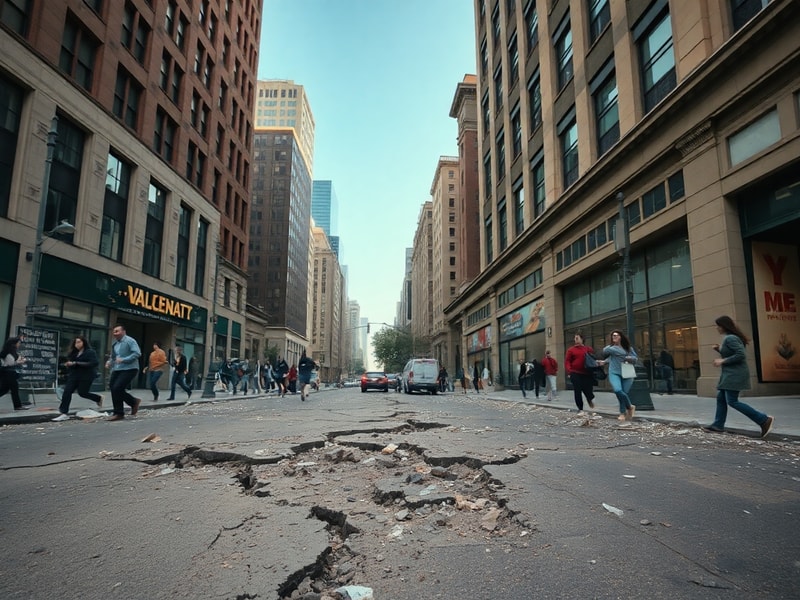
Understanding California’s Earthquake Risk: What Residents Need to Know
California sits on shaky ground—literally. The Golden State experiences roughly 10,000 earthquakes annually, though most are too small to notice. Yet history shows the state’s vulnerability to rare but devastating quakes, such as the 1906 San Francisco temblor, which killed more than 3,000 people and left the city in ruins. Today, with a population exceeding 39 million, the stakes are higher than ever. Understanding earthquake risk in California isn’t just academic—it’s a matter of safety, preparedness, and long-term resilience.
Most of the state’s seismic activity stems from the San Andreas Fault system, a network of fractures stretching nearly 800 miles through California. The fault marks the boundary where the Pacific Plate grinds past the North American Plate, moving at a rate of about 2 inches per year. While this slow creep doesn’t always trigger noticeable quakes, stress builds over time. When the crust finally ruptures, the energy released can travel for miles, shaking cities from Los Angeles to San Francisco. The 1989 Loma Prieta earthquake, for example, registered a 6.9 magnitude and caused $6 billion in damage, despite striking a relatively rural area.
Not all faults in California are equal. Some, like the Hayward Fault, run directly beneath densely populated cities such as Oakland and Berkeley. Scientists estimate a 33% chance of a magnitude 6.7 or greater quake striking the Hayward Fault in the next 30 years. This fault alone could affect more than 7 million people. Other significant faults include the San Jacinto Fault in Southern California and the Cascadia Subduction Zone off the northern coast, which could generate a “megathrust” earthquake with catastrophic consequences.
Why California Is So Prone to Earthquakes
The state’s geography is a double-edged sword. On one hand, its rugged terrain and Mediterranean climate draw millions of residents and visitors. On the other, the same tectonic forces that created its mountains and valleys also make it one of the most seismically active regions in the U.S. California accounts for nearly 80% of the nation’s earthquake damage, according to the U.S. Geological Survey (USGS).
Several geological factors contribute to this risk:
- Plate Boundaries: California straddles the boundary between the Pacific and North American tectonic plates. Where these plates meet, friction locks them in place until stress overcomes it, resulting in sudden movement.
- Fault Networks: The San Andreas Fault isn’t alone. It’s part of a complex system with hundreds of smaller faults, including the Imperial, Calaveras, and Rodgers Creek faults. Each can generate its own destructive quakes.
- Subduction Zones: In Northern California, the Cascadia Subduction Zone could produce an earthquake as powerful as 9.0, triggering tsunamis that threaten coastal communities.
- Human Activity: While natural forces drive most quakes, human activities like fracking and wastewater injection have been linked to induced seismicity, particularly in regions like Kern County.
The combination of these factors means California will continue to shake—sometimes violently. The challenge lies not in predicting when, but in preparing for the inevitable.
How California Prepares for the Next Big One
After the 1994 Northridge earthquake—one of the costliest in U.S. history, with $44 billion in damages—California significantly upgraded its seismic safety protocols. State agencies, local governments, and private organizations now collaborate on risk reduction strategies, from retrofitting buildings to educating the public.
Key preparedness efforts include:
- Building Codes: California enforces some of the strictest seismic building codes in the nation. Since the 1980s, laws have required new constructions to withstand ground shaking. Retrofitting older buildings, especially unreinforced masonry and soft-story structures, remains a priority. San Francisco’s Soft-Story Ordinance, for example, mandates seismic retrofits for vulnerable apartment buildings.
- Early Warning Systems: The state operates ShakeAlert, a public earthquake early warning system developed by the USGS and partners. It detects initial tremors and sends alerts to smartphones seconds to minutes before shaking arrives. While not a prediction tool, it provides critical time to drop, cover, and hold on.
- Emergency Response Plans: Cities like Los Angeles and San Francisco have detailed emergency plans, including designated disaster shelters, medical triage sites, and mutual aid agreements with neighboring states. The California Governor’s Office of Emergency Services (Cal OES) coordinates statewide drills, such as the annual Great California ShakeOut, which in 2023 involved over 10 million participants.
- Public Education: Programs like the Red Cross’s “Ready to Respond” initiative teach residents how to create emergency kits, secure heavy furniture, and develop family communication plans. Schools and businesses conduct regular drills to ensure readiness.
Despite these efforts, challenges persist. Many older homes, particularly in rural areas, remain unretrofitted. Infrastructure like bridges, pipelines, and power grids also need upgrades. The 2017 Oroville Dam incident, where heavy rainfall caused a near-catastrophic failure, highlighted how aging infrastructure can compound earthquake risks. Meanwhile, funding gaps and public complacency slow progress in some communities.
Earthquake Prediction: Science, Myths, and Reality
Despite Hollywood portrayals and persistent myths, scientists cannot predict earthquakes with precision. While researchers have identified seismic gaps—sections of faults with little recent activity that may be building stress—they cannot determine the exact timing or magnitude of future quakes. The USGS states that reliable short-term prediction remains beyond current technology.
However, advances in seismology and data analysis are improving risk assessment. Projects like the San Andreas Fault System Study use GPS and satellite data to monitor crustal movement in real time. Machine learning models analyze decades of seismic records to identify patterns that may signal increased hazard levels. These tools help scientists refine long-term forecasts, such as the USGS’s 2015 forecast that gave a 72% chance of a magnitude 6.7 or greater quake in the Bay Area by 2043.
Myths about earthquake prediction persist. One persistent belief is that animals can sense quakes in advance. While some studies suggest certain species may react to subtle environmental changes, there’s no reproducible evidence linking animal behavior to imminent seismic events. Another myth is that small quakes reduce the risk of larger ones. In reality, they may simply release a fraction of built-up stress, but the potential for a major rupture remains.
The focus, therefore, is on mitigation rather than prediction. Communities that invest in resilient infrastructure, enforce building codes, and maintain emergency plans are better positioned to weather the next quake—regardless of when it strikes.
What You Can Do: Personal Preparedness in Earthquake Country
While governments and scientists work on large-scale solutions, individuals play a crucial role in earthquake safety. The most effective preparation starts at home. Begin by identifying potential hazards: heavy bookshelves, unsecured water heaters, and hanging artwork can become dangerous projectiles during shaking. The Red Cross recommends securing these items with brackets, straps, or museum putty.
Creating an emergency kit is another essential step. A basic kit should include water (one gallon per person per day for at least three days), non-perishable food, a flashlight, batteries, a first-aid kit, a multi-tool, and copies of important documents. Don’t forget a portable phone charger and a whistle to signal for help if needed. Store the kit in an accessible location, such as a closet near an exit.
Develop a family communication plan. Choose an out-of-state contact who can coordinate information if local networks are down. Designate meeting points in case family members are separated during an earthquake. Practice these plans through drills, just as schools and workplaces do. The California Office of Emergency Services provides free templates for emergency plans on its website.
Finally, know what to do when the shaking starts. If you’re indoors, drop to your hands and knees, cover your head and neck, and hold on until the shaking stops. Stay away from windows, mirrors, and heavy objects that could fall. If you’re outdoors, move to an open area away from buildings, trees, and power lines. Never try to run during shaking—most injuries occur from falling debris.
After the quake, check for injuries and damage. Be cautious of aftershocks, which can cause additional harm. If you smell gas or see downed power lines, evacuate immediately and report the issue to authorities. Keep your phone charged and monitor local news for updates. While the immediate danger may pass, the recovery process can take months or years.
Looking Ahead: The Future of Earthquake Resilience in California
The next major earthquake in California isn’t a question of if, but when. The question is whether the state and its residents will be ready. The good news is that progress is being made. Cities like Los Angeles have launched ambitious programs, such as the Resilience by Design report, which outlines steps to retrofit thousands of buildings and improve infrastructure resilience over the next decade.
Technology also offers new tools for disaster response. Drones equipped with thermal imaging can assess structural damage in areas that are unsafe for human inspectors. AI-powered damage assessment models analyze satellite and aerial imagery to identify the most affected neighborhoods, helping emergency responders prioritize aid. Social media platforms and emergency alert apps provide real-time information, though they also require careful verification to combat misinformation.
Yet challenges remain. Climate change exacerbates some risks, such as wildfires and landslides, which can complicate earthquake recovery efforts. Aging infrastructure, particularly in underserved communities, lags in seismic retrofitting. And public funding for preparedness often competes with other priorities, leaving gaps in rural and low-income areas.
Despite these hurdles, California’s experience offers lessons for the rest of the world. From Japan’s early warning systems to Chile’s strict building codes, other seismically active regions look to California for models of resilience. The state’s ongoing efforts to balance growth with safety demonstrate that progress is possible—even in the face of nature’s unpredictability.
For now, the message is clear: preparation saves lives. Whether through retrofitting a home, downloading an alert app, or simply discussing an emergency plan with family, every step counts. The ground may shake, but California’s future doesn’t have to crumble.