Carlo Ancelotti’s reputation as football’s ultimate pragmatist has been built on one simple principle: adapt or lose. Now in his third stint at Real Madrid, the Italian manager has once again demonstrated why he remains the most reliable architect of success in the modern game. At 64, with five Champions League titles to his name, Ancelotti continues to defy expectations by blending tactical flexibility with unshakable man-management. His ability to navigate the complexities of elite football—whether guiding a squad of galacticos or nurturing young talent—sets him apart from peers who rely on rigid systems or charismatic rhetoric.
From Player to Proven Winner
Ancelotti’s journey from a promising midfielder to one of football’s most decorated managers is a study in evolution. Born in 1959 in Reggiolo, Italy, he rose through the ranks at Parma before joining Roma in 1979, where he became a key figure in their Serie A title-winning side in 1983. His playing career also included stints at AC Milan, where he won two European Cups under Arrigo Sacchi, a formative experience that shaped his understanding of elite-level football.
After retiring in 1992, Ancelotti transitioned seamlessly into management. His early years at Reggiana and Parma showcased his aptitude for working with limited resources, a skill that would later define his approach at larger clubs. By 2001, he had earned his first major appointment at Juventus, where he introduced a more fluid 4-4-2 system that emphasized possession and positional play. Though his time in Turin was brief, it laid the groundwork for his future successes.
Ancelotti’s breakthrough came at AC Milan, where he took over in 2001 and transformed the club into a European powerhouse. His tenure yielded two Champions League titles (2003, 2007), a Serie A crown, and a Coppa Italia, cementing his status as one of the game’s elite managers. What set him apart was his willingness to adjust tactics based on personnel. Under his leadership, Milan evolved from a defensive-minded side to a team capable of dominating possession while remaining lethal on the counter.
Master of Adaptation: The Ancelotti Method
Ancelotti’s managerial philosophy is often summarized in three words: “tactics don’t win games.” Instead, he prioritizes player relationships, squad harmony, and psychological stability. This approach has allowed him to thrive in environments where others have failed. Whether managing the mercurial talents of Cristiano Ronaldo and Karim Benzema at Real Madrid or navigating the high-pressure environment of Chelsea and Bayern Munich, Ancelotti’s consistency stems from his ability to read a locker room.
Key elements of his method include:
- Squad Rotation and Rotation: Ancelotti is unafraid to rotate his starting XI, even in critical matches, to manage fatigue and maintain morale. His use of a “two-tier” system at Real Madrid—where established stars and young talents like Eduardo Camavinga rotate seamlessly—has helped the club stay competitive across multiple fronts.
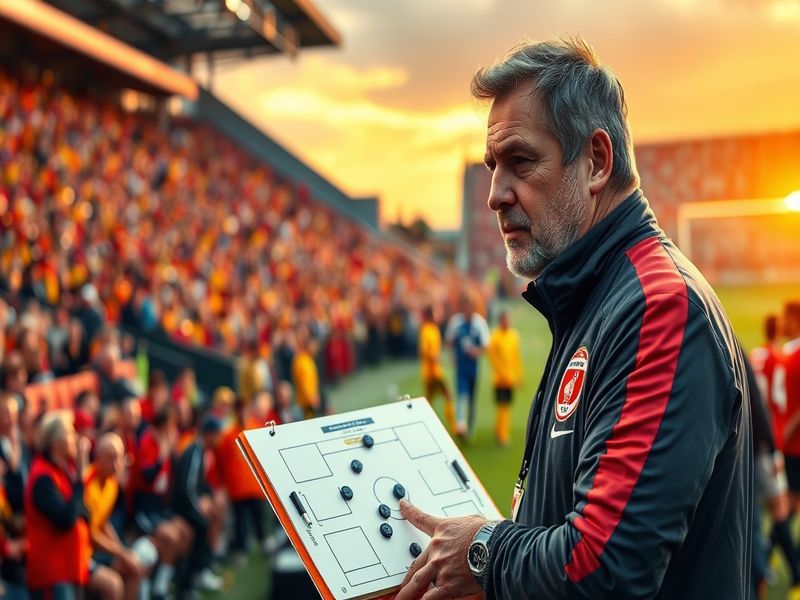
- Tactical Fluidity: Unlike managers who impose rigid formations, Ancelotti adapts his system based on the opposition. Against possession-heavy teams, he deploys a compact 4-4-2 or 4-3-3. Against low-block opponents, he switches to a more direct approach, often utilizing wingers like Vinícius Júnior and Rodrygo to exploit space.
- Man-Management: Ancelotti’s calm demeanor and empathy make him a favorite among players. He avoids public criticism, instead fostering an environment where stars feel valued regardless of form. This was evident during his second spell at Real Madrid, where he mediated tensions between egos like Sergio Ramos and Luka Modrić.
- Big Game Mentality: Ancelotti thrives in knockout football. His Champions League record—five titles as a manager—is unmatched in the modern era. He excels in high-stakes moments, often deploying defensive solidity to grind out results before seizing opportunities in transitions.
His success at Real Madrid this season further underscores this adaptability. Despite losing key players to injury and transfer exits, Ancelotti kept the team in the hunt for La Liga and the Champions League by rotating his squad and trusting his young talent. His decision to prioritize the Champions League while managing league expectations reflects a strategic clarity rare among top managers.
Broader Implications: Why Ancelotti Matters Beyond the Pitch
Ancelotti’s influence extends beyond trophies and tactics. In an era where managers are often reduced to soundbite-driven celebrities, he represents a return to fundamentals: preparation, patience, and respect for the game. His success challenges the prevailing narrative that managers must be either tactical innovators (like Pep Guardiola) or motivational orators (like José Mourinho). Ancelotti proves that intelligence and adaptability can outweigh charisma or rigid ideology.
His impact is also evident in the evolution of player development. At Real Madrid, he has overseen the rise of young talents like Aurélien Tchouaméni and Eduardo Camavinga, integrating them into a squad that demands excellence. This approach contrasts with clubs that prioritize short-term signings over youth development—a trend that has contributed to the decline of traditional powerhouses like Manchester United and Arsenal.
Moreover, Ancelotti’s longevity offers a counterpoint to the revolving door of managerial appointments in modern football. While clubs often dismiss managers after a poor run of results, Ancelotti’s resilience reflects a deeper understanding of the sport’s rhythms. His ability to rebuild relationships with players and fans alike—even after setbacks—demonstrates that success in football is as much about continuity as it is about innovation.
Legacy and the Road Ahead
As Ancelotti enters his 15th season as a manager, his place in football history is already secure. With five Champions League titles, league championships in Italy, England, France, and Spain, and a reputation for handling the biggest personalities in the game, he stands alongside legends like Alex Ferguson and Rinus Michels. Yet, his greatest contribution may be redefining what it means to be a modern manager—not as a tactical revolutionary or a motivational speaker, but as a steady hand in an unpredictable sport.
Looking ahead, Ancelotti’s focus will likely remain on Real Madrid, where he is tasked with maintaining the club’s dominance in an increasingly competitive landscape. With the departures of key players like Benzema and the emergence of new challenges from Manchester City and Bayern Munich, his ability to adapt will once again be tested. If history is any indication, he will find a way to succeed.
For aspiring managers and football enthusiasts alike, Ancelotti’s career offers a valuable lesson: success in football is not about imposing your will on the game, but about understanding its rhythms and adapting to them. In a sport often defined by volatility, Carlo Ancelotti remains the calm in the storm.