Costa Rica’s Ghost Shark Discovery: A Deep-Sea Revelation
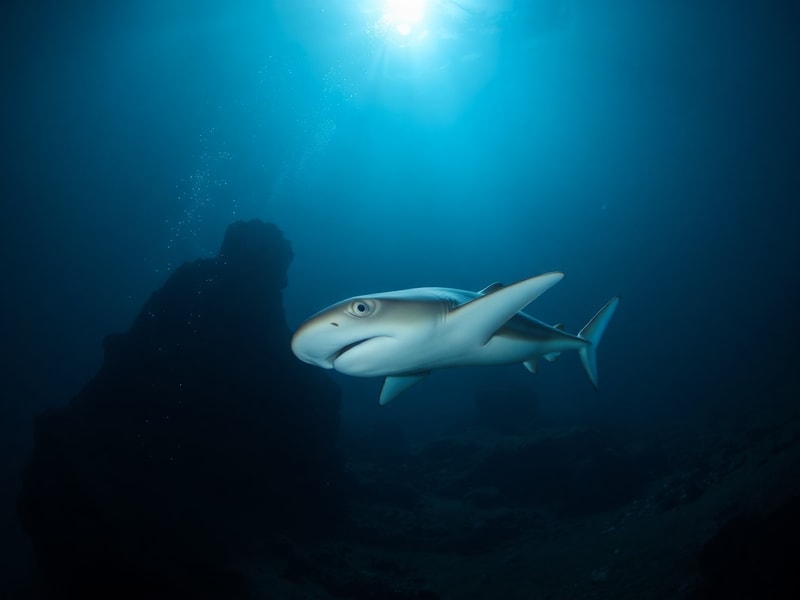
In the cobalt expanse off Costa Rica’s Pacific coast, a pale, slender shark glides through eternal night. Known as the ghost shark or Hydrolagus trolli, this deep-sea dweller is neither a true shark nor a ray but a chimaera—an ancient lineage that has survived for over 300 million years. Its ghostly appearance, with translucent skin and luminous blue eyes, earned it the nickname “ghost shark,” but its recent appearance in a rarely explored trench south of Cocos Island has sent a different kind of shiver through the scientific community.
The Discovery: A Glimpse into the Abyss
In March 2024, a team of marine biologists from the Costa Rican Oceanographic Institute (INCOPESCA) and the Schmidt Ocean Institute, aboard the research vessel Falkor (too), deployed a deep-sea robot to survey the depths of the Costa Rica Thermal Dome. At approximately 1,800 meters—deeper than the Grand Canyon—the high-definition cameras captured the unmistakable silhouette of a chimaera. Its wing-like pectoral fins undulated gracefully as it hovered above a hydrothermal vent, where superheated, mineral-rich water creates a stark contrast against the near-freezing deep.
Dr. Elena Rojas, lead ichthyologist on the expedition, described the moment as “transcendent.” She told reporters, “We weren’t expecting to see a ghost shark in this region. Most sightings occur near New Zealand or southern Australia. The fact that it was here, in a highly active geological zone, suggests that these creatures may be more widely distributed than we thought.” The footage, later verified by the Scripps Institution of Oceanography, was one of only a handful of confirmed sightings of Hydrolagus trolli in the Eastern Pacific.
Why This Matters: More Than Just a Sighting
The presence of the ghost shark in Costa Rican waters isn’t just a curiosity—it’s a biological and ecological signal. Chimaeras are often referred to as “living fossils” because their body plans have remained largely unchanged for hundreds of millions of years. They play a crucial role in deep-sea ecosystems, feeding on mollusks, crustaceans, and small fish, and serving as both predator and prey in the food web.
But their rarity makes them vulnerable. Deep-sea trawling, mining, and climate-driven changes in ocean chemistry threaten their habitat long before scientists can fully understand their behavior. Dr. Rojas emphasized this point: “Every time we find one of these animals in a new location, it tells us that our maps of biodiversity are still incomplete. And that’s dangerous. If we don’t know where they are, we can’t protect them.”
The discovery also highlights the importance of the Costa Rica Thermal Dome—a unique oceanographic feature where cold, nutrient-rich waters upwell and support an explosion of life. It’s one of the most biologically productive regions in the Pacific, yet it remains poorly studied due to its depth and remoteness. The ghost shark’s presence here may indicate that the dome is a critical refuge for ancient species adapting to modern environmental pressures.
The Science Behind the Sighting
Identifying a ghost shark isn’t as simple as spotting a shape on a screen. Chimaeras have soft, gelatinous bodies that don’t preserve well, making DNA analysis and morphological studies difficult. The Costa Rica specimen was identified through a combination of high-resolution imaging and genetic sampling from the surrounding water—an innovative technique known as environmental DNA (eDNA) analysis.
The team collected water samples near the sighting and detected traces of chimaera DNA. When cross-referenced with a global database, the match was conclusive. This method, though still emerging, is revolutionizing deep-sea biology by allowing researchers to detect elusive species without capturing or disturbing them.
Interestingly, the ghost shark’s bioluminescent potential was also noted. While Hydrolagus trolli is not known to produce its own light, researchers speculate that its pale coloration may help it blend into the faint blue glow of the deep sea—a form of passive camouflage. In an environment where even a flicker of light can attract predators, invisibility is survival.
Conservation Urgency: Protecting the Unseen
The discovery comes at a critical moment for deep-sea conservation. The International Seabed Authority is currently drafting regulations for deep-sea mining in international waters, including areas near Costa Rica. Mining companies have expressed interest in extracting polymetallic nodules—rich deposits of copper, nickel, and cobalt—from the seafloor where ghost sharks and other deep-sea creatures live.
Environmental groups, including Marine Conservation Costa Rica, are advocating for a moratorium on mining in the Costa Rica Thermal Dome and adjacent trenches. “This is not just about one species,” said Marina Valdez, policy director at MC Costa Rica. “It’s about an entire ecosystem we’re only beginning to understand. We can’t let short-term economic gain destroy a habitat that has existed for millennia.”
In response, the Costa Rican government has announced plans to expand its marine protected area network and support further deep-sea research. The Ministry of Environment and Energy (MINAE) confirmed in a press release that it will fund a three-year expedition to map deep-sea biodiversity in the region, with ghost sharks as a flagship species.
What’s Next? From Discovery to Protection
For now, the ghost shark remains a silent ambassador of the deep, its image preserved in the expedition’s data vaults. But its story is far from over. Scientists are planning follow-up missions to locate more individuals and study their behavior. They’re particularly interested in whether these chimaeras use the thermal vents for thermal regulation or as feeding grounds for specialized prey.
Public awareness is also key. The Schmidt Ocean Institute has released the raw footage under a Creative Commons license, encouraging educators and filmmakers to use it in outreach programs. Already, the clip has been viewed over 2.3 million times on social media, sparking curiosity about deep-sea life.
As technology advances, so does our ability to explore the ocean’s deepest corners. High-resolution sonar, AI-powered species identification, and autonomous underwater vehicles are making it possible to study creatures like the ghost shark without ever touching them. But technology alone won’t save them. It will take international cooperation, strong policy, and a cultural shift in how we view the deep sea—not as a limitless resource, but as a fragile, irreplaceable frontier.
For now, the ghost shark glides on, a living relic in a world we’re only beginning to see. Its presence off Costa Rica is a reminder: the ocean is not just water and waves. It’s a museum of time, a vault of secrets, and a frontier that demands our respect long before we fully understand it.