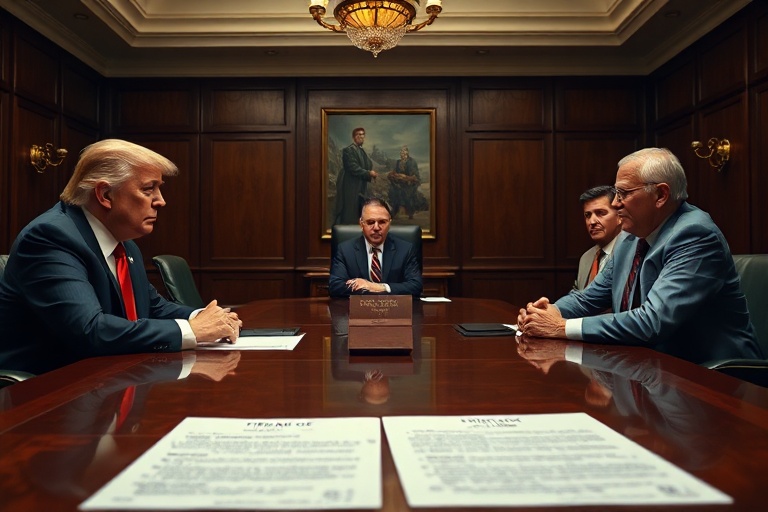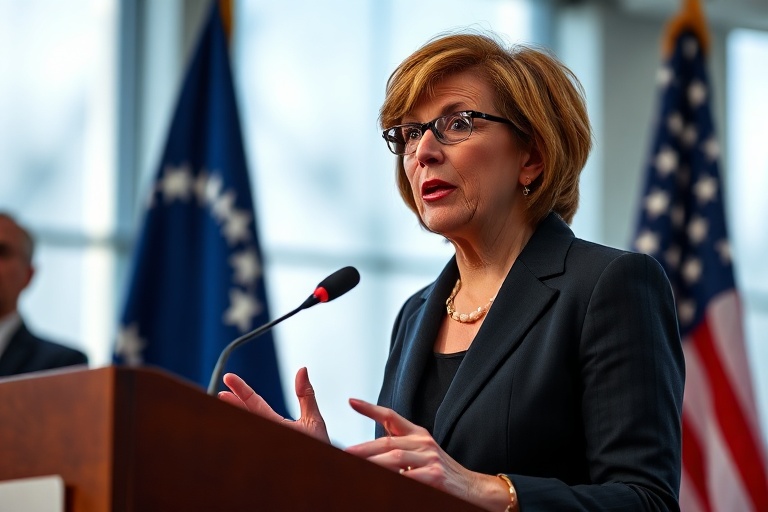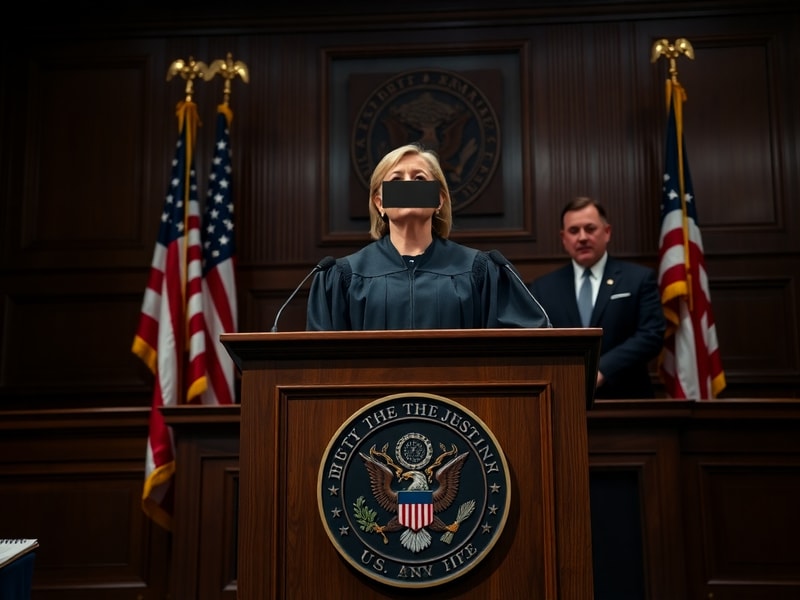
A federal judge in Arizona has blocked former President Donald Trump from implementing a proof-of-citizenship requirement for voter registration, delivering a decisive legal blow to his ongoing efforts to tighten election integrity measures. The ruling, issued by U.S. District Judge Susan Bolton on Thursday, prevents the state from enforcing a law that would have required voters to submit documentary proof of citizenship when registering using the federal voter registration form.
The decision comes as part of a broader legal battle over voting rights and election administration in Arizona, a perennial swing state that has become a flashpoint for debates over election security. Trump and his allies have long argued that voter registration systems are vulnerable to fraud, despite a lack of evidence supporting widespread illegal voting. The former president has repeatedly called for stricter identification requirements, positioning himself as a champion of election integrity.
Judge Bolton, an appointee of President Barack Obama, sided with voting rights advocates who argued that the proof-of-citizenship requirement would disproportionately disenfranchise eligible voters, particularly those from marginalized communities. Her 38-page order emphasized that the law violated the National Voter Registration Act (NVRA), which prohibits states from imposing additional documentation requirements beyond what is specified on the federal voter registration form.
The legal battle over Arizona’s voting laws
Arizona has been at the center of a years-long legal fight over voting rights, with multiple laws facing challenges in court. The proof-of-citizenship requirement was signed into law by Republican Gov. Doug Ducey in 2022, but its implementation was delayed due to legal challenges. The law, Senate Bill 1267, required voters to provide documents such as a birth certificate, passport, or naturalization papers when registering to vote.
Voting rights groups, including the League of Women Voters of Arizona and Mi Familia Vota, swiftly filed lawsuits arguing that the law would create unnecessary barriers for eligible voters. They pointed to data showing that thousands of Arizonans lack easy access to these documents, particularly older residents, low-income individuals, and communities of color. The plaintiffs also highlighted that the federal voter registration form already includes a citizenship attestation under penalty of perjury, a system that has functioned without significant issues.
Judge Bolton’s ruling underscores the tension between state-level election reforms and federal voter registration standards. The NVRA, enacted in 1993 to streamline voter registration, explicitly prohibits states from requiring additional documentation beyond what is required on the federal form. The law was designed to make registration more accessible, particularly for groups that historically face barriers to voting.
In her decision, Bolton wrote that Arizona’s law “conflicts with the NVRA’s clear command” and would “disenfranchise eligible citizens who are unable to provide the required documents.” She also rejected the state’s argument that the proof-of-citizenship requirement was necessary to prevent fraud, stating that there was “no evidence” to support the claim that voter fraud was a significant issue in Arizona.
Trump’s role in pushing for stricter voting laws
Former President Donald Trump has been a vocal advocate for stricter voting laws, repeatedly claiming—without evidence—that the 2020 election was stolen from him due to widespread fraud. His rhetoric has fueled a wave of Republican-led election reforms across the country, with Arizona becoming a key battleground in this fight. Trump’s allies in the state legislature have pushed for aggressive voting restrictions, including measures to purge voter rolls, limit mail-in voting, and impose stricter ID requirements.
The proof-of-citizenship requirement was a cornerstone of Trump’s broader push to tighten election laws. In a 2022 speech, he praised Arizona’s efforts, stating, “They’re doing a great job in Arizona. They’re making sure that only citizens vote.” His rhetoric has resonated with his base, many of whom remain convinced that election integrity is under threat. However, critics argue that these measures disproportionately target minority voters and those who face systemic barriers to obtaining identification documents.
Trump’s influence on Arizona’s election policies is evident in the state’s Republican-controlled legislature. Many of the voting restrictions passed in recent years align closely with the priorities he outlined during his presidency. The proof-of-citizenship law was no exception, as it was championed by lawmakers who have echoed Trump’s claims about election fraud.
While Trump was not directly involved in the legal battle over the proof-of-citizenship requirement, his broader efforts to reshape election laws have set the stage for these fights. His allies in Arizona and other states continue to push for restrictive voting measures, often citing the need to restore public confidence in elections. However, critics argue that these measures are more about suppressing voter turnout than addressing actual fraud.
What this ruling means for Arizona and beyond
Judge Bolton’s decision is a significant victory for voting rights advocates, but the legal battle over Arizona’s election laws is far from over. The state has already indicated that it plans to appeal the ruling, setting up a potential showdown in the Ninth Circuit Court of Appeals. Legal experts predict that the case could eventually reach the U.S. Supreme Court, where the conservative majority has shown a willingness to uphold restrictive voting laws.
For now, Arizona voters will continue to use the federal voter registration form without the additional proof-of-citizenship requirement. However, the state could still enforce other voting restrictions, such as its ban on ballot harvesting and strict ID laws for in-person voting. These measures have also faced legal challenges, with voting rights groups arguing that they disproportionately impact minority and low-income voters.
The ruling also sets a precedent for other states considering similar proof-of-citizenship requirements. Kansas, for example, has been embroiled in its own legal fight over a law requiring proof of citizenship for voter registration. The Kansas Supreme Court struck down the law in 2018, but the state continues to enforce a dual registration system that requires proof of citizenship for state-specific voter registration forms. Legal experts say that Judge Bolton’s decision in Arizona could influence future rulings in these cases.
Beyond Arizona, the ruling highlights the ongoing national debate over voting rights. Since the 2020 election, Republican-led states have passed over 500 restrictive voting laws, according to the Brennan Center for Justice. These laws include stricter ID requirements, reduced early voting periods, and limitations on mail-in voting. Democrats and voting rights advocates have fought these measures in court, arguing that they are designed to suppress voter turnout among minority and Democratic-leaning voters.
The broader implications for election integrity
The debate over election integrity has become one of the most contentious issues in American politics. While Trump and his allies argue that stricter voting laws are necessary to prevent fraud, critics contend that these measures are a thinly veiled attempt to suppress voter turnout. The lack of evidence supporting widespread voter fraud has done little to dampen these claims, as many Republicans continue to push for restrictive voting laws.
Judge Bolton’s ruling is a reminder that the courts still serve as a check on these efforts. Her decision underscores the importance of federal voter registration standards in ensuring that all eligible voters can cast a ballot. The NVRA was designed to make registration more accessible, and Judge Bolton’s ruling reinforces the law’s role in preventing states from imposing unnecessary barriers.
However, the legal battles over voting rights are far from settled. With the Supreme Court increasingly conservative, voting rights advocates fear that future rulings could undermine federal protections for voters. The Court’s 2013 decision in Shelby County v. Holder, which struck down a key provision of the Voting Rights Act, has already made it easier for states to pass restrictive voting laws. A future ruling that weakens the NVRA could further erode protections for voters.
The fight over Arizona’s proof-of-citizenship requirement is just one chapter in a much larger struggle over the future of American democracy. As states continue to pass restrictive voting laws, the courts will play a crucial role in determining whether these measures are constitutional. For now, Judge Bolton’s decision is a rare victory for voting rights advocates, but the battle is far from over.
For Arizonans, the ruling means that the state cannot enforce the proof-of-citizenship requirement—at least for now. But with the state planning to appeal, the legal fight will continue. Meanwhile, voters in Arizona and across the country will keep a close eye on the courts, knowing that the outcome of these cases could shape the future of American elections.