As the countdown to the FIFA World Cup 2026 begins, anticipation is building across the globe. The tournament, co-hosted by the United States, Canada, and Mexico, will expand to 48 teams, making it the largest edition in history. With qualification matches underway and powerhouse nations jockeying for position, the standings are already shaping up to be unpredictable. Here’s what fans need to know about the evolving landscape of the 2026 FIFA World Cup.
The Road to Qualification: How Teams Are Earning Their Spots
Qualification for the 2026 World Cup is a marathon, not a sprint. The expanded format means more nations than ever will have a shot at glory. Europe, with its traditional powerhouses like Germany, France, and Spain, will send 16 teams, while Africa and Asia will each have nine spots. South America’s CONMEBOL will contribute six teams, and CONCACAF, the host confederation, will send six as well—including automatic berths for the U.S., Canada, and Mexico.
For smaller nations, this tournament represents an unprecedented opportunity. Teams like Haiti and Jamaica have already punched above their weight in CONCACAF qualifying, while nations like New Zealand and Iraq are pushing for historic berths. The expanded format rewards consistency, but upsets remain a cornerstone of World Cup drama. As qualification rounds progress, expect underdogs to emerge and traditional giants to stumble.
One of the most intriguing storylines is the battle for the final spots in Europe. With nations like the Netherlands, Portugal, and Belgium competing for direct qualification, the playoffs will likely decide who joins the elite. Meanwhile, in South America, Brazil and Argentina are safely on course, but nations like Colombia and Uruguay face pressure to secure their places. The stakes are high, and every point matters.
Early Standings: Who’s Leading the Pack?
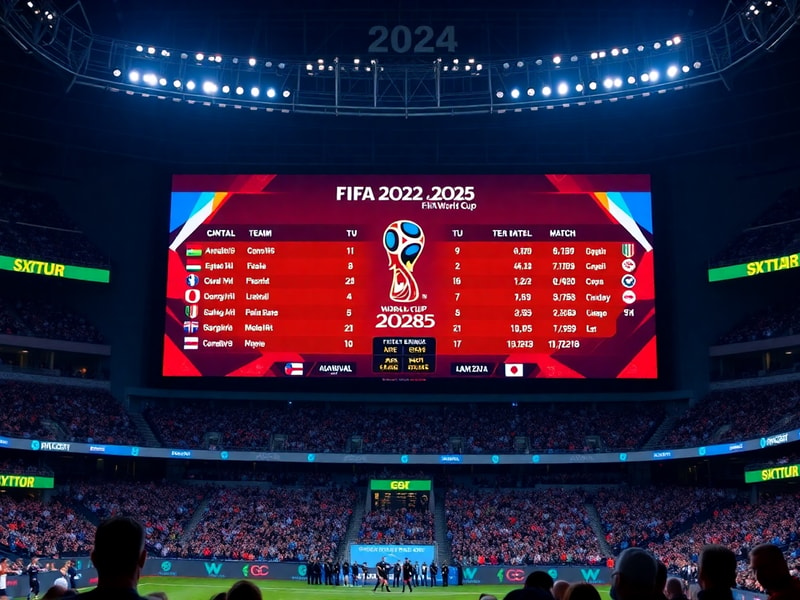
While qualification is still in flux, early indicators suggest a mix of familiar faces and rising contenders. In Europe, France and England lead the charge with strong performances in their groups, while Germany—despite home advantage—faces scrutiny over its rebuilding process. Italy, the 2020 European champions, is also making waves under new management, proving that even storied nations must fight for their place.
In South America, Brazil’s attacking trio of Vinícius Jr., Rodrygo, and Endrick has drawn global attention, but Argentina’s reliance on Lionel Messi’s successor remains a question mark. Colombia and Uruguay, meanwhile, are punching above their weight with disciplined defensive structures and emerging talents.
Across Africa, Morocco’s historic run to the 2022 World Cup semifinals has set expectations high, but nations like Senegal and Nigeria are determined to follow suit. In Asia, Japan and South Korea remain the region’s strongest hopes, though Saudi Arabia’s aggressive investment in its team could disrupt the status quo.
For a deeper look at how these teams are performing in their respective qualifiers, check out our News section, where we break down key matches and standout players.
The Hosts’ Dilemma: Can the U.S., Canada, and Mexico Compete?
The co-hosts face a unique challenge: balancing home advantage with the pressure to perform. Mexico, with its passionate fanbase, will likely secure its place comfortably, but the U.S. and Canada are in a tighter race. The U.S. team, led by manager Gregg Berhalter, has shown flashes of brilliance but remains inconsistent. Canada, buoyed by young stars like Alphonso Davies, is a dark horse with genuine potential.
Hosting duties come with scrutiny. If any of the three nations underperform, the tournament’s early stages could become a liability rather than an asset. However, the expanded format means even a group-stage exit wouldn’t be catastrophic. Still, the hosts will aim to avoid early embarrassment, especially in a tournament where first impressions matter.
One advantage for the co-hosts is familiarity with the venues. The 2026 World Cup will span 16 cities across North America, from Vancouver to Atlanta. Stadiums like MetLife in New Jersey and SoFi in Los Angeles are already in final preparations. For fans planning to attend, now is the time to book accommodations—demand will be fierce.
Dark Horses and Potential Upsets
Every World Cup produces at least one underdog run. In 2018, it was Belgium and Croatia reaching the semifinals. In 2022, Morocco became the first African nation to reach the knockout stage. For 2026, several teams could emerge as the tournament’s Cinderella story.
Here are a few candidates poised for a deep run:
- Denmark – A cohesive unit with a strong collective ethos, Denmark could overachieve if its stars like Rasmus Højlund and Christian Eriksen stay fit.
- Switzerland – Consistently punches above its weight, with a defense anchored by Manuel Akanji and Granit Xhaka marshalling the midfield.
- South Africa – A resurgent Bafana Bafana, led by Percy Tau, could capitalize on a favorable group draw.
- Costa Rica – Despite recent struggles, Costa Rica’s tactical discipline and home support in Mexico City could spark a surprise.
The beauty of the World Cup lies in its unpredictability. A single moment—a red card, a penalty save, a last-minute winner—can redefine a nation’s footballing legacy. As qualification heats up, these dark horses will look to stake their claim on glory.
For more insight into rising talents and tactical trends shaping the tournament, explore our Analysis section, where we dissect the game’s evolving strategies.
What to Watch as the Tournament Approaches
With nearly two years until kickoff, the focus remains on qualification, but several factors will shape the final standings. The form of European giants in Nations League play could indicate their World Cup readiness. Meanwhile, injuries to key players—like Mbappé’s recent calf issue for France—could derail even the most talented squads.
Another trend to monitor is the rise of young talent. Players like Barcelona’s Lamine Yamal and Bayern Munich’s Mathys Tel are already drawing comparisons to past prodigies. Their development over the next two years will be critical.
As the tournament nears, the narrative will shift from “who’s qualified?” to “who’s peaking at the right time?” Coaches will face tough decisions on squad selection, while pundits will debate the best XI for each nation. The 2026 World Cup is more than a competition; it’s a stage for football’s next generation.
For fans eager to dive deeper into the tournament’s history and legacy, our Sports category offers historical context and expert predictions.
The 2026 FIFA World Cup stands to be a defining moment in football history. With expanded competition, new storylines, and a fresh generation of stars, the standings will evolve in real time. One thing is certain: when the first whistle blows, the world will be watching.