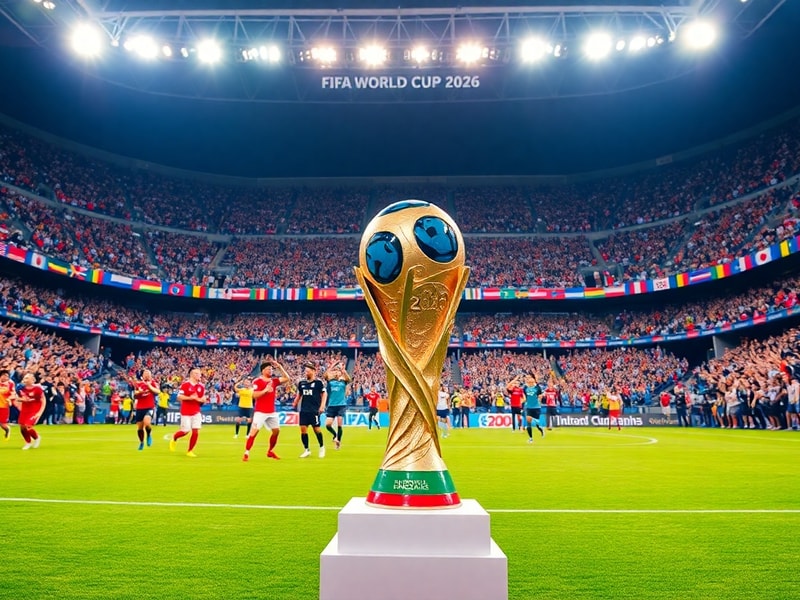
The 2026 FIFA World Cup marks a historic moment in football, not just for its expanded format but for how it reshapes the global sporting calendar. For the first time, 48 teams will compete across three host nations—Canada, Mexico, and the United States—spanning 16 cities and 10 weeks. This expansion isn’t merely about numbers; it redefines accessibility, fan engagement, and commercial strategy for FIFA and its partners. The tournament’s structure alone introduces new dynamics, from group-stage logistics to knockout-round unpredictability, all while testing the adaptability of football’s most traditional institutions.
Logistical Overhaul: Stadiums, Scheduling, and Sustainability
The sheer scale of the 2026 World Cup demands a rethinking of how global tournaments are organized. Host cities like Atlanta, Vancouver, and Guadalajara will host matches in stadiums ranging from historic venues like Mexico City’s Estadio Azteca to modern facilities like SoFi Stadium in Los Angeles. Each venue must meet FIFA’s stringent sustainability criteria, including carbon-neutral operations and renewable energy sourcing. The tournament’s scheduling reflects this ambition: a carefully staggered kickoff times across time zones to maximize live viewership while minimizing travel fatigue for teams.
Transportation presents another challenge. With matches spread across North America, teams will face grueling travel schedules, especially during the group stage. FIFA has implemented a rotation system to balance travel burdens, but the physical toll on players—particularly those from clubs with congested domestic calendars—cannot be ignored. This raises questions about player welfare and the long-term viability of such expanded tournaments. Will clubs push back against releasing players for extended national-team duty? Could this lead to a shift in how football’s governing bodies negotiate calendar conflicts?
Expansion’s Ripple Effect: Qualification, Competition, and Culture
The 48-team format introduces 16 additional spots, fundamentally altering the qualification landscape. Traditional powerhouses like Brazil, Germany, and Argentina will still dominate headlines, but the door is now wide open for emerging football nations. Teams from Africa, Asia, and North America—such as Canada, whose homegrown talent pool has swelled in recent years—will have unprecedented opportunities to qualify and make a statement on the world stage. This shift could democratize football’s appeal, fostering new rivalries and fan bases in regions where the sport is growing rapidly.
Yet, the expansion also risks diluting the tournament’s prestige. More teams mean more matches, but not all will carry the same weight. The group stage, now featuring 12 groups of four teams, could lead to uncompetitive dead-rubber matches or tactical mismatches that feel out of place in a World Cup. FIFA’s solution—a straight knockout round of 32—ensures drama, but it also waters down the significance of group-stage performances. Will fans accept a tournament where early exits feel less like heartbreak and more like a stepping stone?
The cultural impact of 2026 extends beyond the pitch. With three host nations, the World Cup becomes a celebration of North American football’s diversity. The United States, with its burgeoning MLS league and growing fan base, will host marquee matches in cities like New York and Dallas. Mexico, with its passionate supporters and deep football culture, will bring unmatched atmosphere to venues like Monterrey and Mexico City. Canada, meanwhile, will showcase its progress as a footballing nation, with Toronto and Vancouver offering fresh perspectives on fan engagement. This trinational collaboration could set a new standard for how global tournaments are hosted, emphasizing shared infrastructure and collective ambition.
Economic and Commercial Implications: Who Wins and Who Loses?
The 2026 World Cup is projected to generate over $11 billion in revenue, a figure that dwarfs previous tournaments. Sponsorships, broadcasting rights, and tourism will drive this growth, but the distribution of profits remains a contentious issue. FIFA’s revenue-sharing model allocates a significant portion to member associations, but critics argue that smaller federations—especially those from Africa and Asia—may struggle to capitalize on the opportunity. The tournament’s commercial success hinges on its ability to engage global audiences, from casual fans to die-hard enthusiasts, across multiple platforms.
Broadcasters will play a crucial role in shaping the tournament’s legacy. With matches spread across time zones, networks like Fox, Telemundo, and Canada’s TSN will compete for viewership in an increasingly fragmented media landscape. The rise of streaming services and social media means fans expect real-time access, interactive content, and personalized viewing experiences. FIFA’s digital engagement strategy—including AI-driven highlights and virtual fan zones—will be tested like never before. Will traditional broadcasters adapt quickly enough, or will digital platforms steal the spotlight?
The economic impact on host cities is another layer of complexity. While mega-events promise job creation and infrastructure development, they also carry risks of white-elephant stadiums and budget overruns. Los Angeles’ SoFi Stadium, for example, was built with the World Cup in mind, but its long-term utility remains uncertain. Cities like Atlanta and Guadalajara must balance short-term gains with sustainable legacy projects, ensuring that the tournament leaves a lasting positive footprint.
Key Takeaways: What to Watch in 2026
The 2026 FIFA World Cup is more than a sporting event; it’s a test case for the future of football. Here’s what to keep an eye on:
- Format Innovation: Will the expanded field elevate underdog stories or dilute the tournament’s intensity?
- Player Welfare: How will clubs and federations manage the increased physical demands on players?
- Fan Experience: Can FIFA deliver a seamless, inclusive experience across three countries and 16 cities?
- Commercial Strategy: Will sponsors and broadcasters maximize the tournament’s global appeal?
- Legacy Projects: Will host cities benefit from long-term infrastructure improvements?
The 2026 World Cup arrives at a crossroads for football. It’s an opportunity to grow the game, but it’s also a gamble—one that could redefine the sport’s economics, culture, and competitive balance for decades to come. For fans, the excitement is undeniable. For stakeholders, the pressure is on to deliver a tournament that lives up to the hype.
As the countdown begins, one thing is clear: football’s most prestigious event is entering a new era, and the world will be watching.
For more on the evolving landscape of international football, explore our Sports and Analysis categories, where we break down the trends shaping the game.