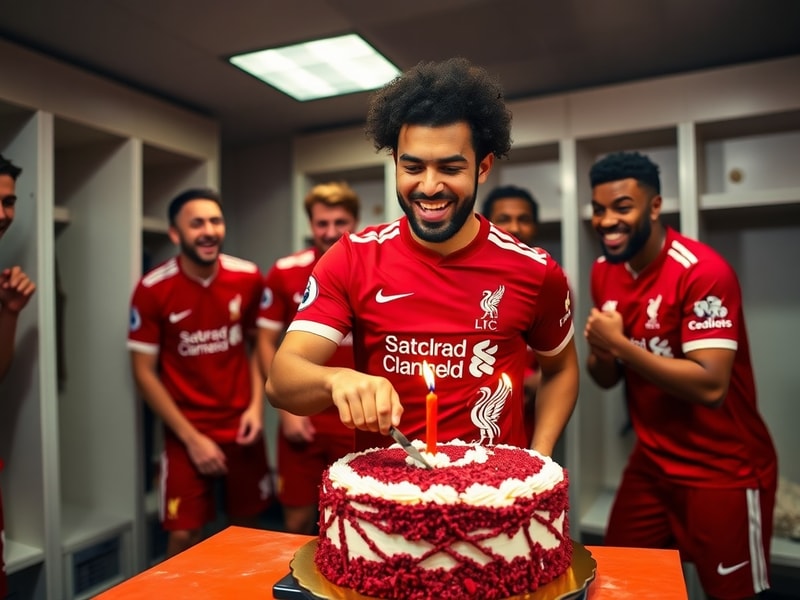
Every year on June 15, football fans around the globe pause to celebrate Mohamed Salah’s birthday. The Egyptian forward, known for his lightning pace, clinical finishing, and humble demeanor, has become one of the most recognizable figures in modern football. Beyond his on-field exploits, Salah’s influence extends into culture, philanthropy, and even geopolitics. As another year passes since his birth in 1992, it’s worth reflecting not just on his career, but on what his presence means for football and beyond.
From Nagrig to the Global Stage: Salah’s Humble Beginnings
Mohamed Salah Hamed Mahrous was born in Nagrig, a small village in Egypt’s Gharbia governorate. Growing up in a modest family, his early life was marked by hard work, discipline, and an unshakable passion for football. Unlike many European stars who are scouted early in elite academies, Salah’s journey began on dusty pitches in rural Egypt, where his talent quickly became evident.
His professional career started at Al Mokawloon Al Arab, where his performances caught the attention of European scouts. A move to Basel in Switzerland in 2012 marked his breakout moment, leading to a series of high-profile transfers that culminated in his arrival at Liverpool in 2017. That transfer, for a reported £36.9 million, was initially met with skepticism due to his modest goal tally at Chelsea. Yet, the rest—as they say—is history.
Salah’s connection to his roots remains a defining aspect of his identity. He frequently returns to Egypt, donating to local charities and investing in community projects. His birthday isn’t just a personal milestone; it’s a celebration of Egyptian resilience and aspiration.
Key Milestones in Salah’s Career
- 2012: Moved to FC Basel from Al Mokawloon, winning the Swiss Super League in his first season.
- 2014: Joined Chelsea but struggled for regular playing time before loan moves to Fiorentina and Roma.
- 2016: Signed permanently by AS Roma, where he flourished under Luciano Spalletti, scoring 19 goals in Serie A.
- 2017: Transferred to Liverpool for £36.9 million, becoming a cornerstone of Jürgen Klopp’s resurgent team.
- 2018: Shared the Premier League Golden Boot with 32 goals, breaking numerous records including most goals in a 38-game season.
- 2019: Played a pivotal role in Liverpool’s Champions League triumph, scoring in the final against Tottenham.
- 2020: Helped Liverpool win the Premier League, ending a 30-year wait for the title.
- 2022: Became Africa’s all-time top scorer in men’s international football, surpassing Didier Drogba’s record.
The Cultural Impact of Salah Beyond Football
Salah’s influence transcends the pitch. In Egypt and across the Arab world, he is more than a footballer—he is a symbol of pride and representation. His success has inspired countless young players from the region, proving that talent and determination can overcome limited resources and systemic barriers.
Off the field, Salah has used his platform for social good. He has donated millions to charitable causes in Egypt, including funding surgeries for children, supporting education, and aiding victims of natural disasters. His philanthropy is often low-key but deeply impactful, reflecting his belief in giving back to the community that shaped him.
Salah’s impact is also felt in the global perception of Arab athletes. He challenges stereotypes about Muslim players, particularly regarding prayer rituals and cultural identity. His dignified approach to fame—balancing superstardom with humility—has earned him respect far beyond football circles.
Why Salah’s Birthday Matters in the Modern Game
In an era dominated by commercialization and fleeting celebrity, Salah represents a rare consistency. His professionalism, loyalty, and consistency are often cited by younger players as benchmarks for career longevity. At 32, he remains one of Liverpool’s most important players, defying the typical decline associated with his age bracket.
His influence extends to Liverpool’s global brand. The club’s commercial growth in Africa and the Middle East has been partly attributed to his presence. Sponsors like Nike and Vodafone have leveraged his popularity to expand into new markets, demonstrating how a single athlete can drive economic and cultural influence.
Salah’s birthday also serves as a moment to reflect on the changing demographics of football. As European leagues become more diverse, players like Salah—who blend multiple cultural identities—are reshaping narratives around identity, belonging, and success. His story is a counterpoint to the traditional Eurocentric view of football excellence.
Looking Ahead: What’s Next for Salah?
As Salah enters the later stages of his career, questions about his future are inevitable. Liverpool’s recent struggles have raised doubts about the club’s ability to retain its core players. Yet, Salah’s contract, set to expire in 2025, leaves room for speculation.
Could he return to Serie A, where he enjoyed immense success at Roma? Might a move to Saudi Arabia or the MLS be on the cards, given the financial allure of those leagues? Or will he finish his career at Anfield, cementing his legacy as one of Liverpool’s greatest players?
Regardless of where his journey takes him next, Salah’s birthday is a reminder of what he has already achieved. From a village in Egypt to the global stage, his story is one of perseverance, skill, and quiet leadership.
As fans prepare to celebrate another year of his life, the broader implications of his career—on football, culture, and society—cannot be overstated. Mohamed Salah isn’t just a birthday milestone; he’s a living testament to the power of sport to inspire and unite.
So, on June 15, as we honor another year of his life, let’s also celebrate the man who has redefined what it means to be a modern athlete—on and off the pitch.
Read more about Liverpool’s recent performances and Salah’s role in our Sports section.
Explore deeper analysis of football’s cultural impact in our Analysis section.