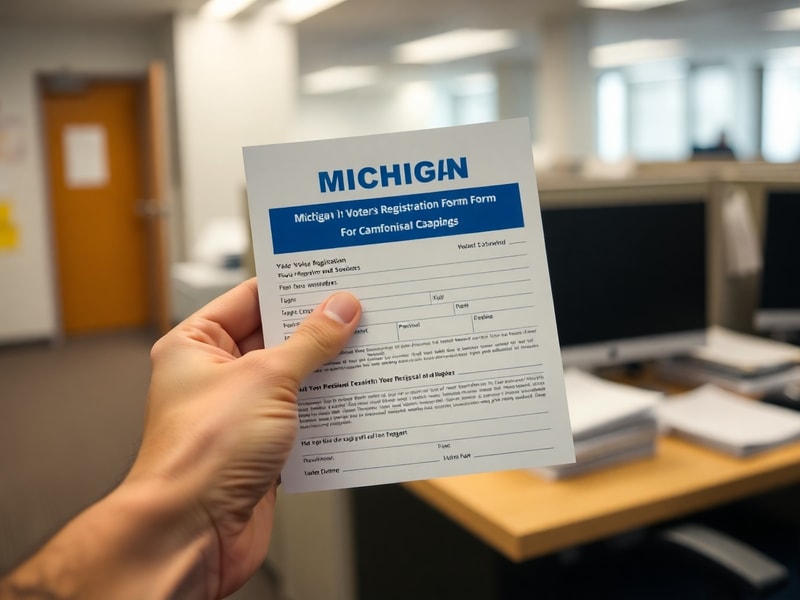
The Michigan voter registration data appeal has become a focal point in discussions about election integrity and administrative oversight, drawing attention from legal experts, political analysts, and civic organizations across the United States. At its core, the appeal centers on a challenge to the state’s voter rolls, particularly the accuracy and maintenance of registration records in the lead-up to recent elections. Critics argue that outdated or duplicate registrations could distort electoral outcomes, while supporters of the current system emphasize the importance of accessibility in democratic participation.
This legal dispute is not isolated to Michigan. Similar debates have emerged in other states, reflecting broader tensions between election security and voter inclusivity. For instance, Georgia and Arizona have faced comparable scrutiny over their voter registration processes, with advocates on both sides presenting data to support their positions. The Michigan case, however, has gained particular traction due to its timing and the high stakes involved in national elections.
The appeal stems from a 2023 ruling by a Michigan court, which upheld the state’s voter registration procedures against claims of negligence. The plaintiffs, a coalition of conservative and voter integrity groups, argued that Michigan’s failure to regularly purge outdated registrations violated federal law. Their appeal now seeks to overturn that decision, potentially setting a precedent for how other states manage their voter rolls.
Key Players and Legal Arguments
The appeal has drawn involvement from a diverse coalition of stakeholders, each bringing distinct perspectives to the debate. On one side, the plaintiffs include organizations like the Public Interest Legal Foundation (PILF), which has long advocated for stricter enforcement of voter registration laws. PILF’s legal team contends that Michigan’s voter rolls are riddled with errors, including registrations for deceased individuals and those who have moved out of state.
Opposing the appeal is Michigan’s Secretary of State, Jocelyn Benson, who has defended the state’s practices as compliant with federal and state laws. Benson’s office points to Michigan’s automatic voter registration system, which allows residents to register when obtaining or renewing a driver’s license. This system, they argue, has significantly reduced errors while expanding access to the ballot box. Additionally, Michigan conducts regular audits of its voter rolls to ensure accuracy, a process that PILF has dismissed as insufficient.
The legal arguments hinge on two primary statutes: the National Voter Registration Act (NVRA) of 1993 and the Help America Vote Act (HAVA) of 2002. The NVRA requires states to maintain accurate and current voter registration lists, while HAVA mandates the creation of statewide voter registration databases. The plaintiffs claim Michigan has fallen short of these requirements, while the state counters that it has met the legal standards through its existing processes.
Global Perspectives on Voter Registration Challenges
While the Michigan appeal is a domestic issue, it reflects broader global trends in election administration. Many democracies struggle to balance voter accessibility with the need for accurate registration lists. For example, in the United Kingdom, the introduction of individual voter registration in 2014 led to a significant drop in registration numbers, particularly among younger and marginalized communities. Similarly, in India, one of the world’s largest democracies, voter registration drives are a year-round effort, often complicated by logistical challenges and bureaucratic hurdles.
In Europe, countries like Germany and France have adopted digital voter registration systems, which have streamlined the process but also raised concerns about data privacy and cybersecurity. The Michigan case underscores a universal dilemma: how can governments ensure that voter rolls are both accurate and inclusive? The answer often depends on the political and cultural context of each country. In the United States, where election integrity is a deeply partisan issue, the debate is particularly contentious.
Culturally, the discussion around voter registration in Michigan also touches on broader themes of trust in institutions. A 2022 Pew Research survey found that only 20% of Americans trust the federal government to do what is right “just about always” or “most of the time.” This erosion of trust extends to election systems, where misinformation and partisan rhetoric have fueled skepticism about the integrity of the voting process. The Michigan appeal, therefore, is not just a legal battle but a cultural one, reflecting deeper anxieties about the health of American democracy.
Potential Implications of the Appeal
The outcome of the Michigan voter registration data appeal could have far-reaching consequences, not only for the state but for the entire country. If the appeal is successful, it could embolden similar challenges in other states, leading to widespread purges of voter rolls. This, in turn, could disenfranchise eligible voters, particularly those in communities with historically low registration rates. On the other hand, if the appeal fails, it may set a precedent that reinforces the status quo, allowing states to continue using their current systems without significant changes.
Beyond the legal and political ramifications, the appeal could also influence public perception of election integrity. A ruling in favor of the plaintiffs might be seized upon by those who argue that widespread voter fraud is a systemic issue, despite a lack of evidence to support such claims. Conversely, a decision upholding Michigan’s current practices could be framed as a victory for voting rights advocates, who emphasize the importance of accessibility in democratic participation.
For Michigan residents, the appeal’s outcome could directly impact their ability to vote in future elections. If the state is forced to adopt stricter maintenance procedures, some voters may find themselves removed from the rolls without their knowledge. This scenario has already played out in other states, where aggressive purges have led to confusion and legal challenges. For example, in Ohio, a 2018 law that purged thousands of voters from the rolls was later partially blocked by a federal court, highlighting the potential for unintended consequences.
The appeal also raises questions about the role of technology in election administration. Michigan’s use of an automatic voter registration system is seen as a model for other states, but critics argue that it lacks safeguards to prevent errors. The case highlights the need for robust data management systems that can balance efficiency with accuracy. As more states move toward digital voter registration, the lessons learned from Michigan’s experience could be invaluable.
What Comes Next?
The Michigan voter registration data appeal is currently pending before the state’s appellate courts, with oral arguments expected in the coming months. Legal experts suggest that the case could ultimately reach the Michigan Supreme Court, or even the U.S. Supreme Court, depending on the outcome of the appeal. The timeline for a resolution remains uncertain, but the stakes are clear: the decision could shape the landscape of American elections for years to come.
In the meantime, civic organizations and advocacy groups are mobilizing to ensure that the appeal does not result in unnecessary disenfranchisement. Groups like the American Civil Liberties Union (ACLU) and the League of Women Voters have already filed amicus briefs in support of Michigan’s current practices. Their efforts underscore the broader fight to protect voting rights in an era of increasing polarization.
For those interested in the intersection of law and democracy, this case offers a critical lens through which to examine the challenges of election administration. Whether the appeal succeeds or fails, it will undoubtedly leave a lasting impact on Michigan’s political landscape and beyond. As the legal battle unfolds, one thing is certain: the debate over voter registration is far from over.
For more on how voter registration trends are influencing local elections, explore our Politics coverage. To understand the broader implications of election integrity debates, check out our News section for ongoing analysis.